Introduction
This was another piece I wrote before I started the mrjohn.blog, and so the style and focus is a little different. Some parts were a little clunky but I hope I’ve tidied those up. Of those early travel pieces, it’s one of the few I quite like, so here it is, even if it’s not great.
Here’s a link to the blog post (with a few photos) for those getting this via the podcast feed.
The podcast version features my lovely friend Sarah Owen.
Sixty-six degrees north
The word “express” used to mean that it was “quicker” than something that was “not express”.
In the world of travel it implied a more direct route with fewer stops, meaning an overall shorter journey time and therefore a more premium product.
Unfortunately for fans of the word “express”, marketing people got hold of it and used it to try to put lipstick on “worse things” by making a virtue of the speed-advantage of having “less choice”. A Tesco Express is smaller than a normal Tesco, so you spend less time there, ergo it was an “express” experience, as was choosing a DVD in my local Blockbusters Express because there was hardly anything to choose from.
Iberia Express have taken this definition-drift one step further by retaining the concept of “worse” but losing the bit about “quicker”.
This means that the Express brand of the Spanish flag-carrier is the same as the normal Iberia, but worse. It is not quicker, it does not have fewer stops on its way to its destination, it is not a premium alternative for the busy commuter; it’s the same but with less legroom.
I was flying to Reykjavik, a fairly lengthy four-hour flight to a pricey destination that seems to jar with the “same-but-worse” Express brand. This is a trunk route between European capitals, and the only direct flight, so not the sort of thing where a low-cost alternative might garner some untapped market share, but there you go, that’s the strategic oddity that is Iberia Express for you.
I limped off the plane, legs frozen from being shoved in the tiny gap between my seat and the one in front, happy to have avoided a thrombosis. I marched through the airport as quickly as I could, trying to get my circulation going; it was 2am, and I was desperate to get to my hotel. I am not a late-night person any more, those days have gone … I used to adore boozy nights in clubs or sitting around with friends chatting into the small hours, but not any more. I have stumbled through my midlife crisis and come out the other side, accepting the non-negotiable fact that I’m fifty … accepting it and embracing it because you don’t mess with people who are fifty, we’re too grizzled with experience, we’re too fucking hard. I no longer mourn my lost youth, there’s a lot I regret and things I would love to do over, but I’ve got better at living in the present and looking to the future and now spend much less time redesigning my possible pasts. I don’t want to pretend my age isn’t true – it isn’t “just a number,” as so many people say – it’s a number that means I don’t want to stand in crowded bars at 3am drinking gin just to show I’ve still got what it takes. If that’s what it takes to show I’ve got what it takes, then I haven’t got what it takes. If I’m not tucked up in bed by half-ten with a good book I’m not happy … and so, marching through a chilly airport at 2am after a four-hour flight, I feel no sense of adventure at being in a new country, I just want to rush to a cosy hotel room and jump into bed.
One disadvantage of being a middle-aged man is failing to remember the age-perspective rule. This rule states that from the perspective of someone younger, age difference is magnified by a factor of ten. For example, to the very attractive immigration officer who checked my passport and Covid documentation, I probably looked to be about a hundred years old. My tired eyes were bleary, but they focused fast enough when I stepped forward and her elegant beauty emerged from the fog of my blurry vision. Her dark skin was smooth perfection, her features looked like they’d been made as an example to others, to show them what God had meant when He made woman … but she was young enough to have never seen an iPhone 5 when I showed her my vaccination certificate (she called it “cool” with a cheeky twinkle in her gorgeous eye) and yet, from my perspective, the age difference is diminished by a similar factor. She was obviously younger than I was, but from my end of the telescope, we all looked like adults and roughly-speaking were pretty much all more or less in or around the same age bracket, and so a gentleman has to be careful not to misinterpret her being sparkly and friendly as anything more than her treating me like she might treat a friend of her Grandpa’s.
In my 50+ years I have learnt that the best thing to do when women are sparkly and friendly is to either assume they’re a spy hoping to lure me into some poor decision-making that will be used against me later, or that they are just sparkly and friendly people who probably aren’t angling for a middle-aged stranger to try and cop off with them.
It’s better, I have learnt, to respond to sparkly friendliness with a respectful sparkly friendliness in return. This also works if they’re a spy.
I smiled, and in a gesture of sparkle and friendliness, said: “Cool? Not sure about that! Just old!”
I hope she realised I was talking about the phone …
Reykjavik
A decent hotel in any city tells us a lot about that culture’s approach to luxury and customer service, and in a wider sense, its approach to society in general.
Asian hotels are practically built from ingots of solid gold, with guests made to feel like royalty by subservient eager-to-please staff. I would have happily lived the rest of my life in the hotel room I once had in Bangkok, and had to be dragged from the decadent luxury of my hotel in New Delhi … but I couldn’t say the same about my Reykjavik experience … at 3am (by the time I got there), I was mainly concerned with getting to bed, but even through my fog of tiredness I took a moment to register surprise at the underwhelming service-with-a-shrug, a kind of gruff efficiency that was just about polite but also made clear that there would be none of this subservient business going on. I might be the paying customer in this equation, but we were 66 degrees north – on the edge of the Arctic Circle – where everyone’s equal and we’re all expected to be self-sufficient and capable.
Fair enough, I thought, Icelandic people must be tough cookies, this is an inhospitable climate and no place for softies, and as someone who finds subservience excruciatingly uncomfortable, this should be right up my street.
Except the meagre welcome was reflected in everything … it was all a bit tired and tatty; the room was small, dark and freezing (although the old-fashioned radiator was remarkably efficient), the bathroom old and small, and the pillows were like someone had slipped a pillowcase on a bag of gravel … but it was okay, I suppose … but then there was breakfast that was all a bit shit: cold baked beans and transparent orange juice do not make for a great start to the day, so I stuck to some thin porridge, a mediocre coffee and a couple of slices of toast … and yes, I had some flapjack that was actually pretty good, but that’s not technically a breakfast food so doesn’t count.
I had got up earlier than planned meaning I had time before my first meeting, and so I decided to venture outside to see if Iceland in general was as disappointing as my Icelandic hotel.
I stepped outside, then immediately stepped back in, rushing up to my rooms to grab my woolly hat, scarf and gloves. I knew cold, but I live in Madrid, which is not on the edge of the Arctic, and so my cold and Icelandic cold were as different from each other as red and white wine are from each other, and – like red and white wine – should not be called the same thing.
I walked down the main street, looking for bookshops and record shops, hoping I might even find news of some live music during my few days here. Iceland has a strong record of bleak fiction and interesting electronic music, so I was hopeful. In the end I got an album by Vök (Figure)1 and a book by Halldór Laxless (The Fish Can Sing), apparently Iceland’s John Steinbeck; and there’s no higher praise than that (except being compared to Lucas Radebe, obviously).
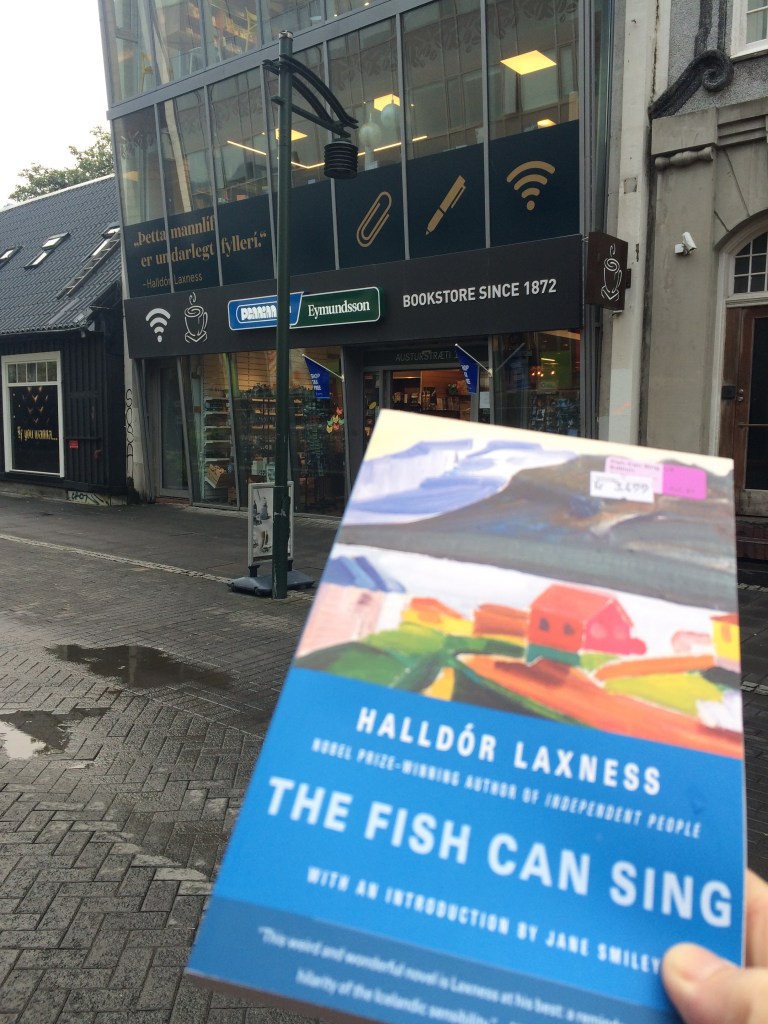
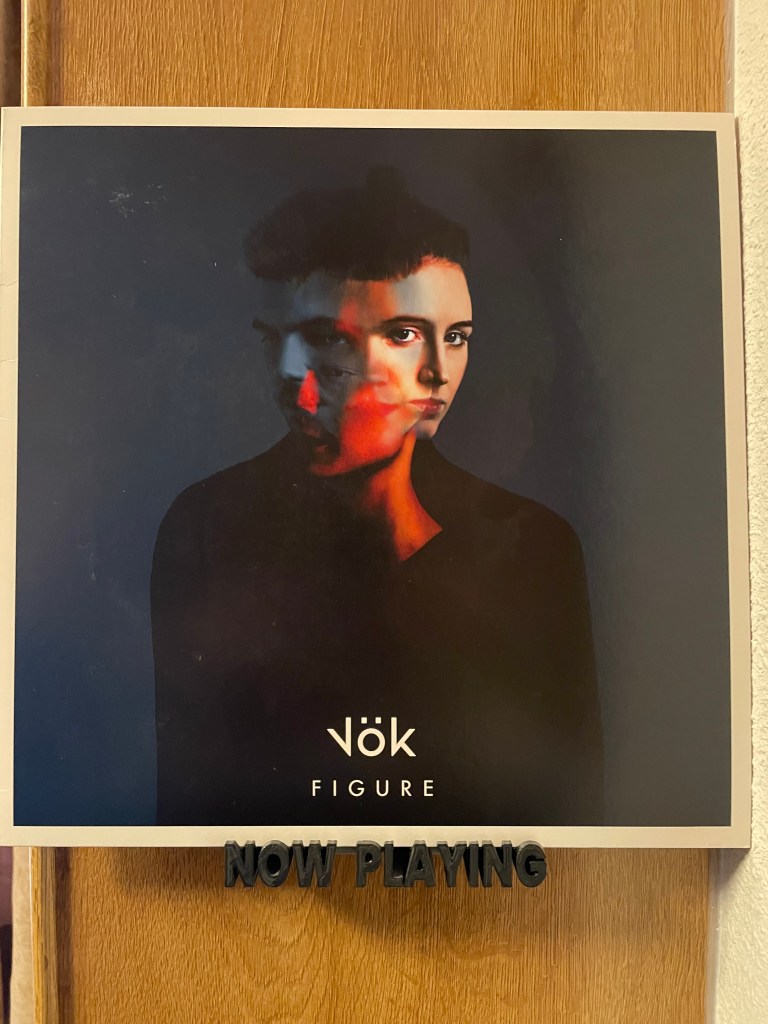
I headed back to my hotel and spent the rest of the day working, then wandered off, back down the main street to find the Bastard Brewery, shamelessly drawn by the amusing name:

I liked Reykjavik.
It had – typical of an outpost on the edge of human life – the open-minded vibe of a place where people did their own thing and didn’t much care if you approved or not. It was like a freezing Key West, but with burly Vikings and four-wheel drive vehicles.
As much as I liked the cool vibe, I felt frail and exposed. I was aware that I could not survive here outside of houses and heating, I was too used to a gentler climate. This made me humble, the bleakness of the snow-capped hills across the bay, the looming winter, the chilly wind blowing up the main street, all made me realise how small and helpless I would be if I weren’t protected.
There is something intriguing about life on the freezing margins, and I imagine spending a winter somewhere like this, in a centrally-heated triple-glazed apartment, where I could focus on writing … but I only had a couple of days so I went to have fish and chips at Reykjavik Fish (more service-with-a-shrug, but the food was good) …

… and climbed to the top of a pointy church …

To see the views …


Due to awkward flight times and multi-leg journeys back home, I had one last night in Iceland on my own. At first I was thrilled by the freedom of walking down a busy Bankastræti, the evening breeze surprisingly gentle and warm. The locals wore t-shirts, some even wore shorts, taking advantage of the mild temperatures. I walked around and eventually found some live music: a bookshop by day that became a jazz bar at night, but in typical Icelandic fashion it was expensive to even get anywhere near the stage, never mind buy a drink. I was on my own, so paying big bucks to squash on the end of a crowded table didn’t feel like a sensible thing to do.
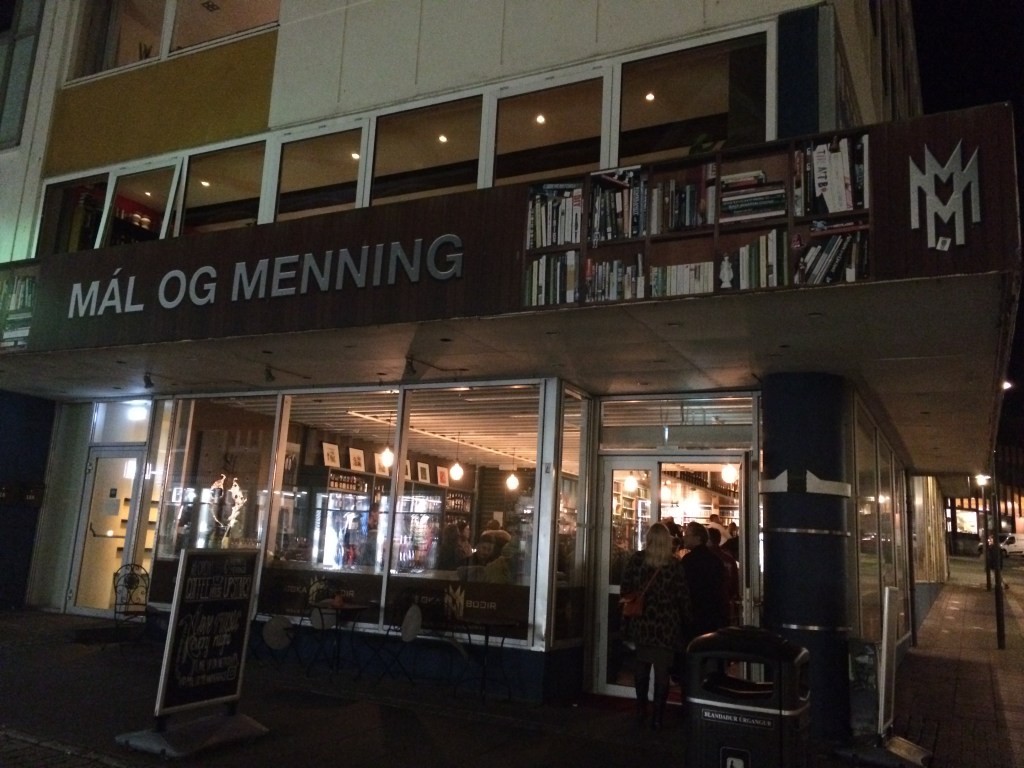
I hung around on the edge (where it was free) and then, feeling unsure what to do with myself, I wandered back outside. There was a street with a few busy gay bars on it, that, were I not a married heterosexual, might have offered some diversion. Despite travelling regularly, opportunities for sexual encounters are vanishingly rare. I assume this is explained by me radiating a lack of interest, but then opportunities were similarly rare before too … looking at my track record over years of travel, there was one time in Paris, the day the new Beaujolais was out and we were all knocking it back in a bar near St Lazare, when I reckon I’d have had a chance had I made a move; there was being propositioned by a lovely prostitute in Ghana who tasted of black tobacco when she kissed me; and once a Russian woman smiled at me in Brussels.
That’s all I’ve got, and those examples are all at least a decade old.
So, I decided to go back to my hotel, I had a very early start the next day.
The journey home
I got to the airport too early to register what was happening. My brain was a cloud of fatigue, and I checked in and rushed through security on autopilot, focused solely on getting coffee as soon as possible … but it was too early, there was nowhere open in the spacious and chilly departure lounge.
Eventually someone somewhere noisily raised some shutters and opened a café that specialised in small tepid coffees and half-defrosted muffins. Desperate, like a parched man finding an oasis in a desert, I went for whatever they had and then felt immediately sick. And cold, the wide-open spaces of the airport terminal didn’t lend themselves well to being heated. I went to sit near the gate and read my book (Desmond Bagley’s Running Blind hastily downloaded on to my Kindle because the action occurs in Iceland), but my eyes closed and I snoozed.
I tend to arrive early for flights, reasoning that I might as well be kicking my heels in an airport as kicking my heels anywhere else, at least I wouldn’t miss the flight. Others take a different view, and believe in minimising time in airports, absorbing the risk of missing the occasional flight. Sometimes this is dressed up as being so dedicated to work that you stay as long as possible in a productive environment (the office) and spend as little time as possible in an unproductive environment (the airport).
I can try to justify my approach through logical reasoning, but really it’s a personality preference: I’d rather be early and keep things under my control than be at the whim of traffic or queues or whatever other external factor that might get in my way and impede my progress. If I stayed in the office or my hotel room until the last minute, I’d only be distractedly worrying about missing my flight so I’d be unproductive anyway.
And anyway, I’ve never minded airports. I don’t enjoy flights, but I like the buzz of travel and the space to chill and watch the world go by without the pressure of normal work and home life.
Sometimes we all need a break.
My British Airways flight (via London) was called and I stretched and got up, ready for another queue … Iceland had been fascinating, and I desperately wanted to come back one day and explore it properly, but at that moment, I just wanted to go home.
- Their bleak moody electronica is rather gorgeous, and has sufficient melody to keep you entertained throughout the album – definitely recommend. ↩︎
 MrJohn