Having had a thoroughly good time in our walk from One Side of Madrid to the Other, Marietta and I set out again on another exciting walking adventure in our adopted hometown. This time it was trying to stick to green spaces (and convents if biscuits were involved) through the central area of the city, discovering many parks and gardens rarely visited and barely known … did we make it? You’ll have to listen (or read) to find out.
Here’s a link to the post with photos for those reading this via the podcast feed.
The podcast version (can be found on all usual podcast providers) is with Marietta Sandilands, my fellow adventurer (who also has a podcast called The Good Fit Podcast that I thoroughly recommend).
I once heard that Madrid was Europe’s greenest city.
This could be nonsense, because I also once heard that Roundhay Park in Leeds was Europe’s largest urban park. It isn’t. Europe’s largest urban park, according to Wikipedia, is the Forest of Fontainebleau in Paris (at over 60,000 acres it just sneaks past Roundhay at 700 acres). I was hoping the largest might be Madrid’s gorgeous Casa de Campo park, but that only clocks in as Europe’s 13th largest at just over 4,000 acres.
Oh well, so much for facts.
When I Googled it, Helsinki came out as the greenest, Sarajevo had the most trees per capita, and Valencia topped the green charts for Spain.
Whatever … Madrid is still fairly green, and has some wonderful parks and gardens, some historic and famous, others hardly known, lost in plain sight to the zillions of tourists who traipse around the city every day, and many lost even to us locals.
Cities are like that: they’re complicated and contradictory, and they change over time. Mistakes accumulate, but so do successes, and this grizzled old place certainly has its mix of lovable quirks and follies, its good points and its awkward corners … yes, I’m still talking about Madrid.
Today’s urban hike attempts to connect a few of these parks and gardens together – sticking to green spaces as much as possible in what we are calling The Madrid Central Garden Route, or, because that’s not a very good name, The Madrid Parks Trail (Central Division) … or maybe we’ll think of something better later because that’s also a crap name.
This time there are five of us at the start.
Marietta’s online fitness activities have attracted other people who want to combine social activity with exercise and exploration before heading back to their home office.
This is all very well, and as sociable and nice as I am in my own little way, I am not mad keen on meeting new people – let’s agree to classify my social anxiety as a lovable quirk.
I go along with the plan because I think it’s healthier to be open to other people rather than shut myself off in my own little introverted world, because “meeting new people” is the sort of thing everyone says you’re supposed to do, especially if you want to avoid dementia.
It’s complicated, because the new people in this case are very nice and I like them, and I want to connect, but I feel self-conscious and apart, and I hang back, unable to be myself without over-thinking how I’m supposed to do it. The real me is left dangling, in plain sight but feeling a bit lost, asking what I’d do if I were me.
Atocha Station’s botanical gardens
We agree to meet at the indoor gardens in Atocha – unfortunately they’re inaccessible to the public at the moment, roped off with “no entry” signs, the tranquil ambience of this lovely green space marred by the cacophony of pneumatic drills rattling away in the background.
I snap a few photos and we head off.
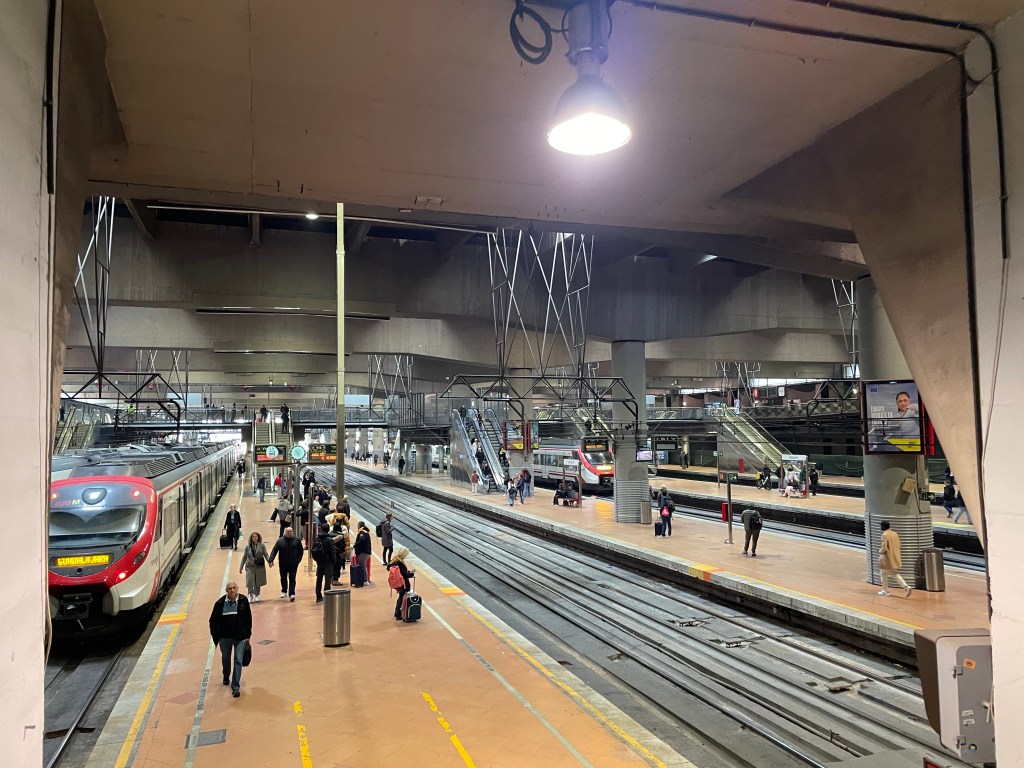
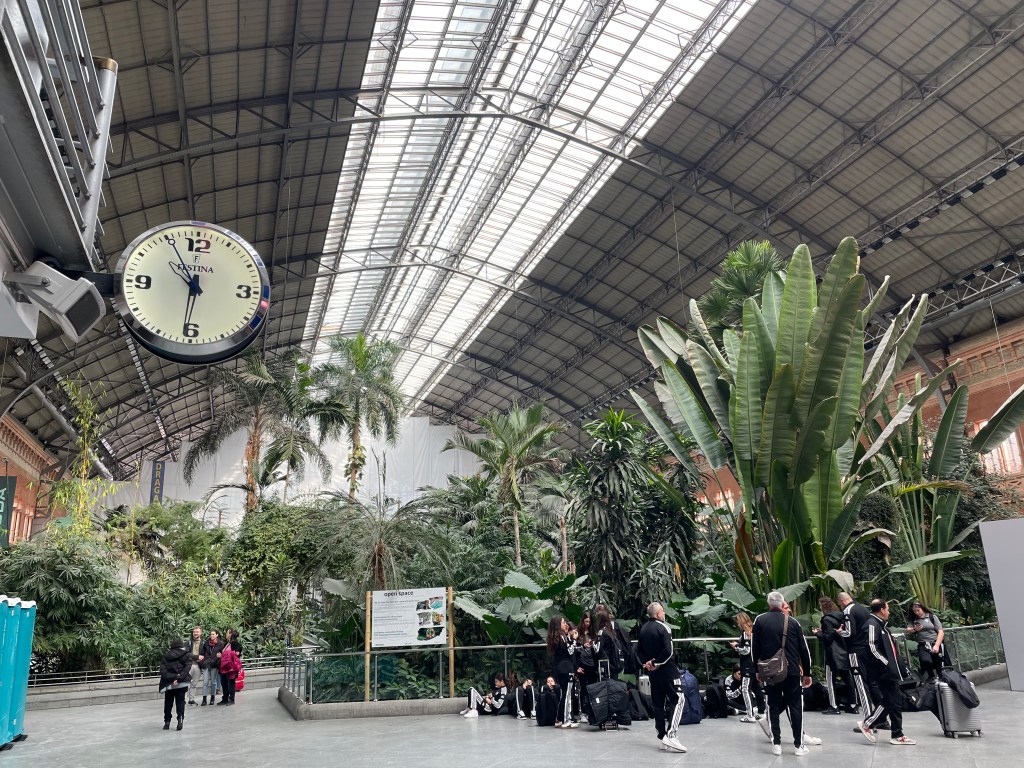
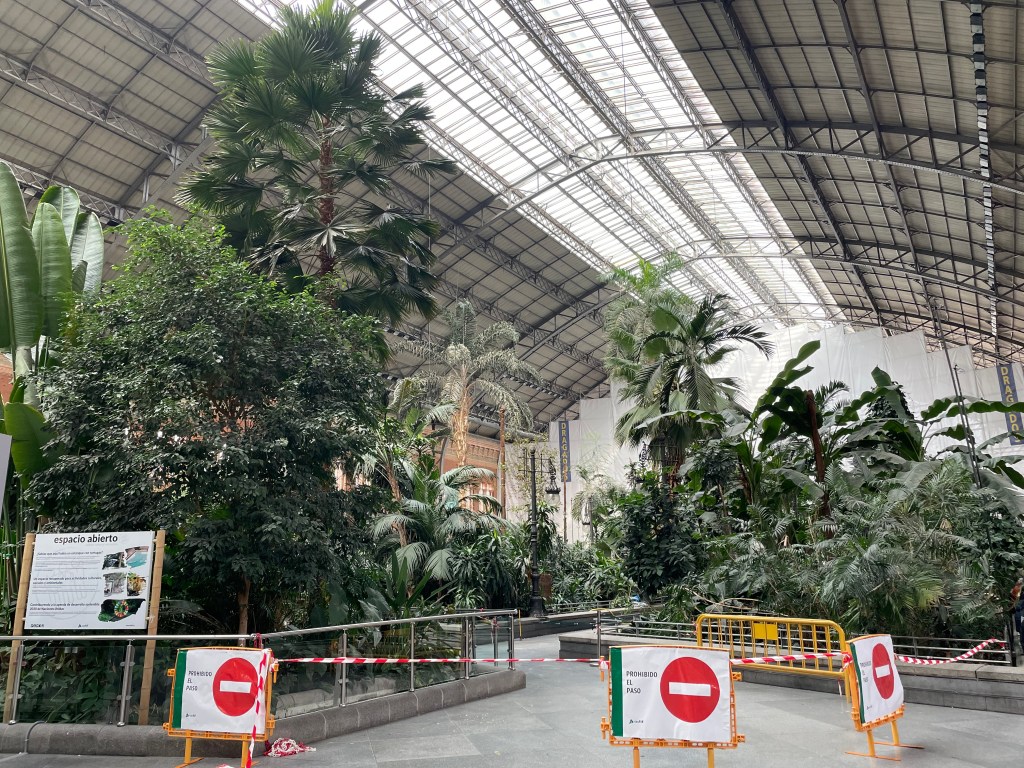
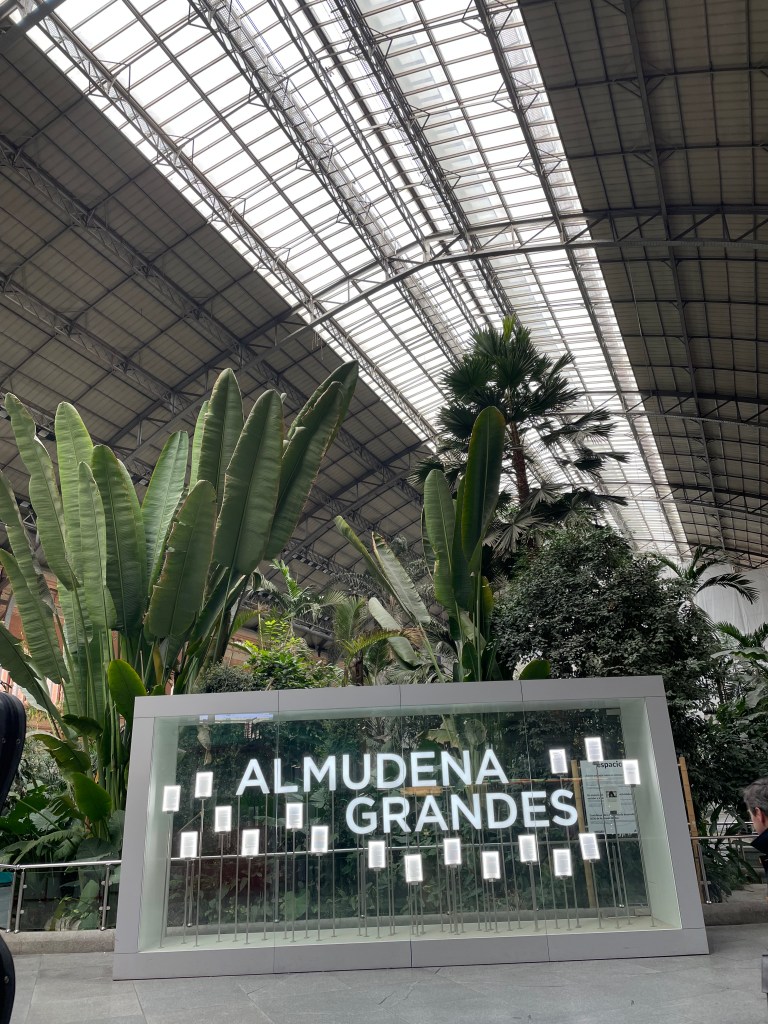
Atocha is Spain’s biggest and busiest train station, and the oldest of Madrid’s terminals. Its full name is now Puerta de Atocha–Almudena Grandes since the woke lefties decided to controversially name Madrid’s two main stations after women. This was controversial and definitely woke because railway stations should be named after men, like Madrid’s old Estación del Norte which was re-named in 1995 to Príncipe Pío in honour of the Italian aristocrat Francisco Pío de Saboya y Moura.
Most stations in Spain are – like most men – functional rather than beautiful, but the old Atocha building is one of the few that is actually attractive. Attractive, but also way too small, and so since the 1990s the long-distance trains have gone from a newer, much less attractive, extension, and the local trains from an even-less-attractive underground shed, tacked on to the side.
The good news is that this freed up the nice bit to be converted into this concourse containing shops, restaurants and a botanical garden – even if it is closed for renovation or whatever it is you do to a garden with a pneumatic drill.
We march off, trying to find our way out through the murky corridors and maze of shops. I hang back a bit, masking my silliness behind the task of taking photos.
We emerge across the road from the station, and head up toward the Botanic Gardens and Retiro Park – this is when I suddenly remember to put Strava on, hence the map at the end misses out the first bit inside the station.
We give the Botanic Gardens a miss, it’s €4 and it’s February, so doesn’t look too exciting to our untrained eyes – rare species of plants hold little fascination for me at the best of times.
We can see a lot of it through the railings anyway, including a school party of teenagers, ignoring the fancy plants, more interested in each other and their phones. It reminds me of my old school trips when our teachers would gamely try to get us interested in things like caves or wool mills or limestone pavements and we’d play along because it was better than lessons, but really we were more interested in mucking about and trying to impress each other than we were in old factories or rock formations.
Parque de Buen Retiro
We skirt the edge of the Botanic Gardens and head up into Madrid’s most-famous park: Parque de Buen Retiro, or just El Retiro for short. This 350-acre park (half the size of Roundhay, just saying) is an old royal hunting patch, made public in 1868. It is a very popular tourist spot and must be familiar to everyone who visits the city, but despite that, and despite my own familiarity with it, it still has lots of hidden corners I don’t know.
We stay at the quieter southern end, and end up in the rose garden, with rows of beautiful blossom trees. It’s early for blossom, but this winter has been unseasonably warm again. It’s almost as if the climate is changing, which, if so, you’d think someone would mention so we could all work together in harmony to do something about it.
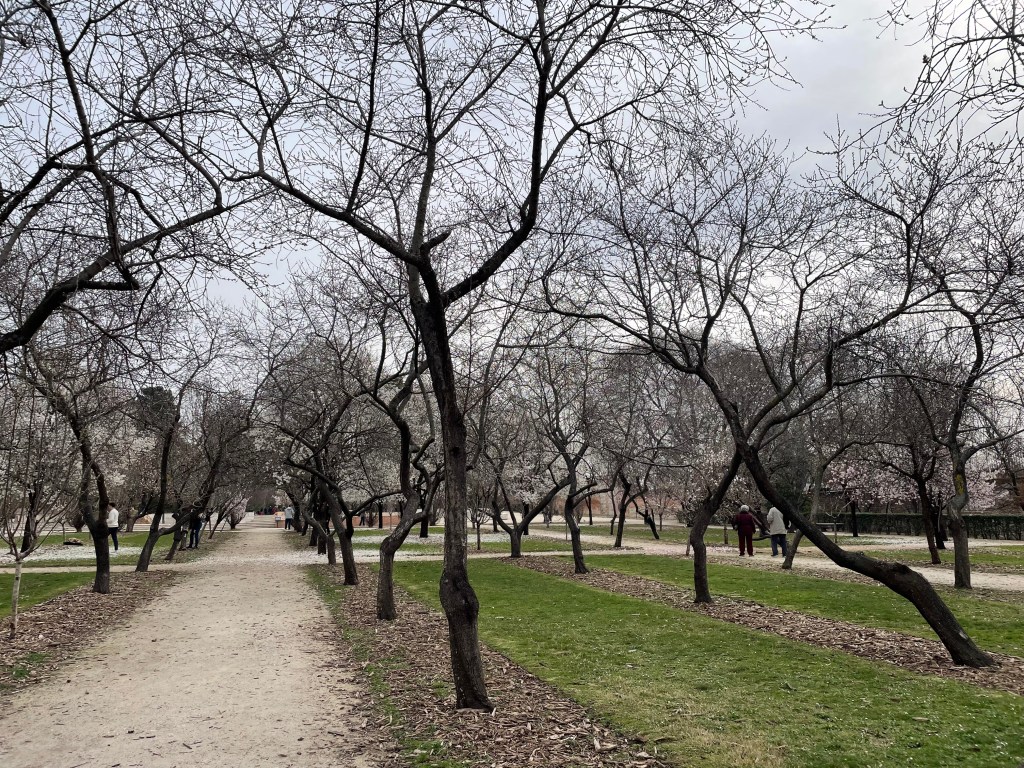
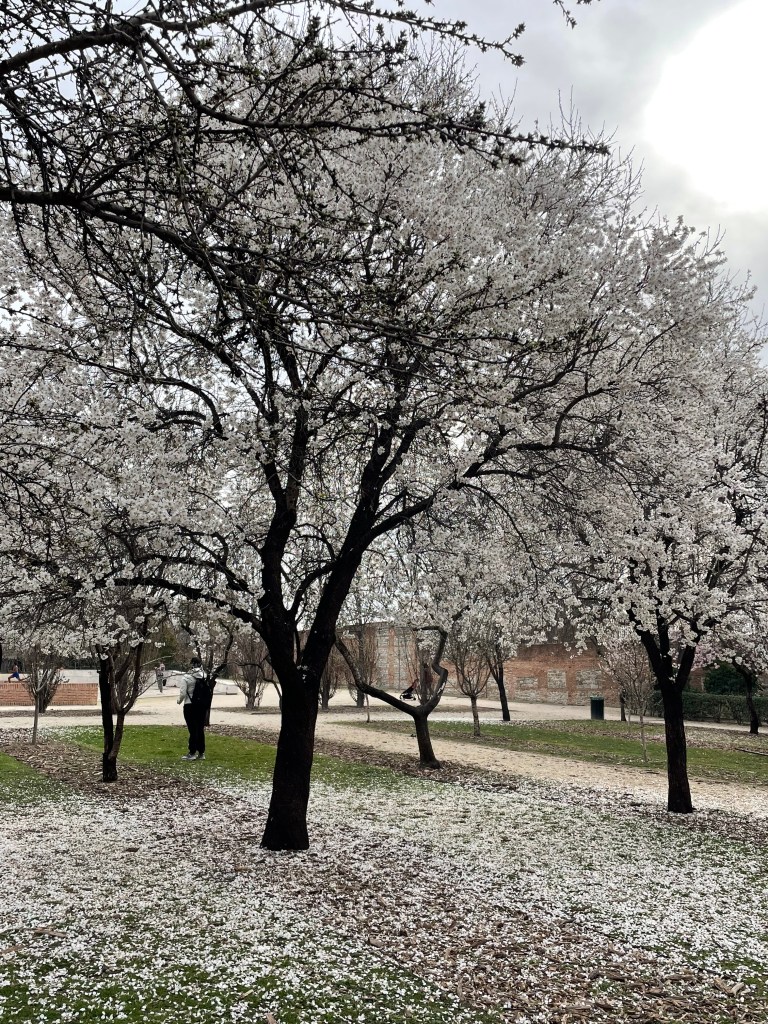
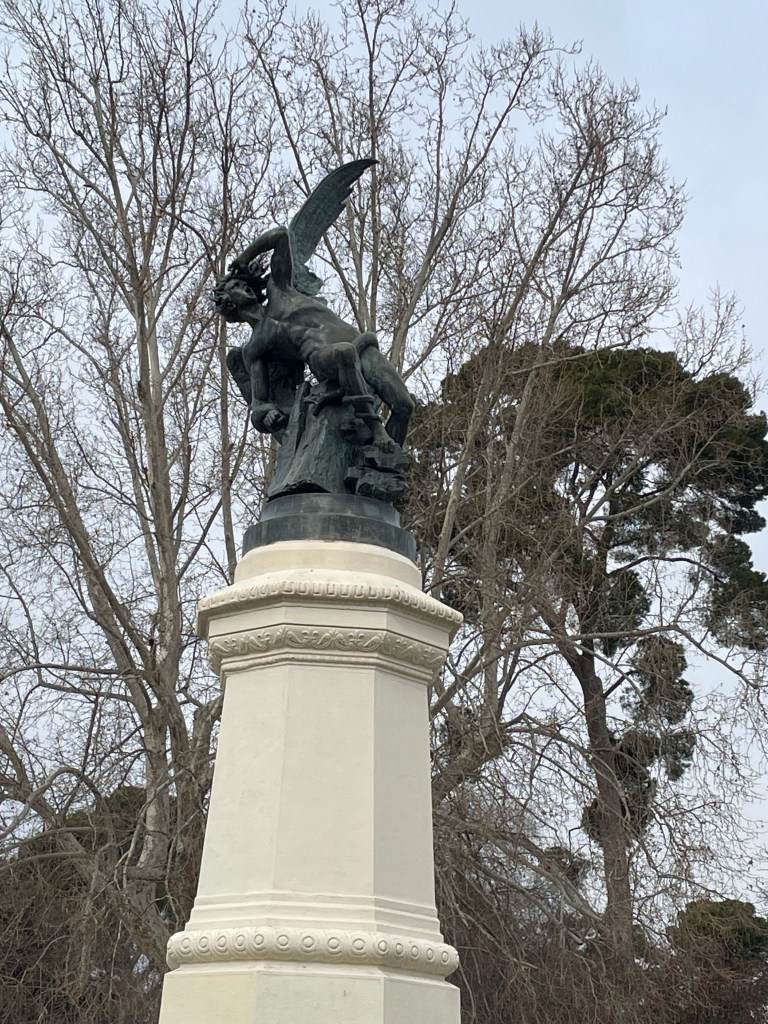
We carry on up to the statue of the Fallen Angel, supposedly the only proper statue of the devil in the world. It sits at exactly 666 metres above sea level which makes it a surprisingly amusing addition to a royal park for a catholic country. The prize-winning statue, inspired by Milton’s Paradise Lost, was created for the National Fine Arts Exhibition in 1877 by Ricardo Bellver, and has been in the park since 1922.
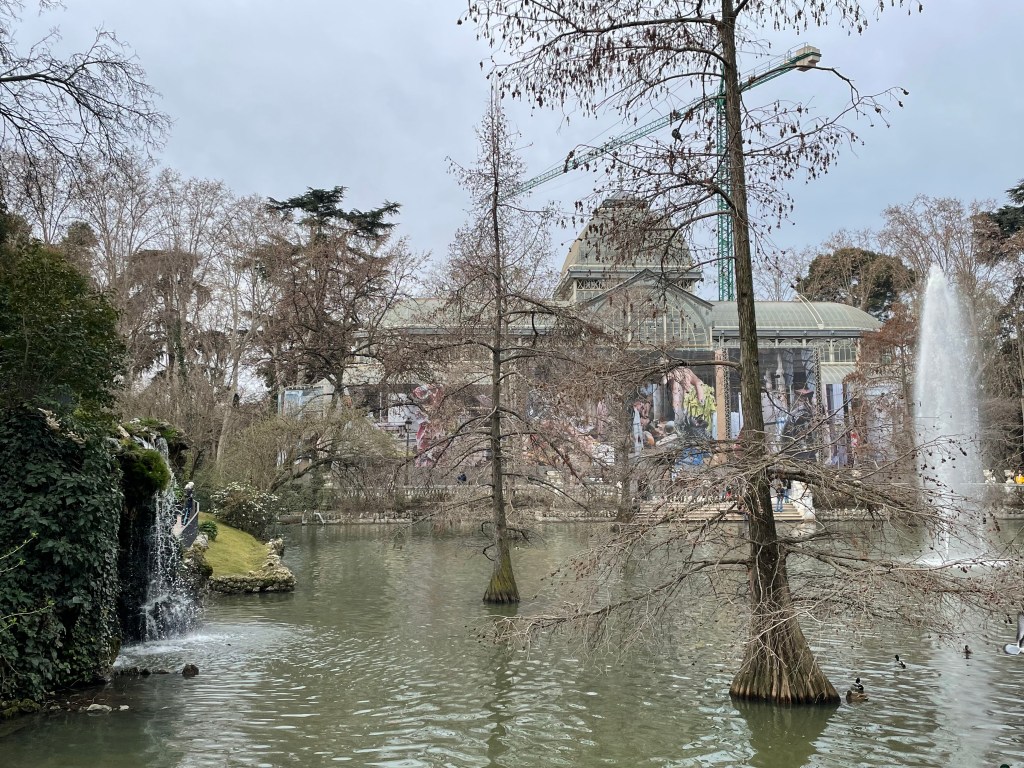
We scoot up to the Palacio de Cristal (Crystal Palace) which is closed for renovation work, noisy drills making their second appearance of the day. We walk around the lovely little lake in front of it, and, squeezing past tourists, take a few snaps …
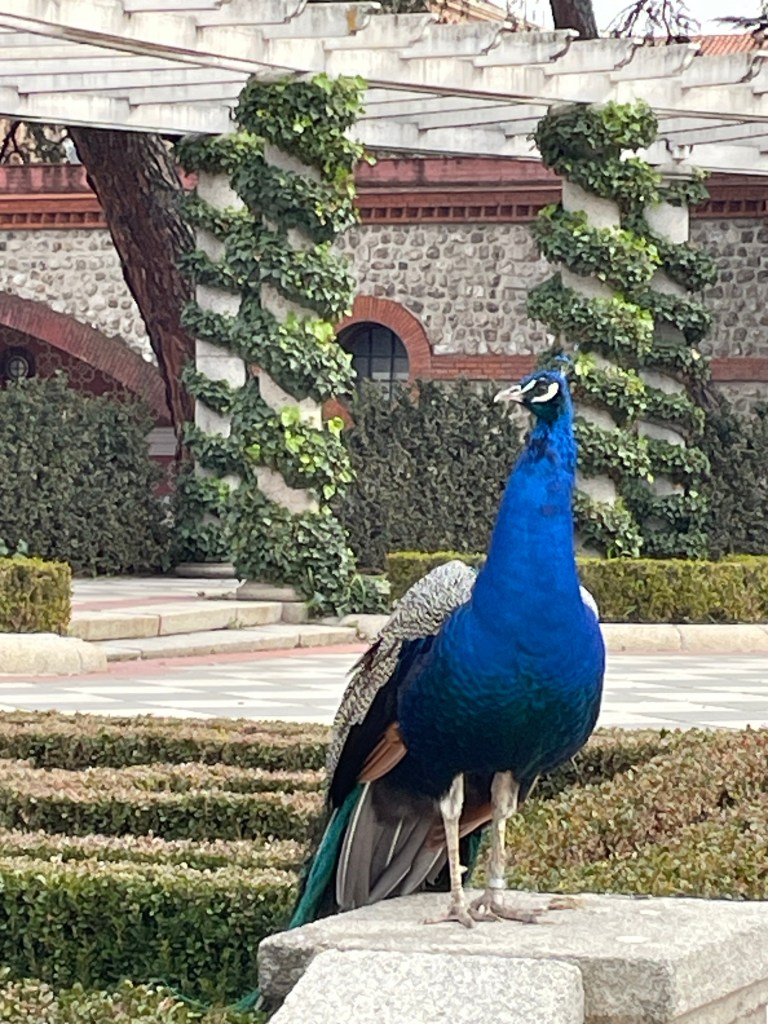
… and head off to the Jardines de Cecilio Rodríguez, the peacock-heavy gardens on the far western edge dedicated to a gardener who bossed this park back in the day. Don’t worry, he’s a man, so it’s not woke to name it after him.
There are peacocks everywhere, some displaying their fancy tails whenever they spot a peahen. It doesn’t seem at all embarrassed to be caught in the act of so obviously displaying, I’d be beet red if someone spotted my clunky attempts to flirt! The target peahen is completely disinterested, and I nod a little empathy in his direction … I know the feeling fella.
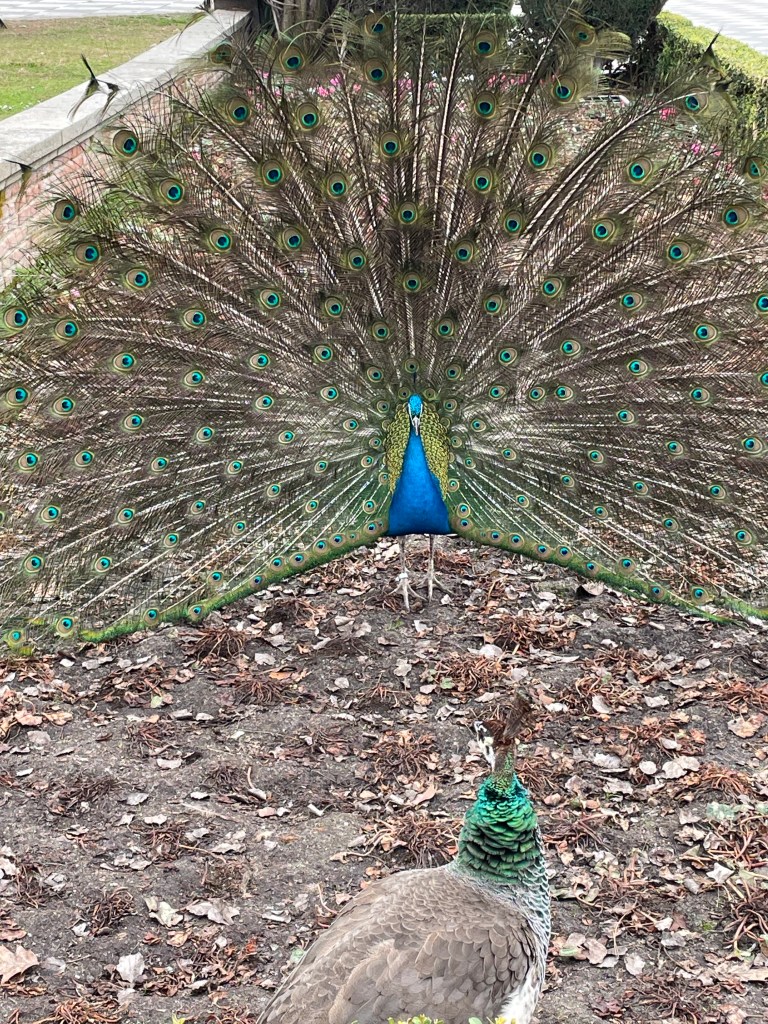
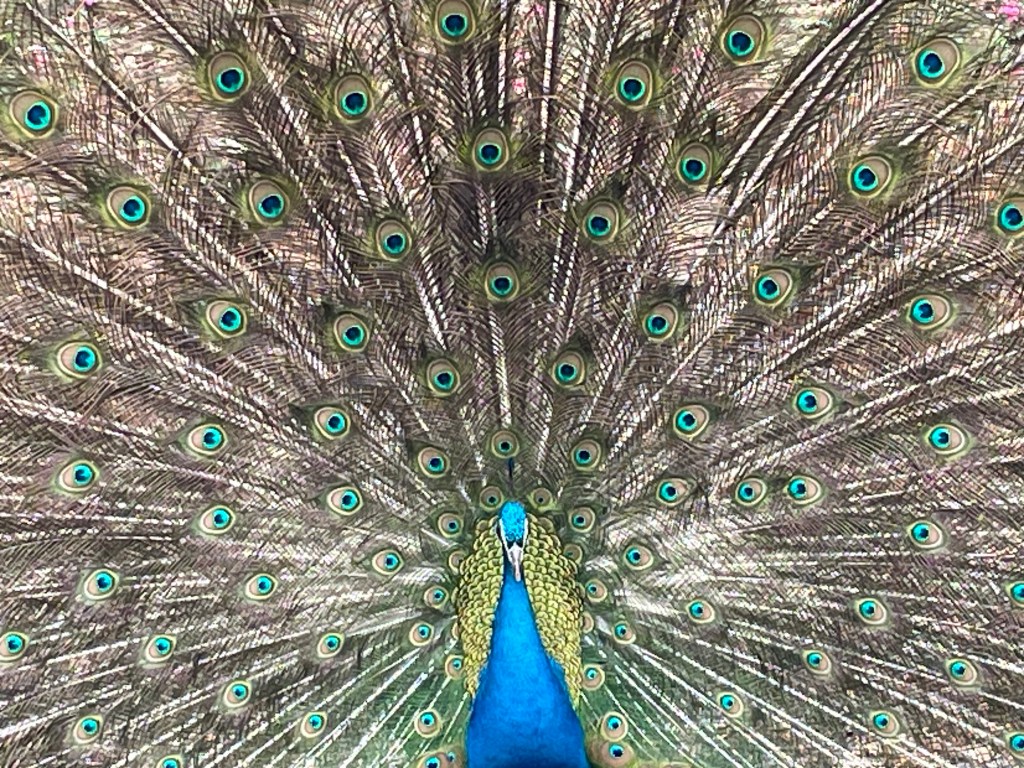
Another “fact” that’s probably wrong is that humans are the only animal where the female does the display thing, and the male is the dowdier figure. I am not so sure this is quite so simple, perhaps it’s more that women’s display is more linked to their bodies, whilst men’s is more to their status (the car being the most obvious proxy1)?
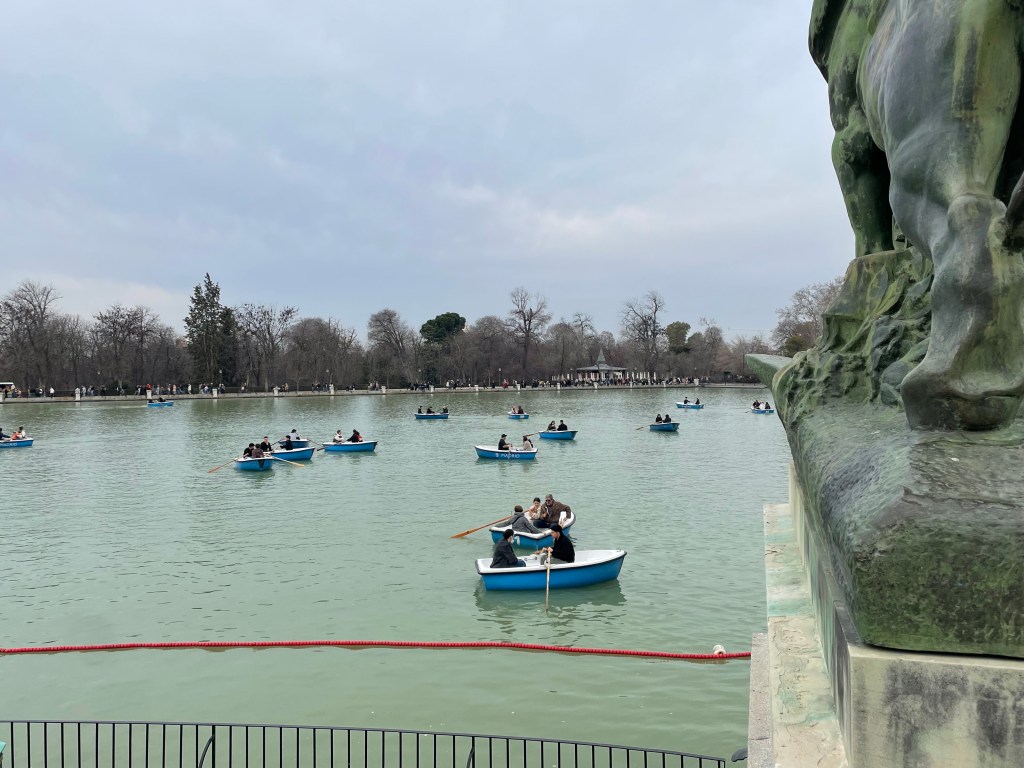
We make our way to the top of the park via the boating pond, probably the most well-known bit of the park. The area around here gets packed with book stalls in May and June during the excellent Feria del Libro – a bibliophile’s dream – but for now, this sunny late Friday morning in February, it is fairly quiet.
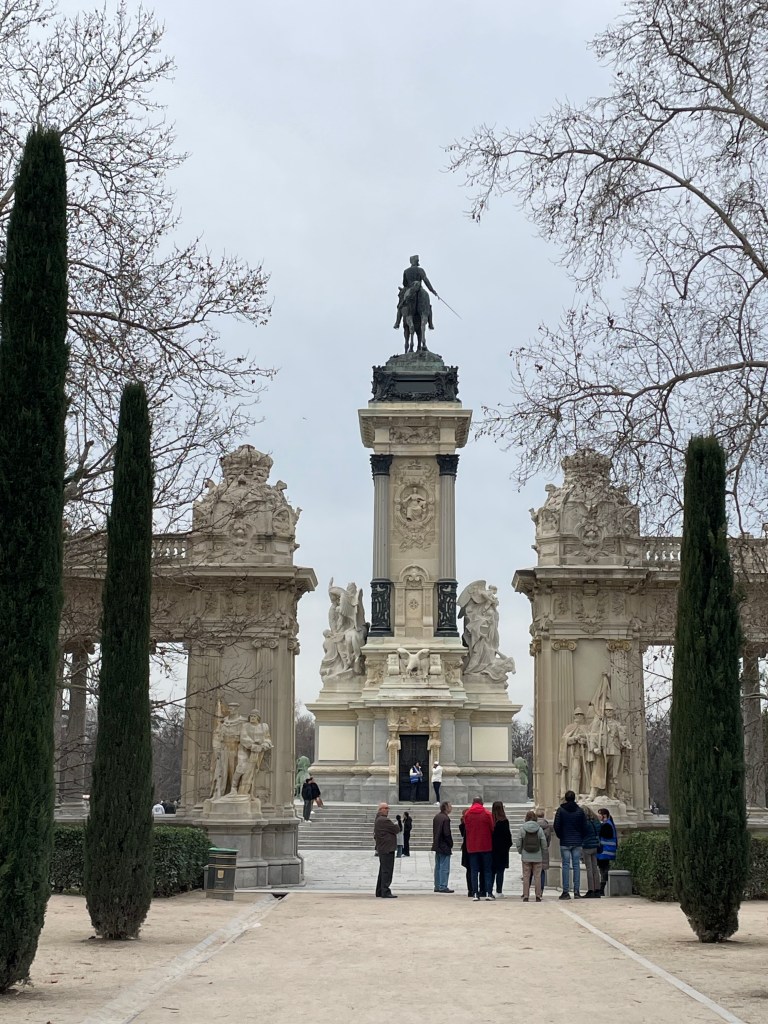
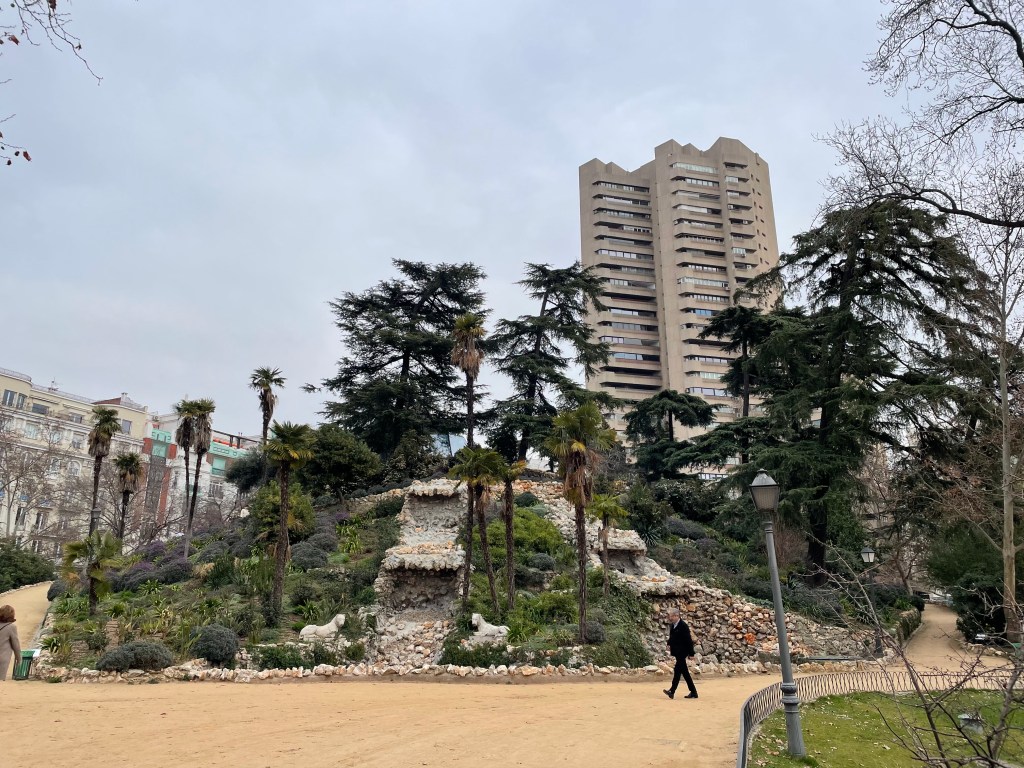
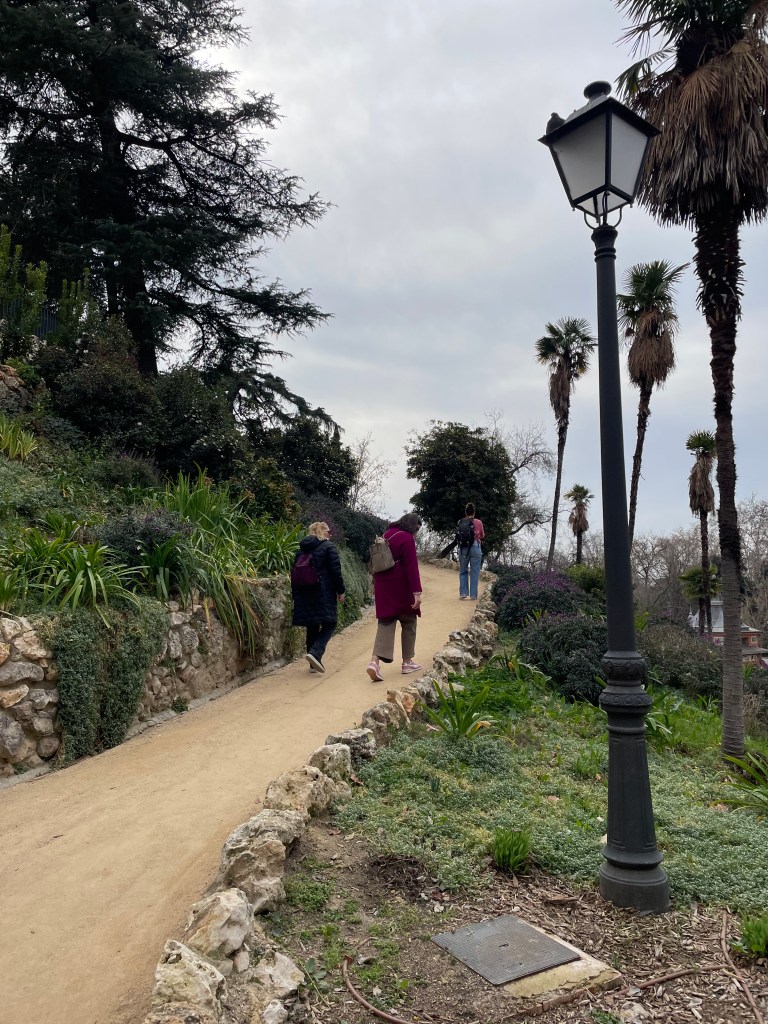
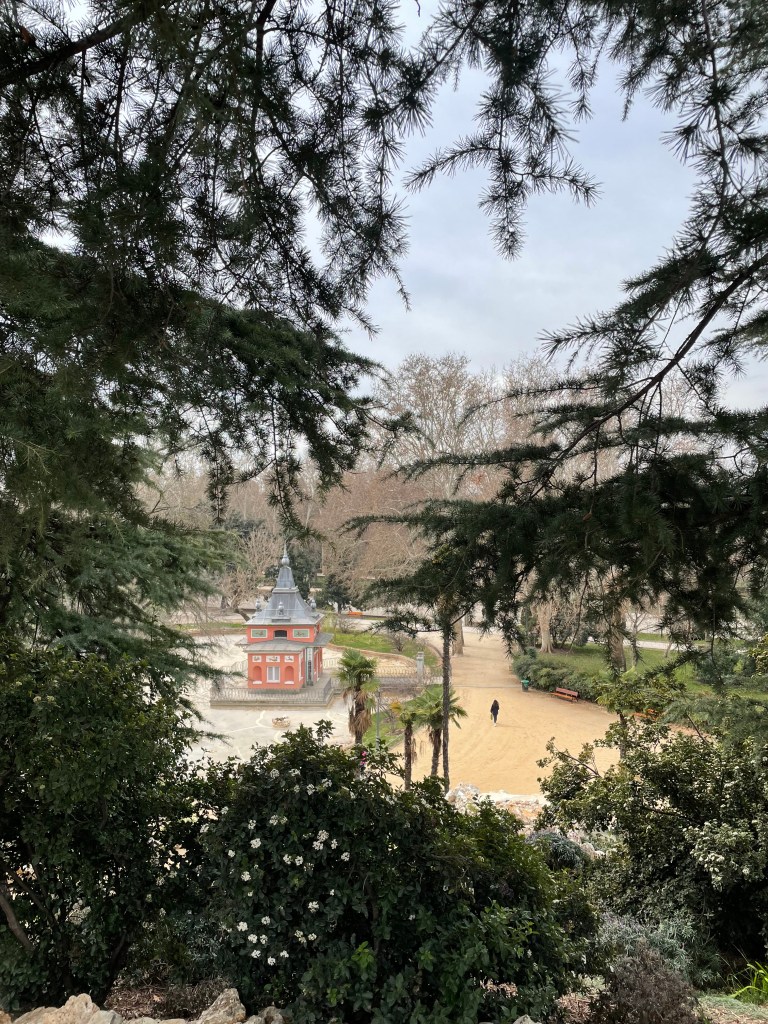
We wander on and climb up the artificial mountain in the top-right corner to get a selfie and speculate over the house prices for the apartments overlooking the park. Then most of the group disperse, back to their day jobs, their flicker of social exercise complete. This is sad, because I now really like them and want them to be my friends. Oh well, it’s now left to us elite hardcore adventurers to carry the torch of hope and complete the mission.
The old Habsburg Centre
The next stop is the nuns at the Convento de las Carboneras del Corpus Christi, another hidden oddity of the city – although not so much a park, more of a convent. You press the buzzer at a side door to the convent and are allowed in to buy their famous biscuits and cakes. The problem is that they close at 13h and it is now 12:40 – we’d started late and dawdled around the park as we discovered new things and waited around to get pictures of the peacocks with their fancy tails on display, so we are now very likely to miss the nuns.
According to Google Maps, it’s 40 minutes walk away:
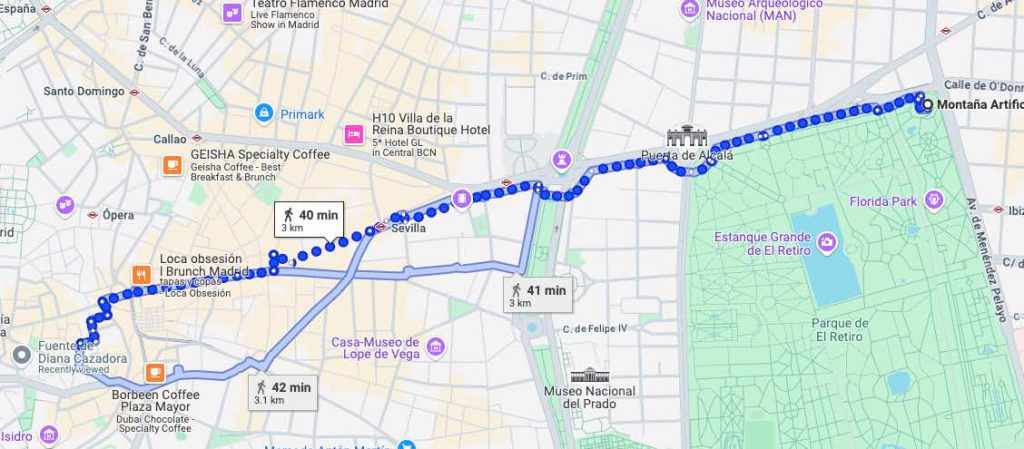
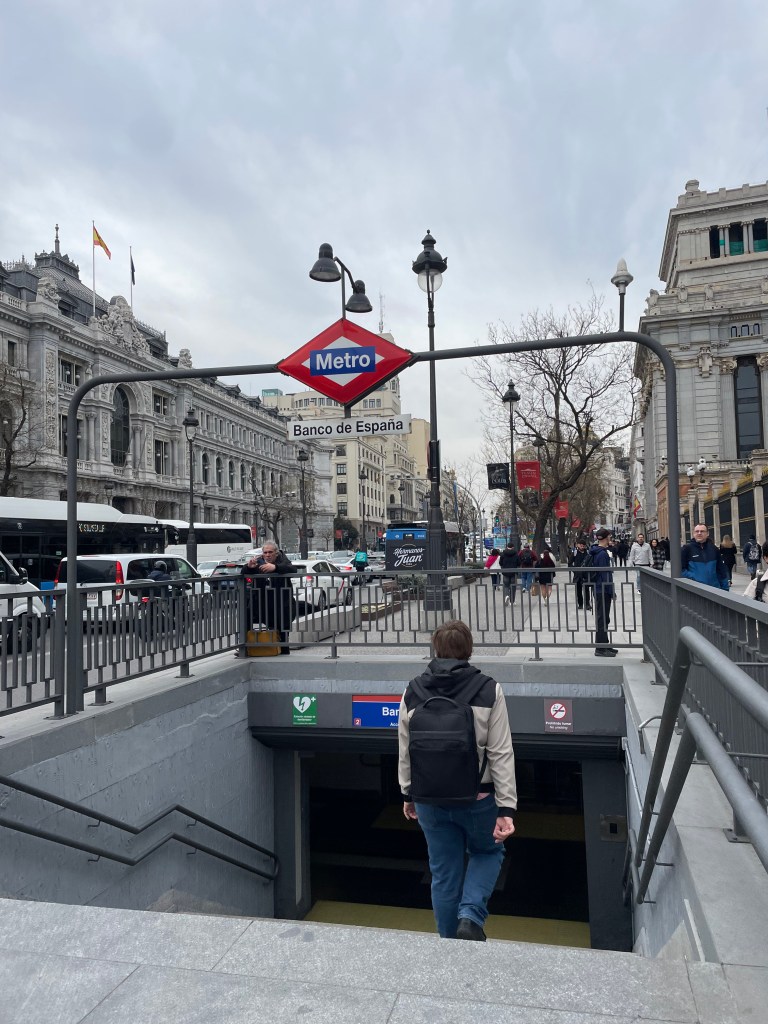
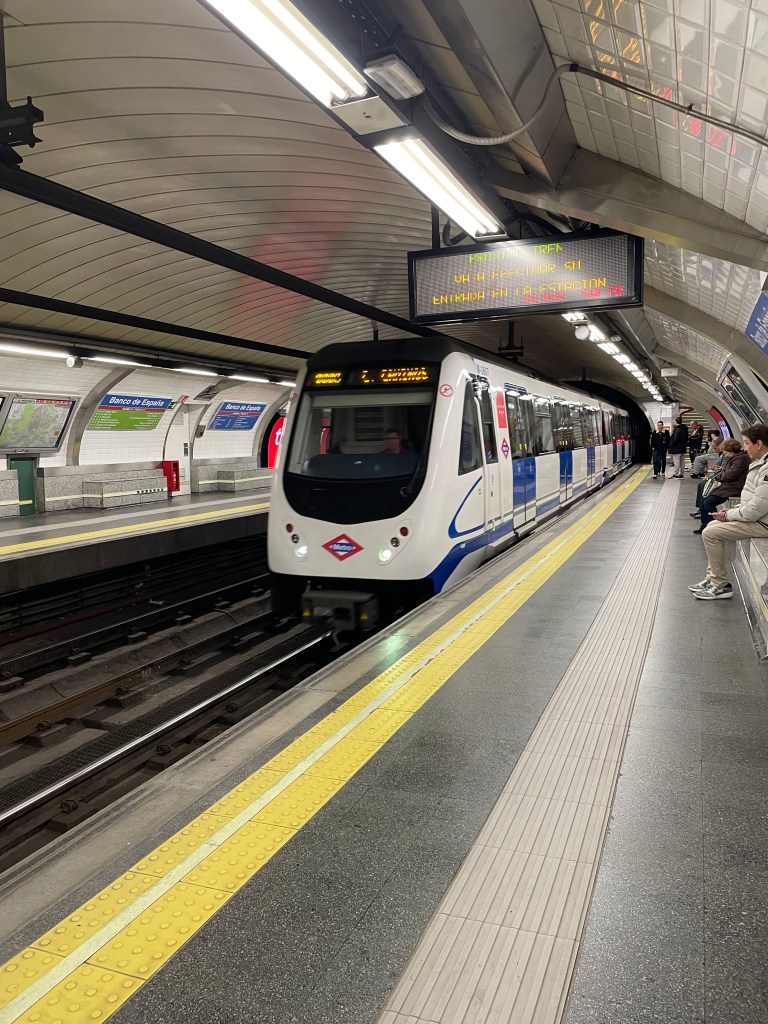
The walk between Retiro and the nuns is all urban streets down familiar territory, so a public transport option might be just about permissible, and so with 15 minutes to spare, we jump on the metro at Banco de España and get off at Ópera, rush the 9 minutes up and down (mainly up) a maze of ancient streets, and press the buzzer at 3 minutes to 1pm.
The door opens and most of me steps through. Unfortunately my head doesn’t, its passage impeded by a plank of wood forming the door frame. I spend the first few seconds inside the convent shouting “fucking bastard” and rubbing my aching head.
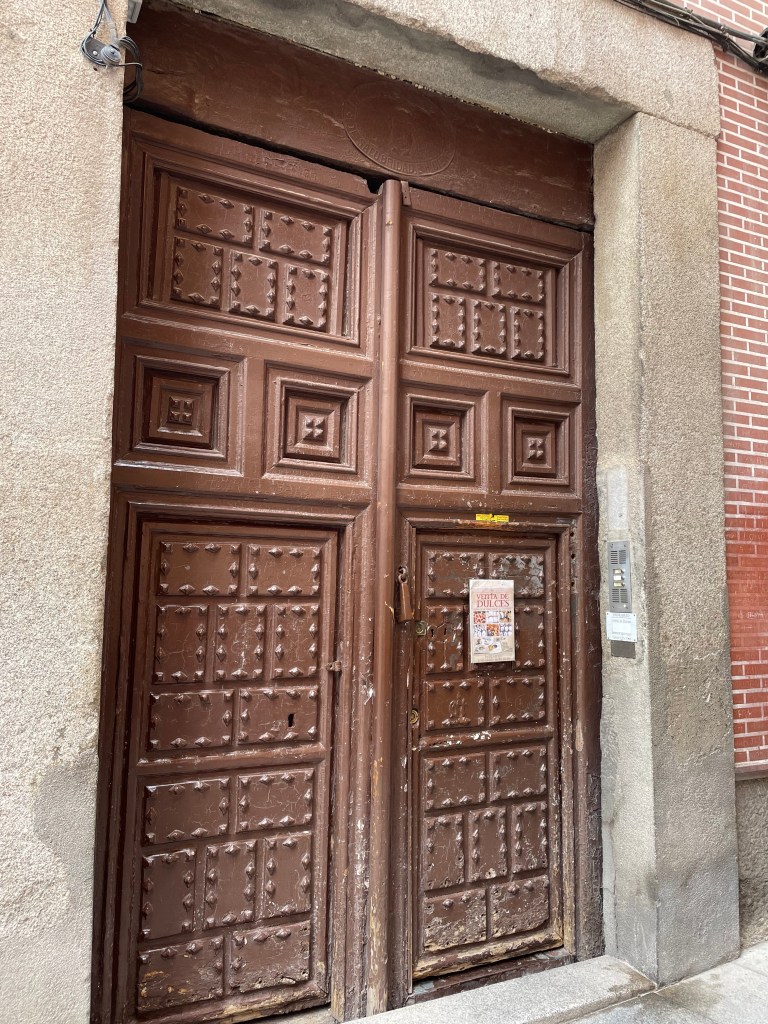
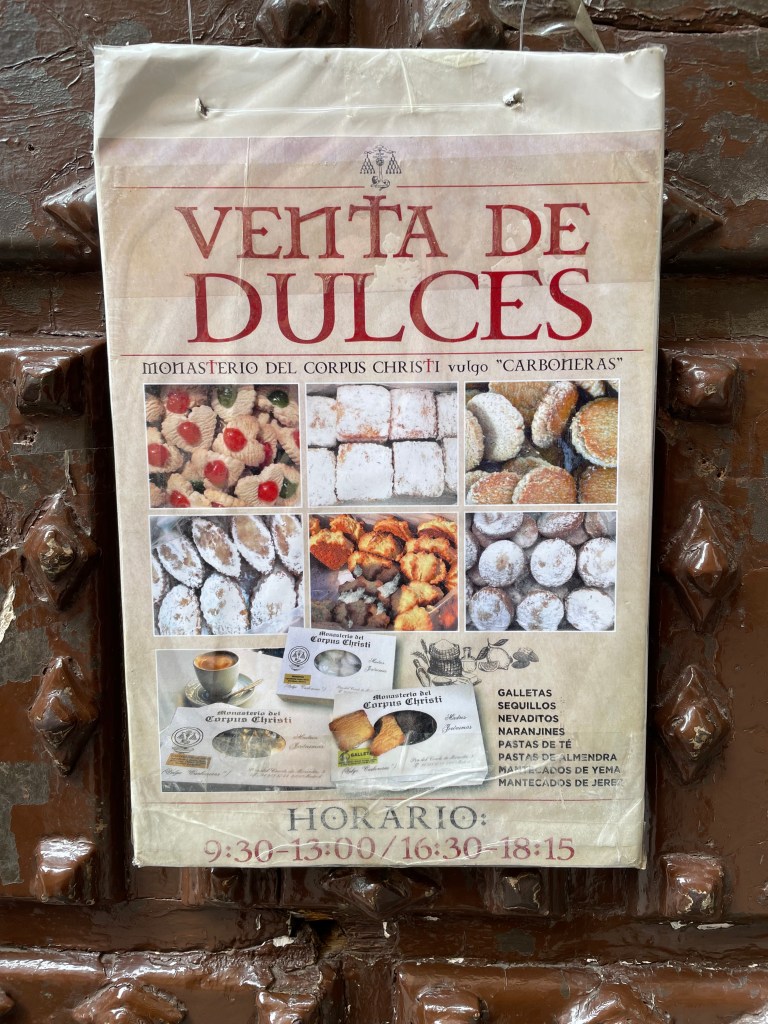
We walk on, into a little courtyard, through another bit of the building, and another courtyard before we get to the tiny room with a lazy-Susan-type-thing where the sales happen. The nuns live behind closed doors, so we don’t see them and they don’t see us, the transactions are made by shouting and putting your money on the thing, and waiting while they spin it around and the packet of biscuits appears.
We choose naranjinas, expecting some orange-flavoured biscuits, thinking they’ll maybe be a bit like a crispy Jaffa Cake.
“No hay naranjinas“
All right love, keep your hair on, you might be a nun, but let’s remember who’s the customer here …
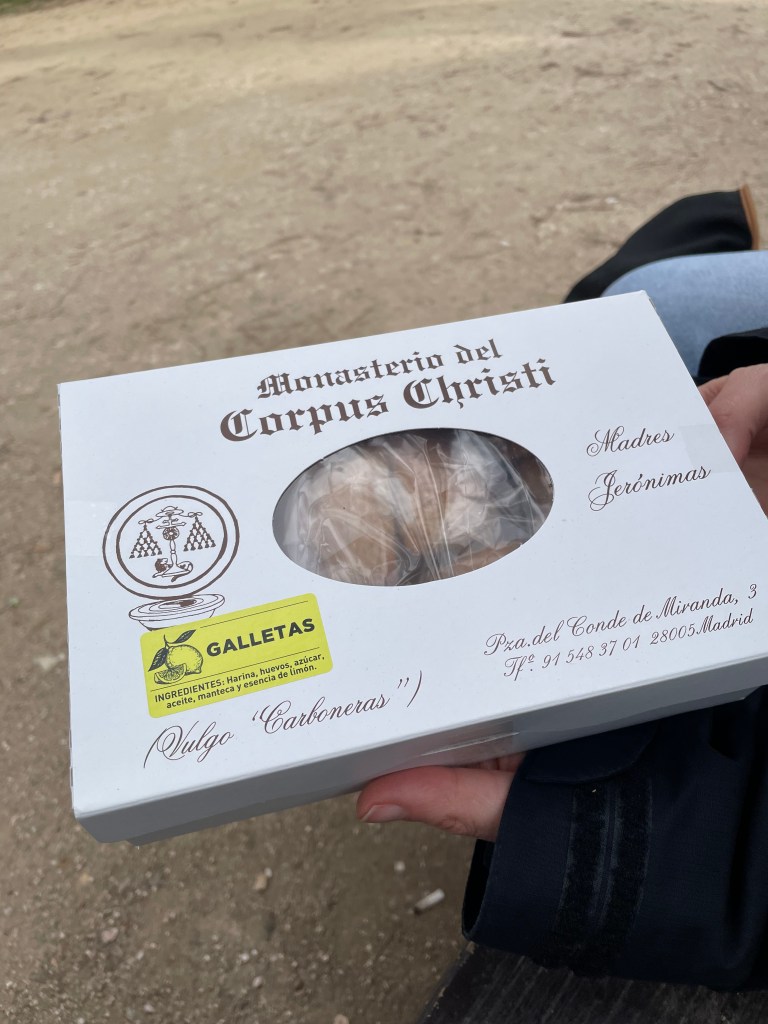
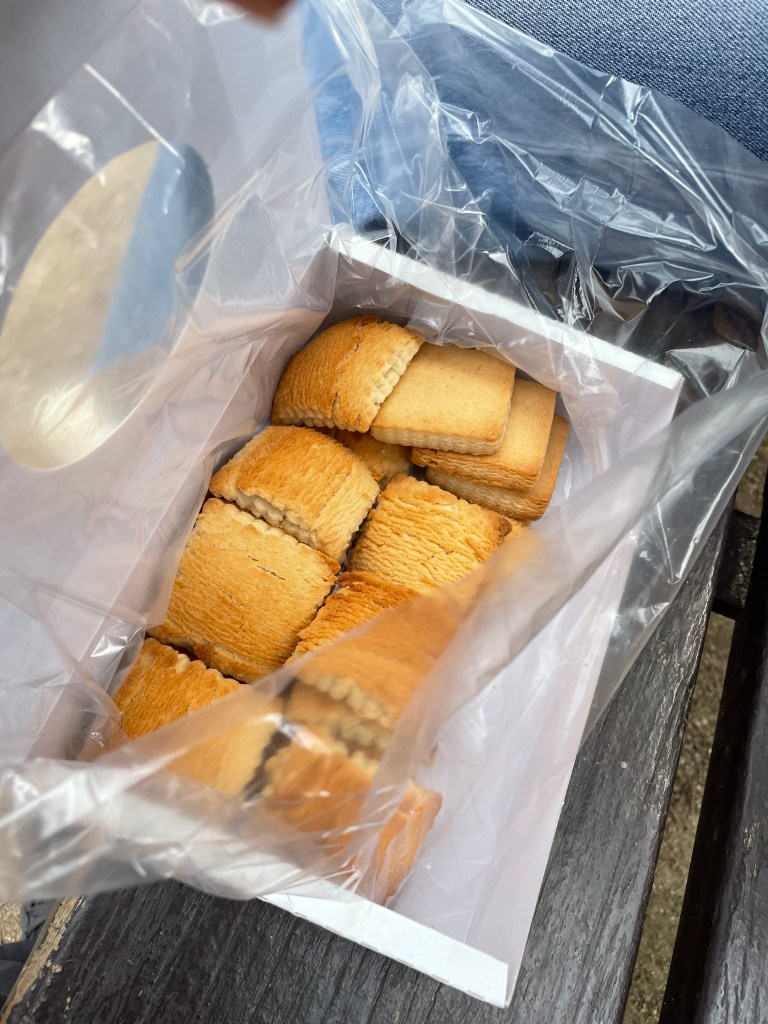
We choose the standard “galletas” (biscuits) that have, according to the list of options, a hint of lemon. This choice is more because there is no way we are going to choose crap like polvorones or pastas de té, and feel under pressure by the ticking clock to let the nun shut up shop and head off for lunch.
We exit, me ducking down to avoid further cranial damage, and head off down Elbow Street to the oldest square in the city (Plaza de la Villa), cut through a couple more streets to find Huerto de las Monjas, a garden hidden in anything but plain sight – down some steps, under some flats and behind the tax office.
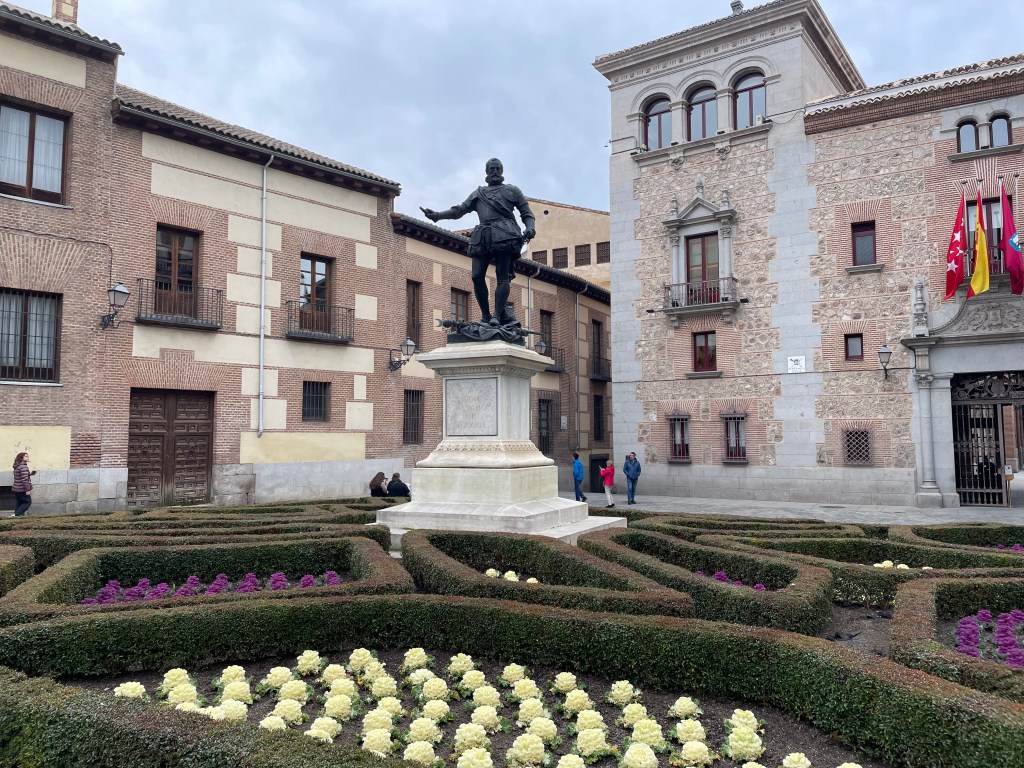
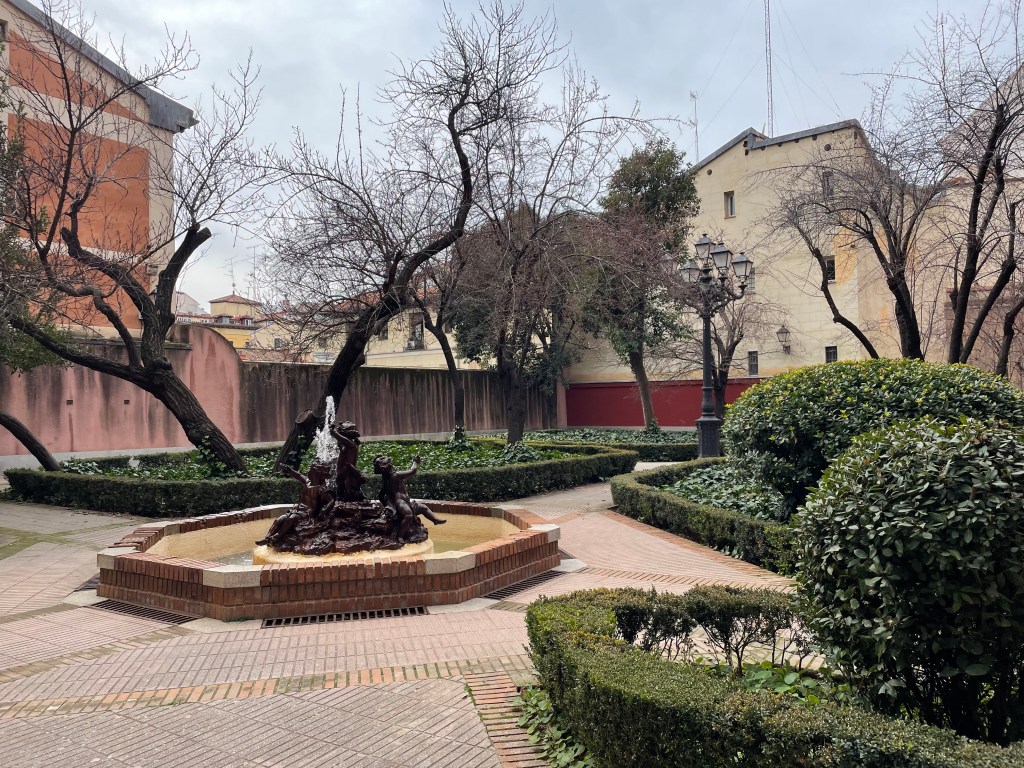
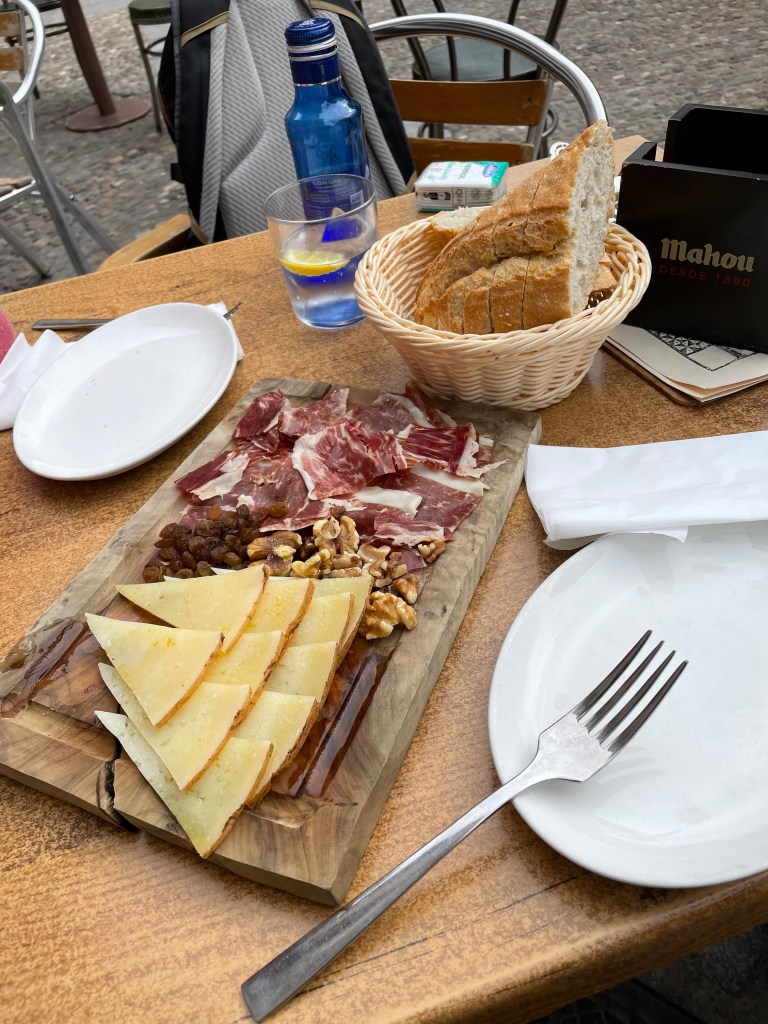
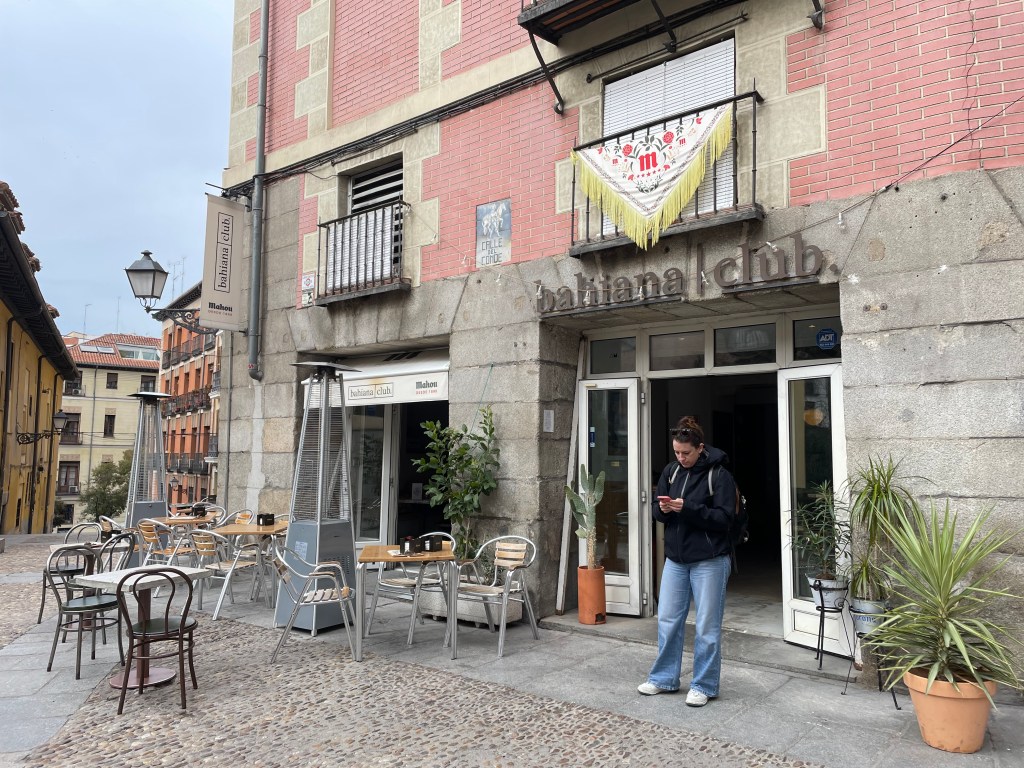
We decide to go for lunch, and as is increasingly the norm, it is unusually warm for the time of year, and so we want to sit outside. We don’t walk far, and soon stumble across Bahiana Club because it is in a sunny spot and looks nice. We order a ham and cheese platter from the friendly waitress and relax in the sun, enjoying the view and the tranquility of this little quiet corner.
The food arrives, and I admit I sometimes question why some restaurant food is just them opening a packet and putting it on a plate, but I don’t like to be a total grump, and so let’s focus on the positive: it is a very tasty cured Manchego cheese with some lovely cuts of Iberian ham, scattered with walnuts and raisins, and with a drizzle of olive oil, so it is still a jolly decent feed … and okay, yes, I do look a bit enviously at the next table where they’d ordered fried chicken fingers, but I am a sophisticated grown-up now … so let’s just appreciate this posh platter.
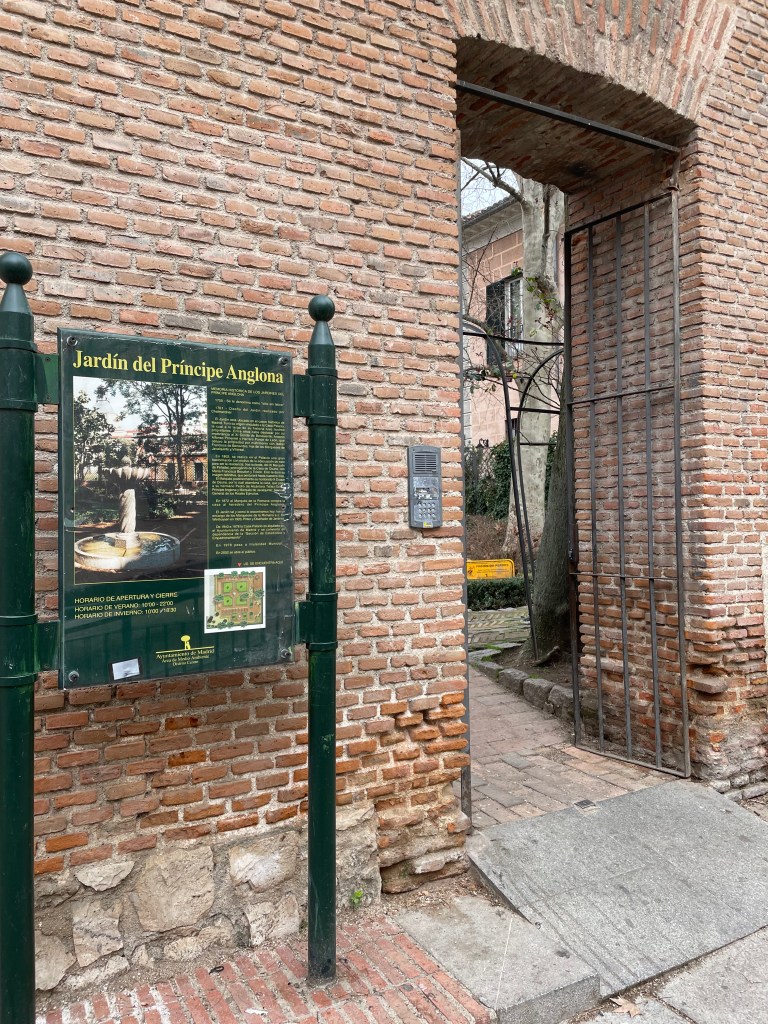
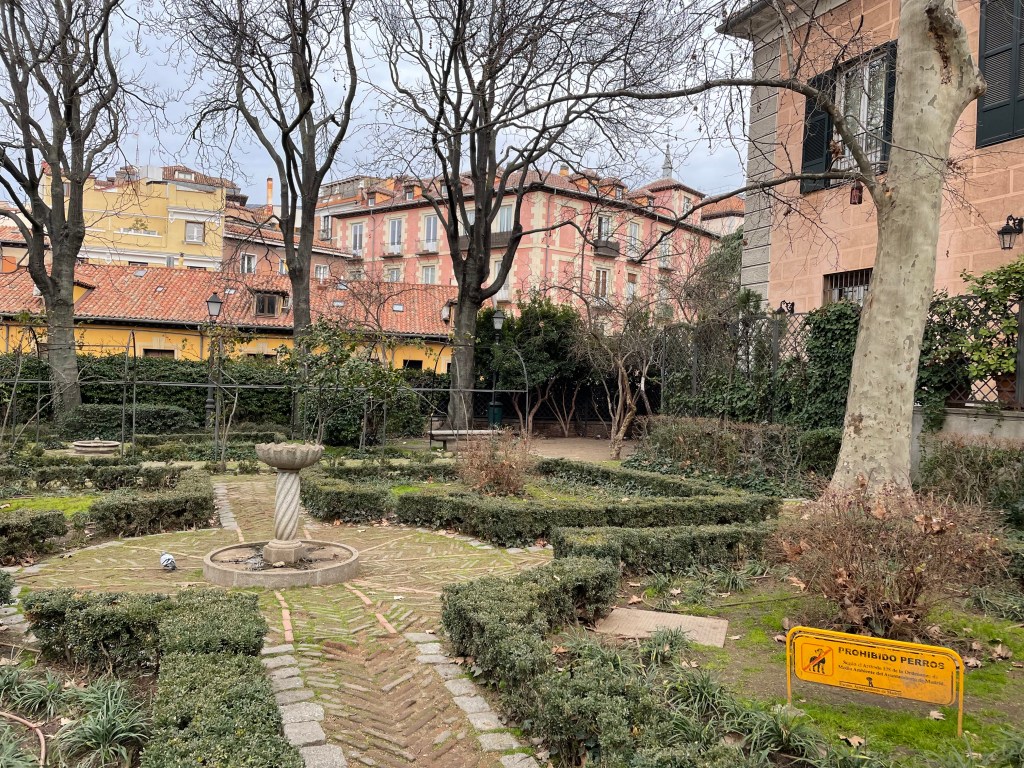
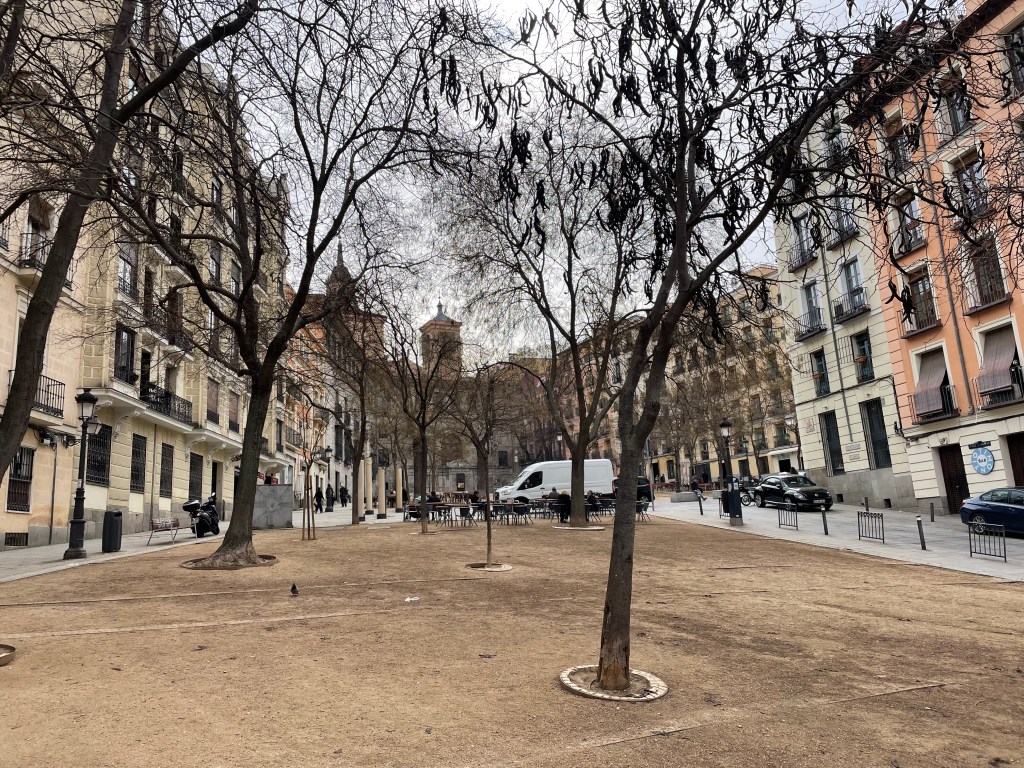
We waiver, wondering if we could get away with just staying here and slowly working our way through the menu, resting our weary legs, but we don’t. We stir ourselves, pay the bill, and carry on to see the Jardín del Príncipe Anglona, another small city garden just off Plaza Paja, a nice sloping unpretentious square that is just the kind of quiet central old-town spot I’d like to live. I imagine having my little balcony overlooking the square where I could sit in plain sight, but be invisible, separate but connected, sipping my wine or coffee (depending on the time of the day) and watching the world go by. The name of the square is a bit unfortunate though: the word paja means straw, or bedding for animals, so you can see where the name might have some historical significance, but since naming the square, the word paja has also come to mean “wank”, so that’s less optimal if it’s your home address.
Is this the place for me? Would I feel at home here on Wank Square?
The Left Bank
We head down under the Segovia Viaduct2 and into the lovely Campo del Moro gardens that run between the river and the royal palace. I know the posh end of these gardens from our previous walk from one side of Madrid to the other, but I don’t know this wilder section below the cathedral. It is lovely!
The gardens were laid out during the reign of Queen Isabel II in an English-style in 1844, hence the more-natural look. They were so named because this is the spot where the Moorish forces under the command of Alí Ben Yusuf camped when they attempted to reconquer the city in 1109.
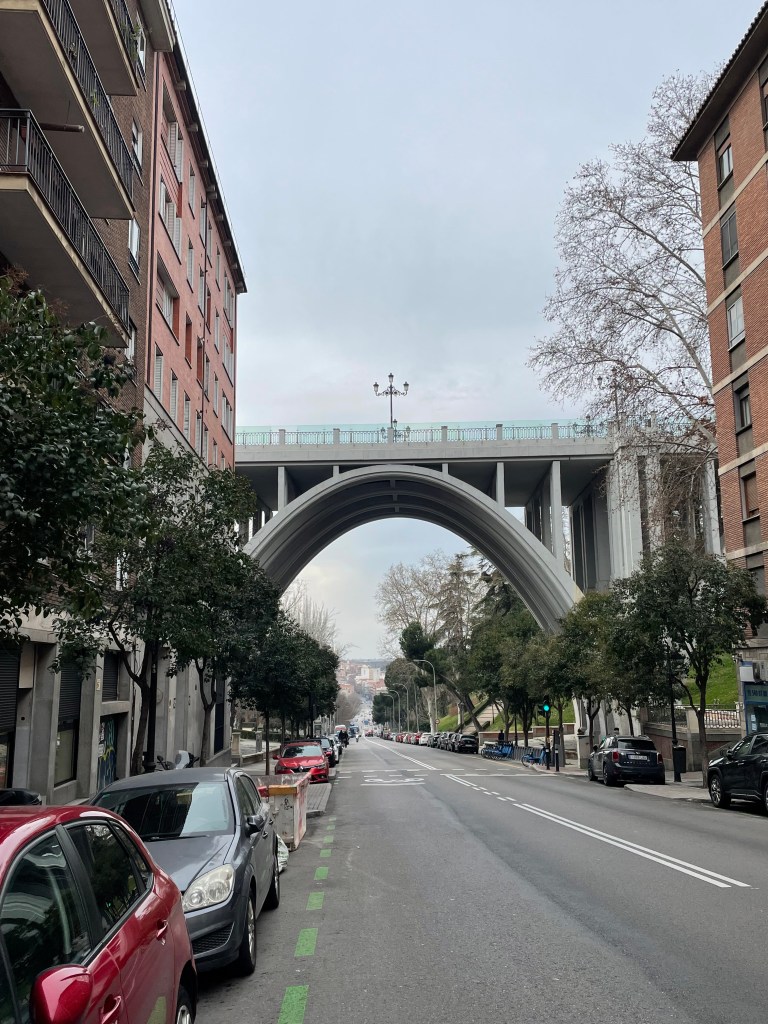
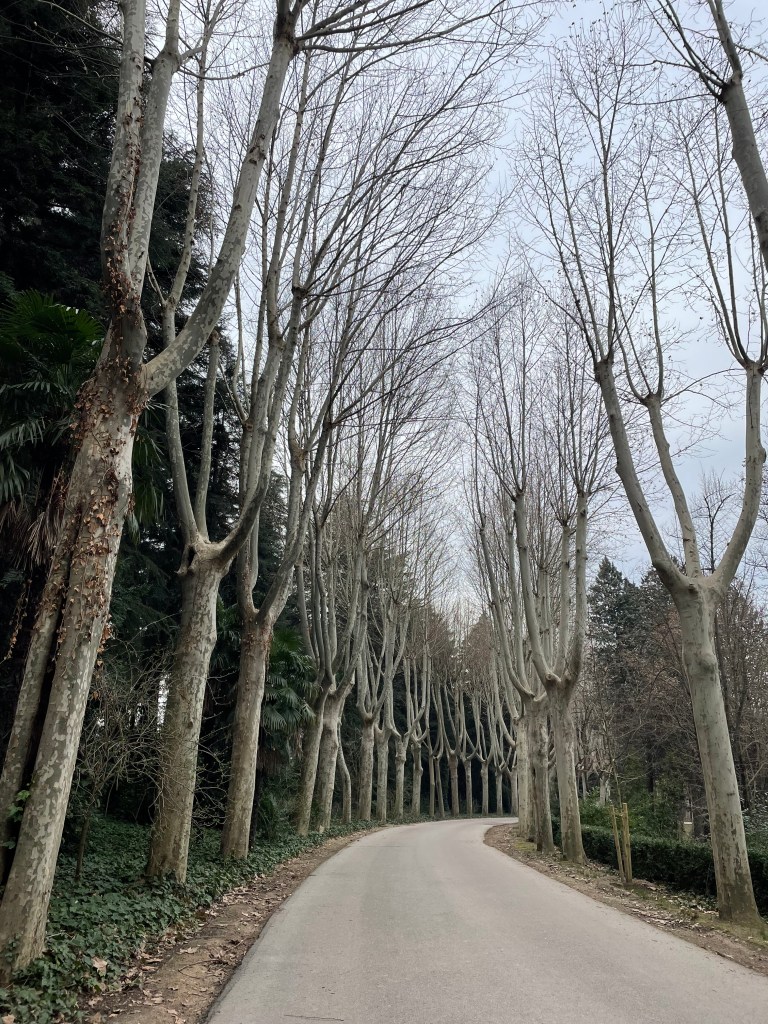
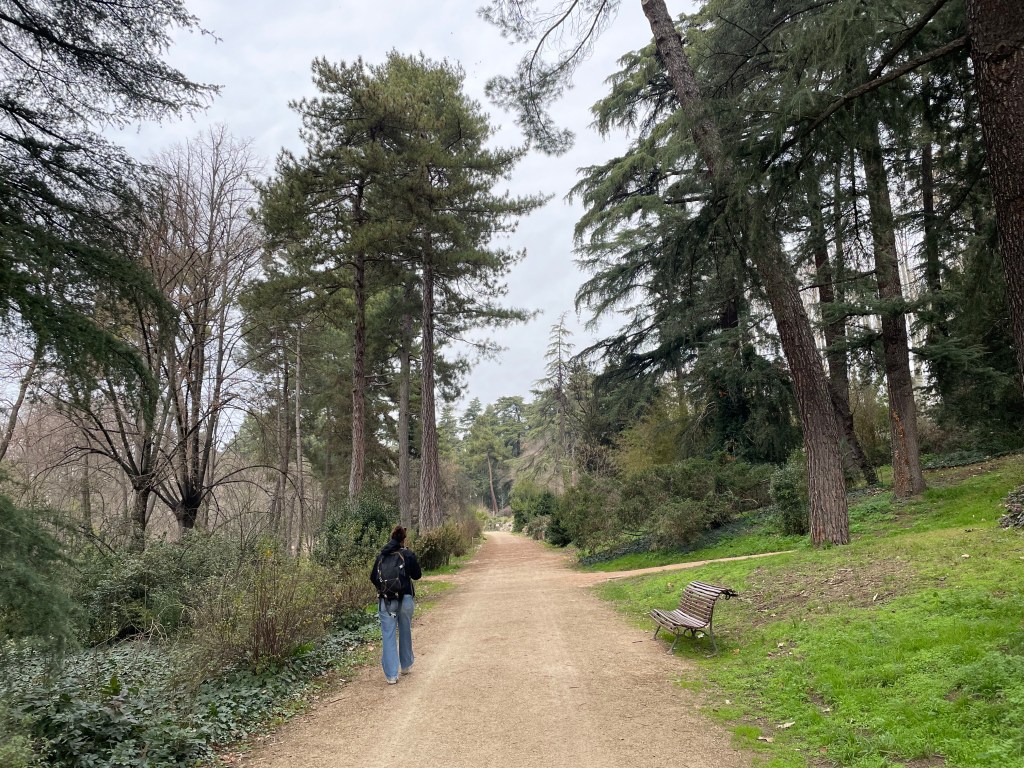
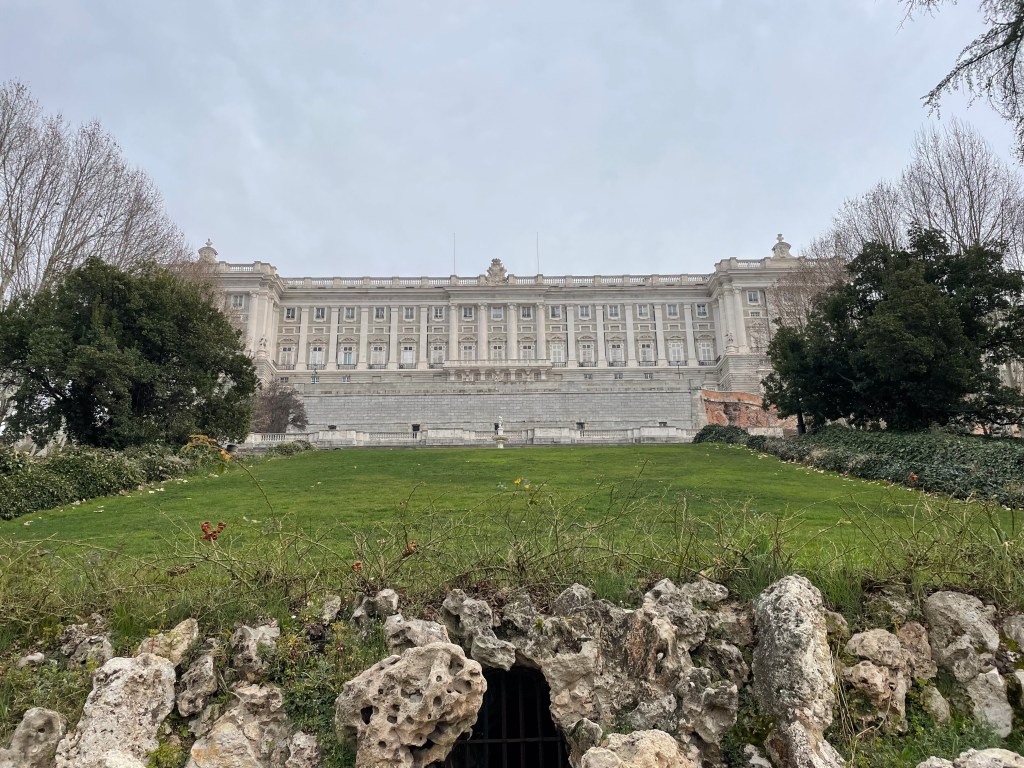
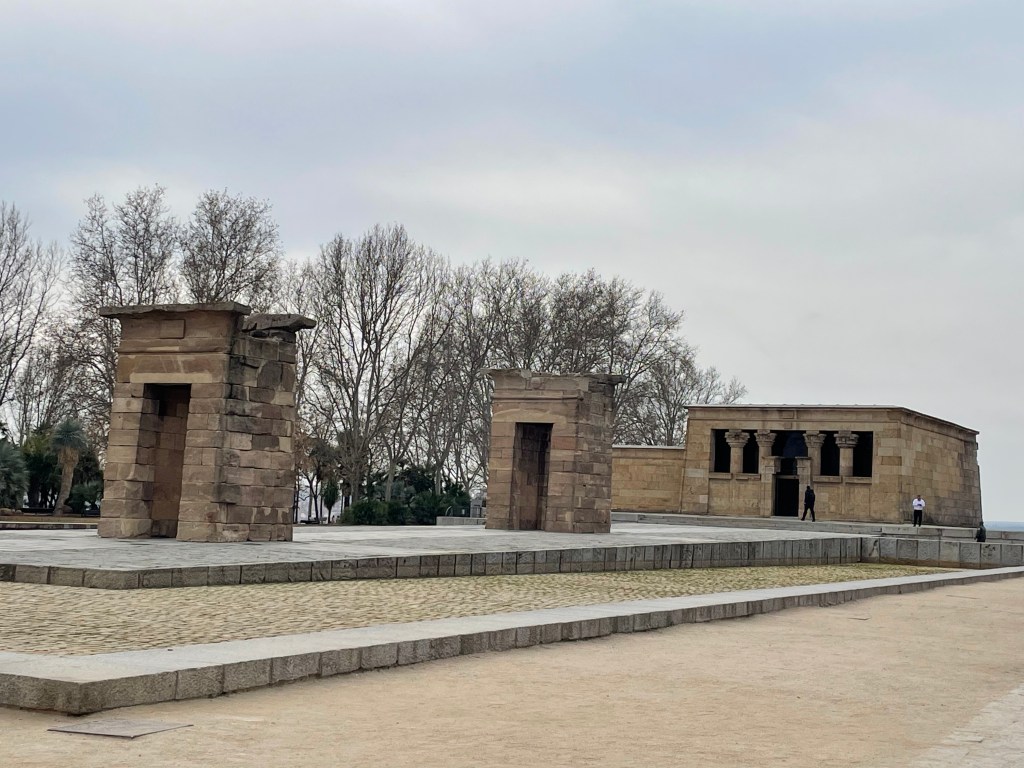
It is so pleasant we take our time strolling through, then exit on the other side and head up to Plaza España, past the humdrum Templo de Debot that people seem to rave about, and on into the Parque del Oeste (West Park). We head off into a side street to get a cup of specialty coffee from The Fix, my “long black” tastes very odd, and we briefly wonder if they accidentally used a fruit-scented washing-up liquid instead of water when making it. We sit on a bench and crack open the nun’s lemon biscuits which are dense and filling, and also dry and not great – but not bad either, they sort of grow on you as you work you way through them.
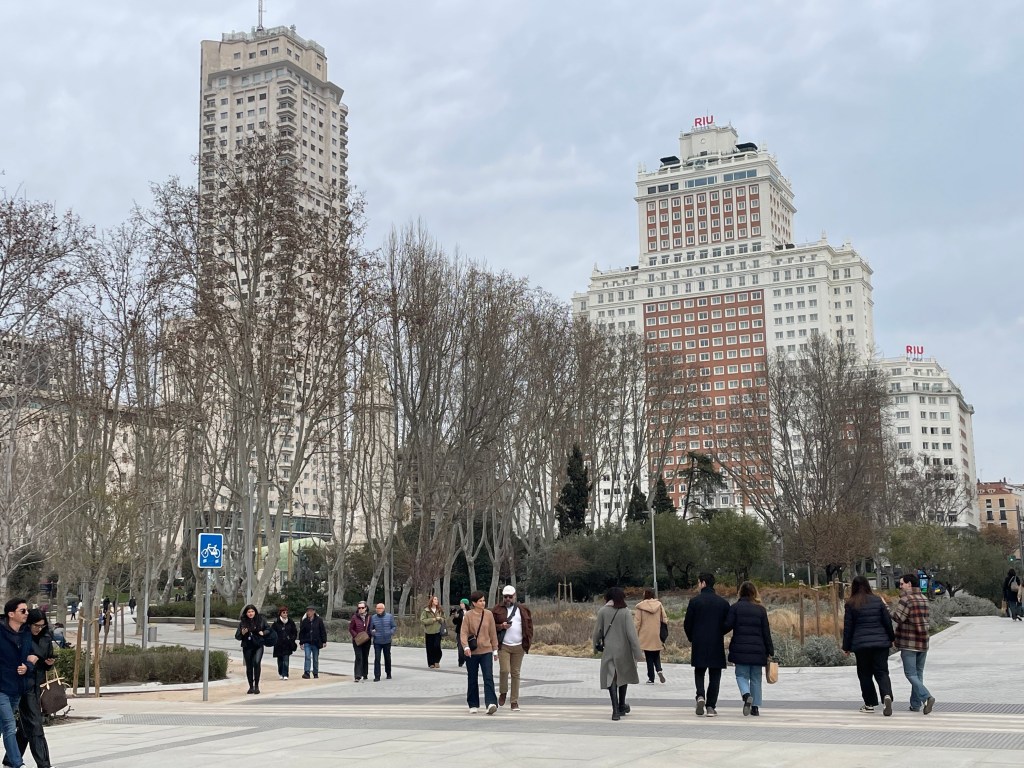

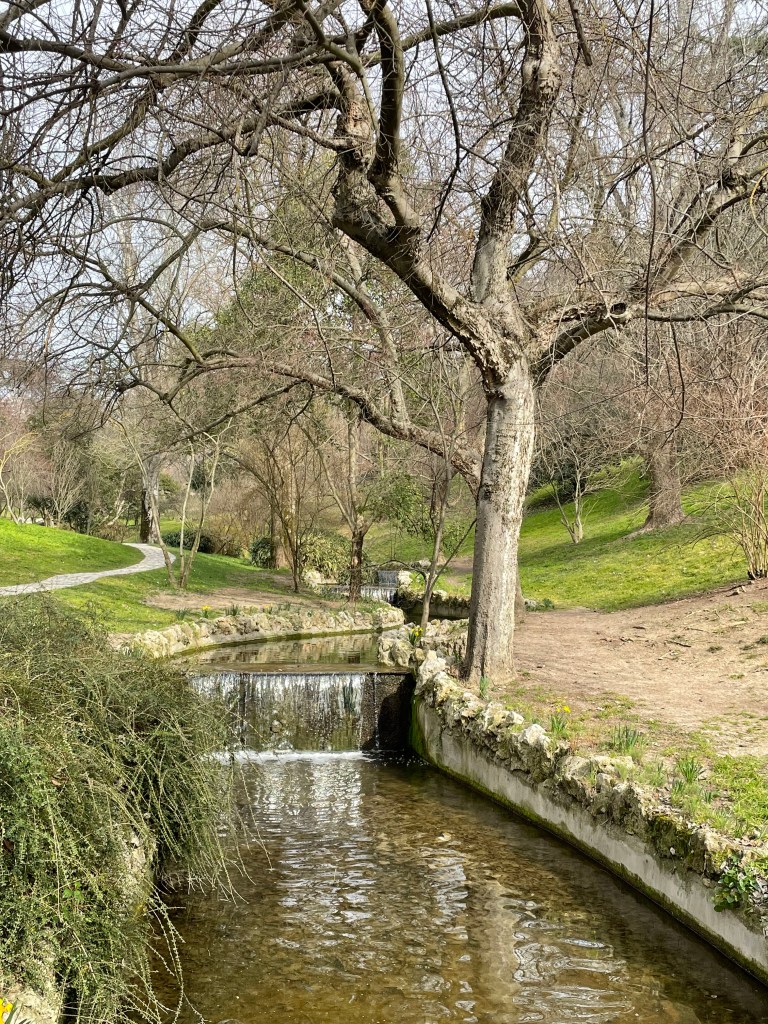
Parque del Oeste is deceptively large and varied. It’s quite long and hilly, clinging to the valley of the Manzanares river on the left bank as the river enters the city centre area. We walk down the valley side and along the park, heading upstream, then cut back up to see the pretty water features that guide a stream down the side of the valley through a series of waterfalls. The sun is shining, and a few people are lazing on the grass, and it feels peaceful and spring-like, even though it’s only mid-February.
It’s hard to believe this is the same city still, this sunny tranquil corner feels so far from the busy Atocha area, or the tourist-clogged Retiro park. I look at the distant towers of flats overlooking this lovely spot and speculate again as to the house prices knowing it’s well beyond my reach. Another “fact” for you: ex-Real Madrid and Spain goalkeeper Iker Casilla lives around here somewhere, so that’s the kind of price range we’re looking at.
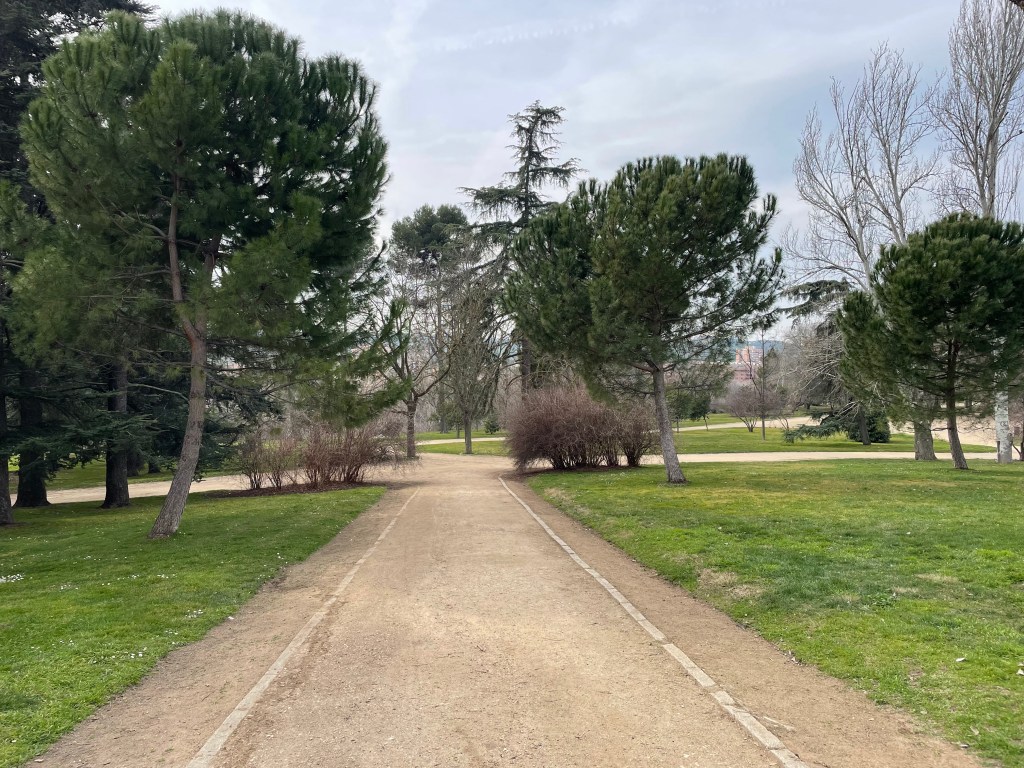
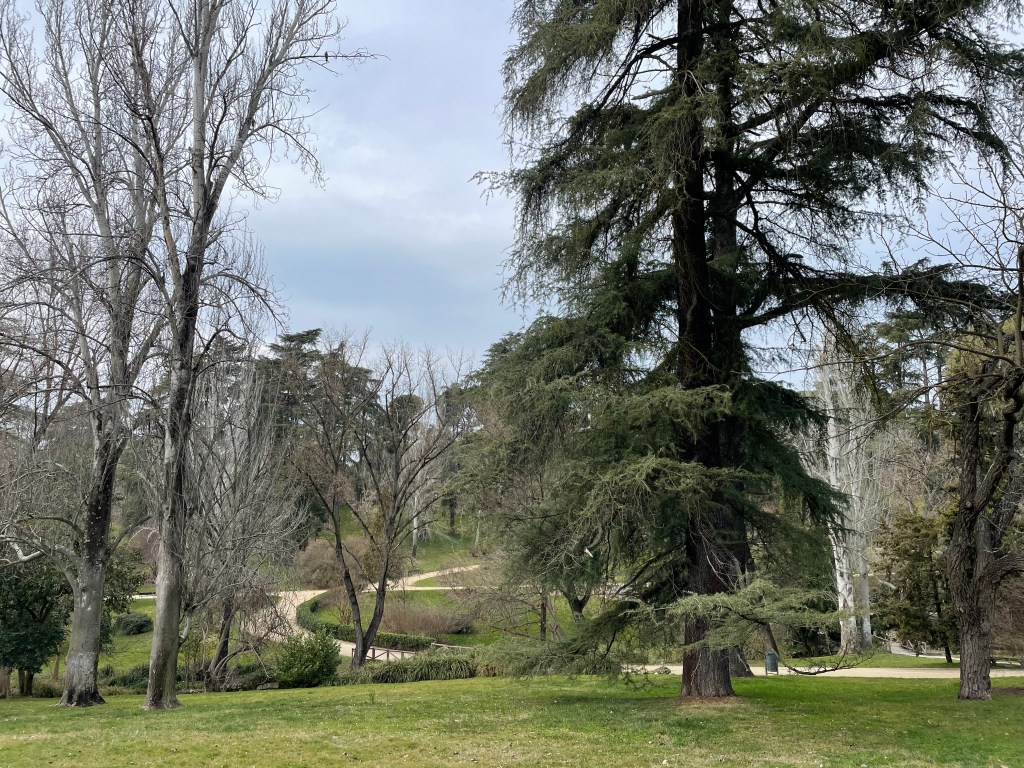
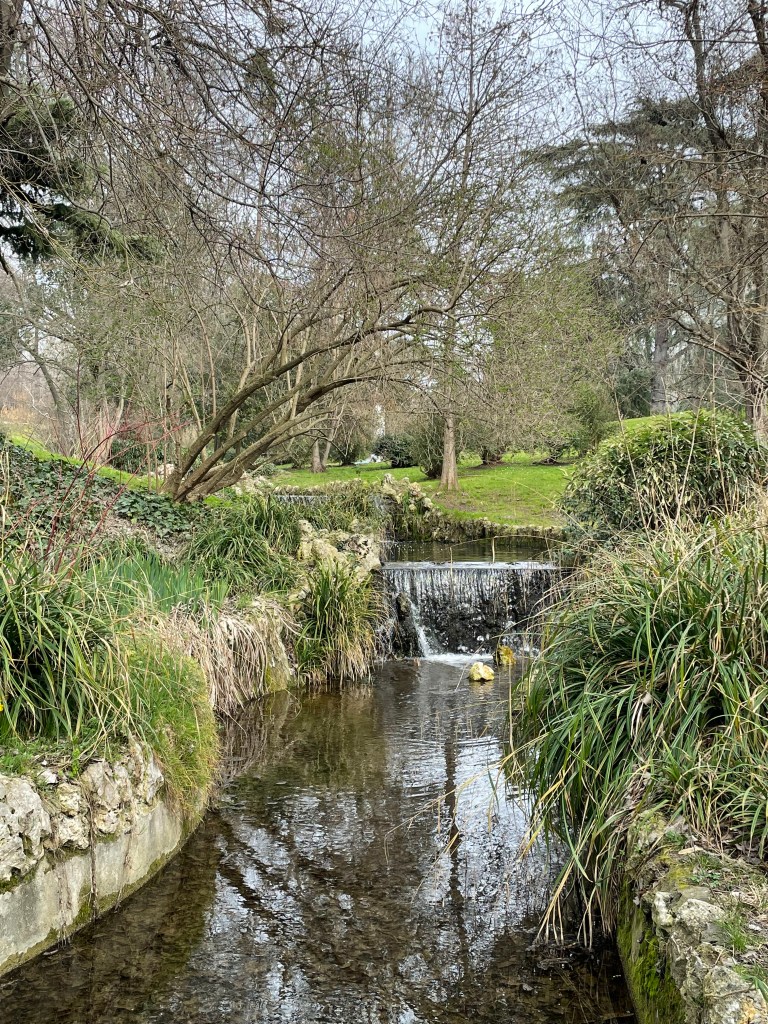
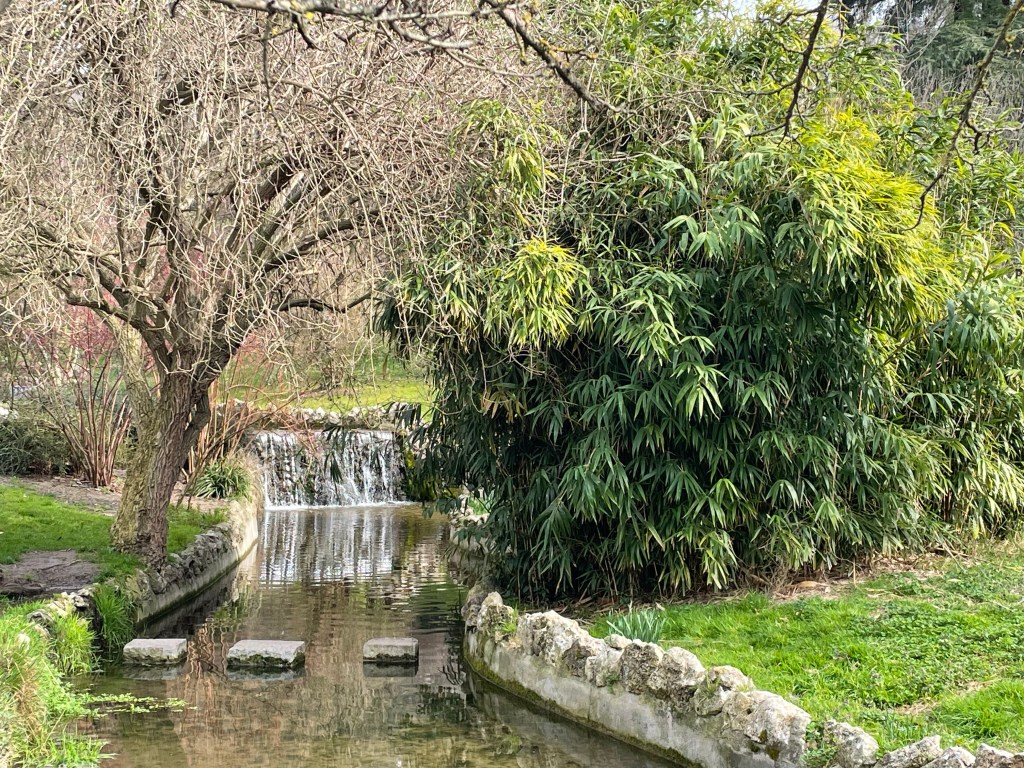
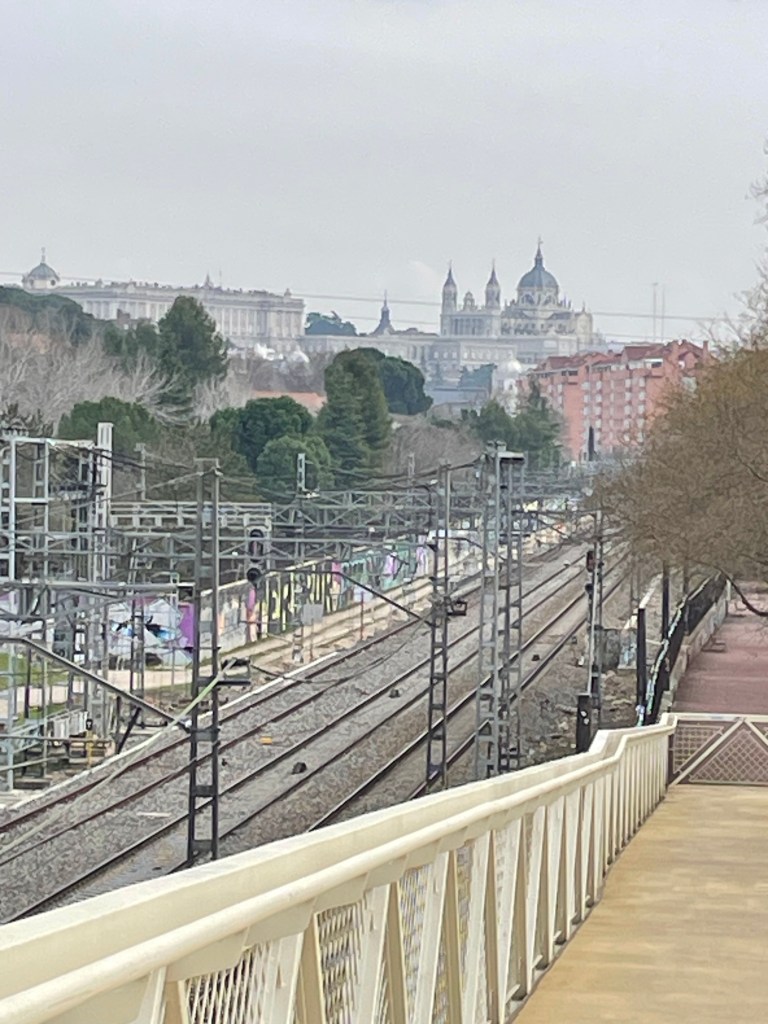
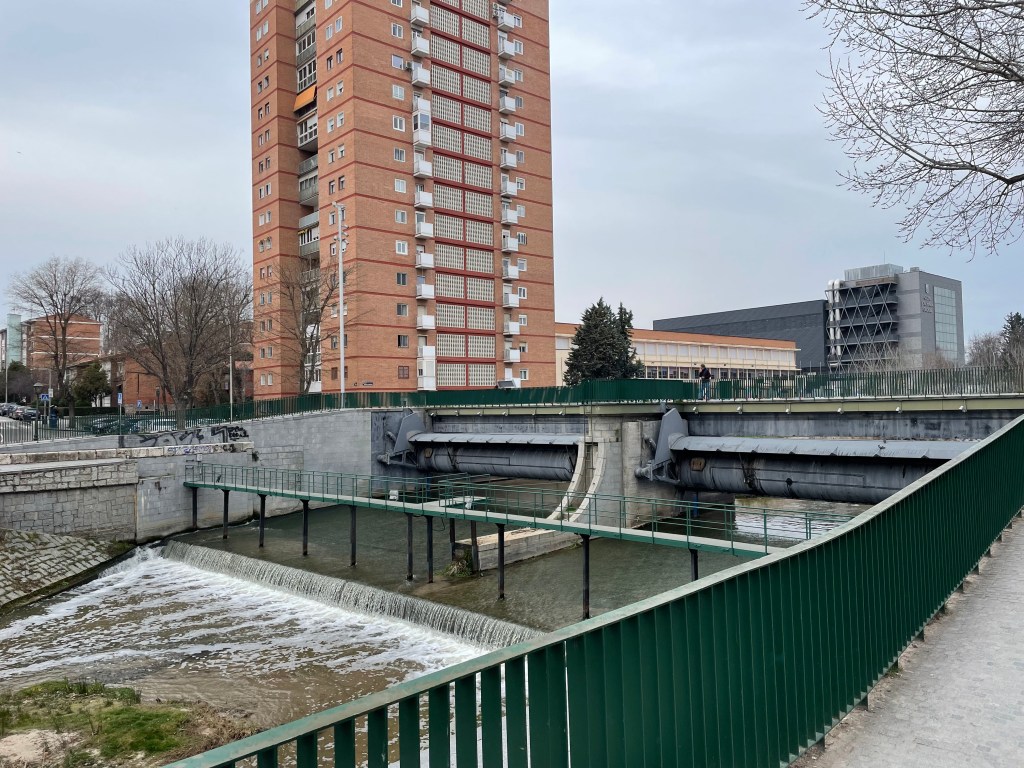
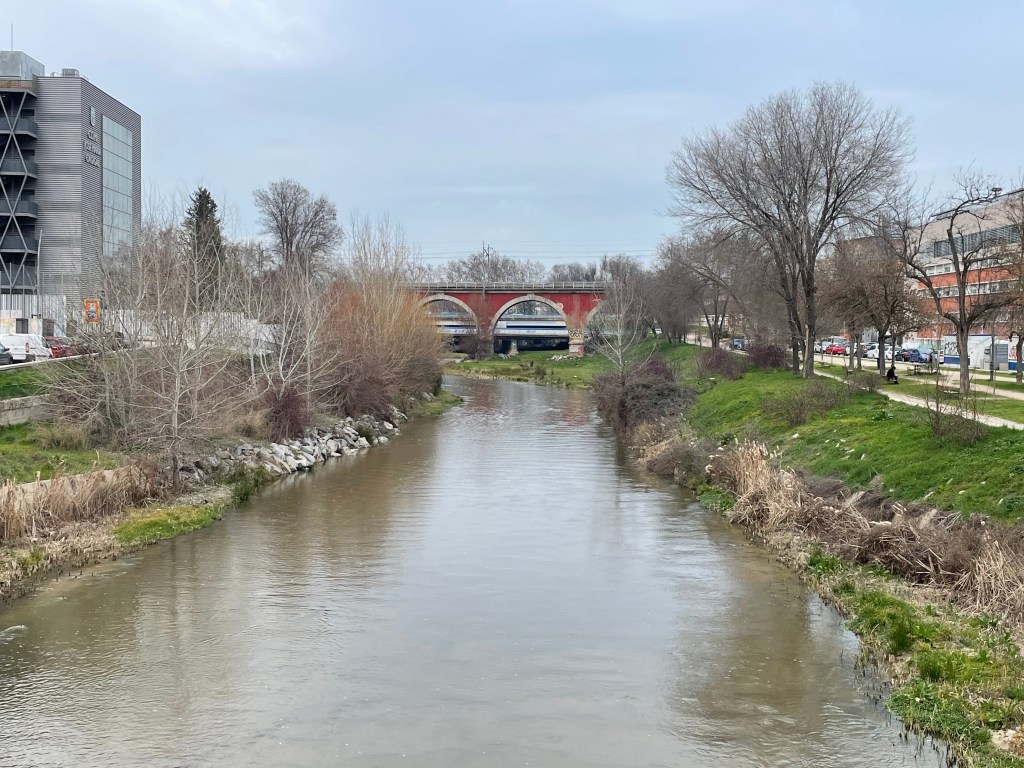
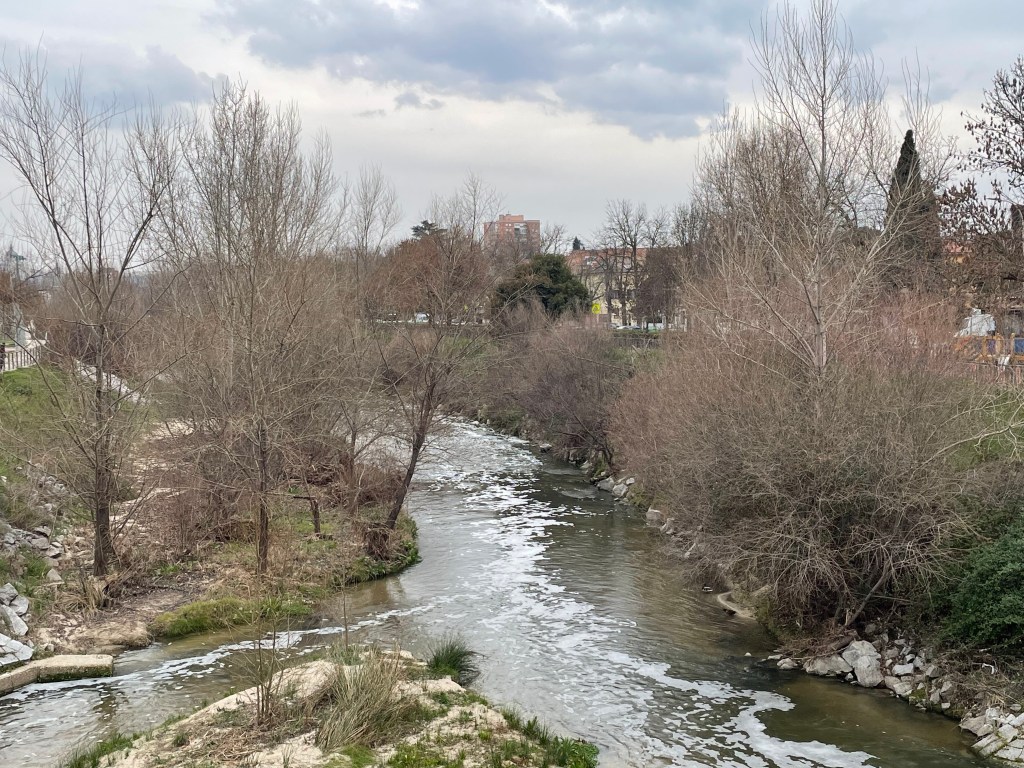
We head back on ourselves, and drop further down the valley to cross the railway lines – the commuter lines going into the manly-named Príncipe Pío Station – then across the little river that trickles through Madrid. It’s nice they have restored it to its natural state and flow (the old locks are still there, but left open), with its re-wilded shores and fish ladders, but a major capital like Madrid could do with a proper river running through it.
I once got this quiz question:
Which is the only European capital not built on a river?
Madrid was option A, but I went for B which was Istanbul, because it’s not on a river (the Bosphorus is not a river, it’s a strait). I was wrong, presumably because Istanbul is not a capital either, although I am not convinced our quiz-masters knew that fact any more than they knew the “facts” about Madrid: Yes, Madrid was the right answer, despite it being built on the mighty Manzanares River.
This was years ago though, so I’m over it now, and rarely bring it up in conversation …
Casa de Campo
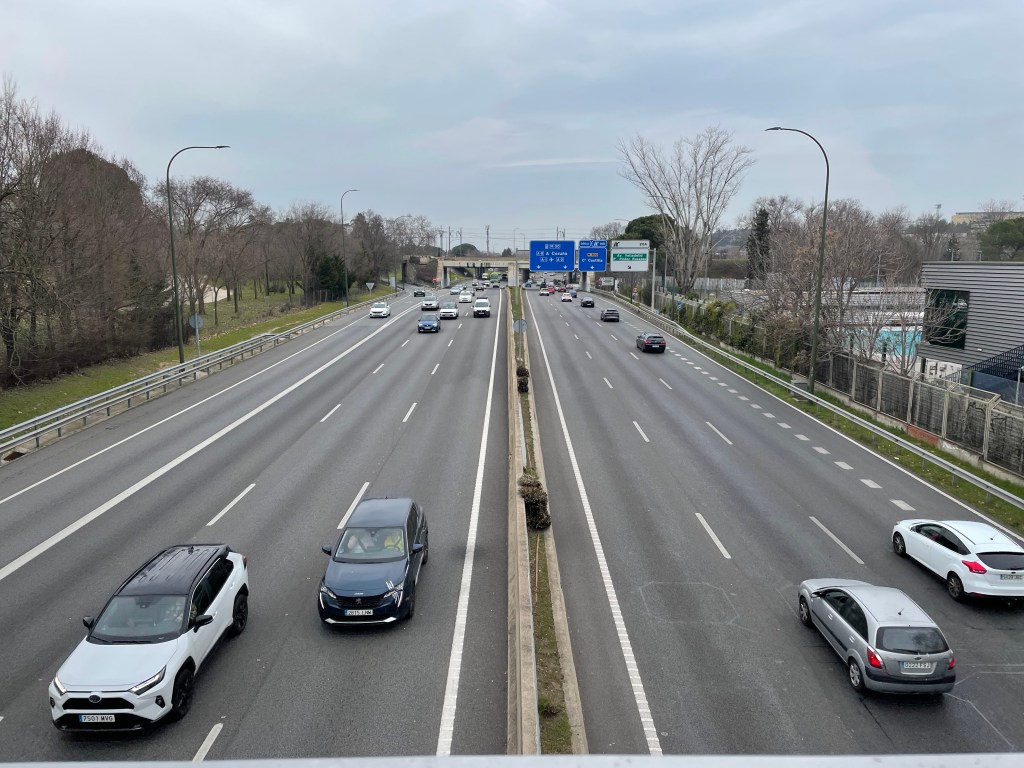
… anyway, we cross the M30 orbital motorway, just before it goes into its lengthy and confusing tunnel, and cut through one block of anonymous urbanity before entering the massive Casa de Campo park, on its wilder northern side.
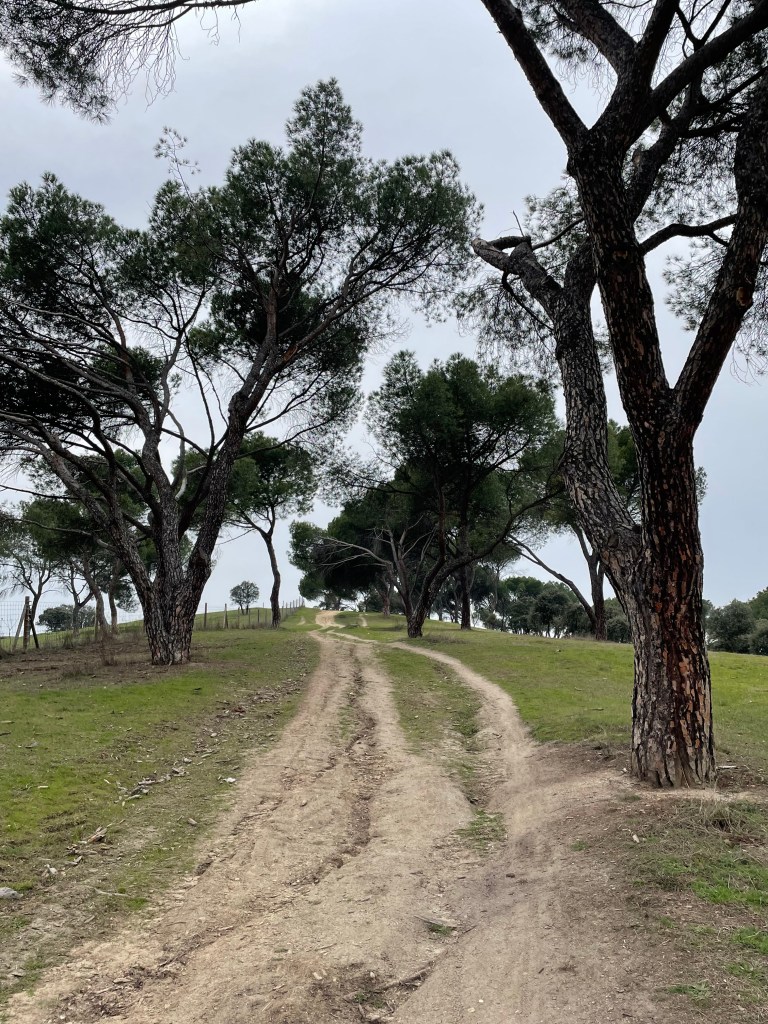
We are excited to see this side of the park. The southern edge is busier and more park-like with a metro line running alongside, and a zoo and theme park and a boating lake. That’s all rather nice, but the charm of Casa de Campo is its enormity and its wildness, its woods and hills criss-crossed with running trails and dotted with nature reserves. This is the bit we really want to see, and the bit that’s kept us going as we flirted with the idea of jacking it in and just having a long lazy multi-course lunch instead.
Another ex-royal hunting ground, this huge park only opened to the public in 1931. The Spanish Civil War raged soon after, and it became the front line in the siege of Madrid, and then decades later, the centre of the capital’s prostitution industry, so it’s seen its fair share of action over the years.
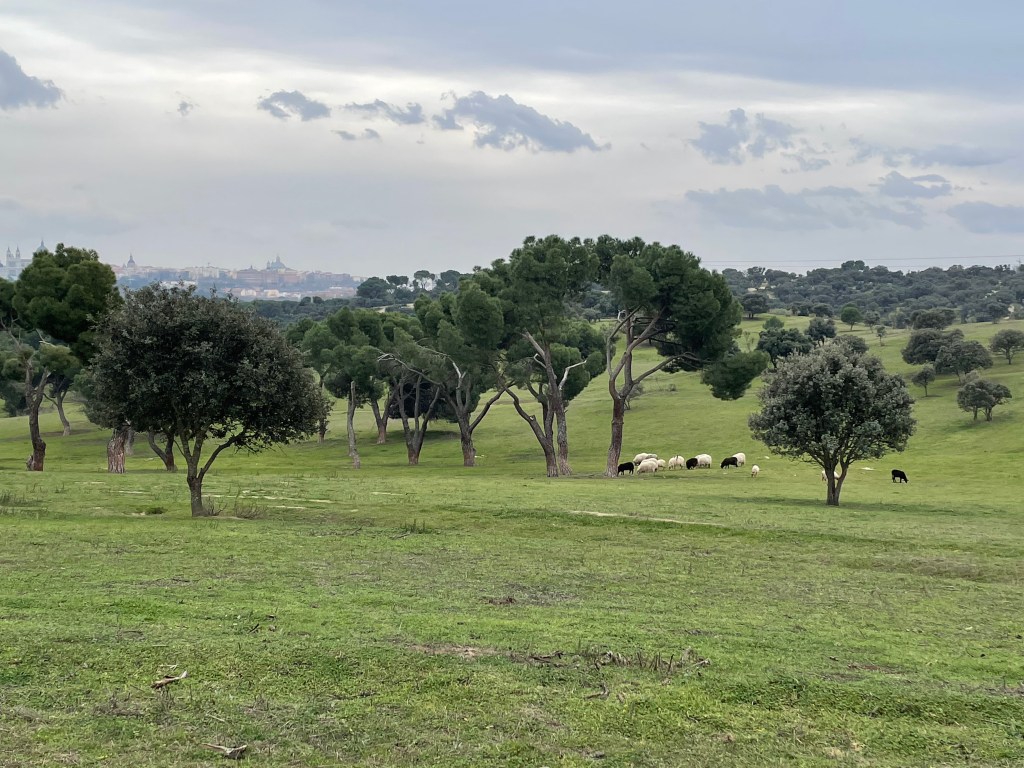
We walk on, guided by Google, and reluctantly climb up to the Mirador del Cerro de las Garabitas and look back to view the city. I later found out this hill at 662m isn’t the summit of our walk, that was actually much earlier atop the artificial mountain in Retiro (690m), but this stunning viewpoint feels like the summit, it feels like what we’ve been aiming for, and at last we feel like we’ve achieved something.
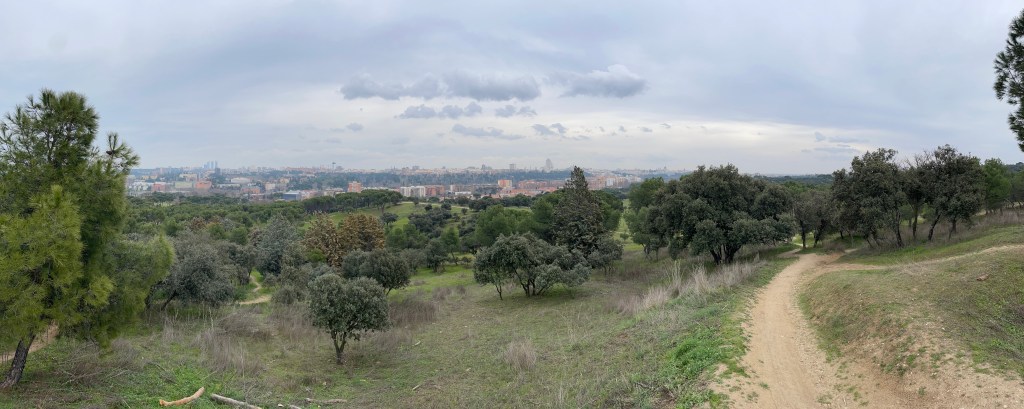
Our first walk from one side of the city to the other was a journey with a destination, and so it felt like an achievement when we’d done it. Motivation was fairly easy because the route had purpose … this one less so, we originally designed it as a circle, ending back at Atocha, but we cut it short to end at Madrid Río to be more realistic with time and distance. This was sensible, but for what we gained in sense, we lost in coherence, and it feels more artificial, like its end point is arbitrary. This means keeping going has been more of a struggle … so looking at the view, feeling on top of the world, our doubts are gone and we are feeling good about the whole thing again.
We carry on, down tiny paths that look like roads on Google but are little more than scratchy rabbit paths. We sit for a while, then are back on a proper track, under an aqueduct, the area to our left fenced off and full of sheep and rabbits. I wonder if there are wild boar here, there must be, they’re everywhere in Spain, so they must be here too. What do you do if you meet one? Are you supposed to look big and scary, or is that a brown bear? Or a black bear? Brown lay down, black fight back – is that right? Doesn’t matter, there are no bears here, although it’d be useful to know in case I get asked in a quiz question.
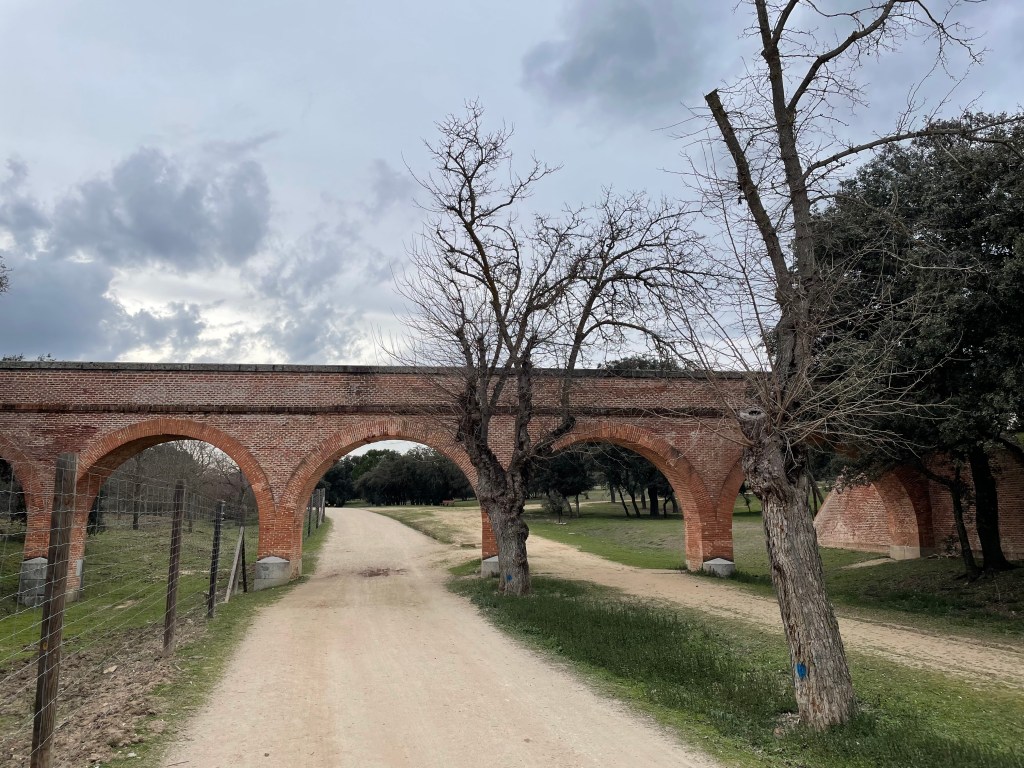
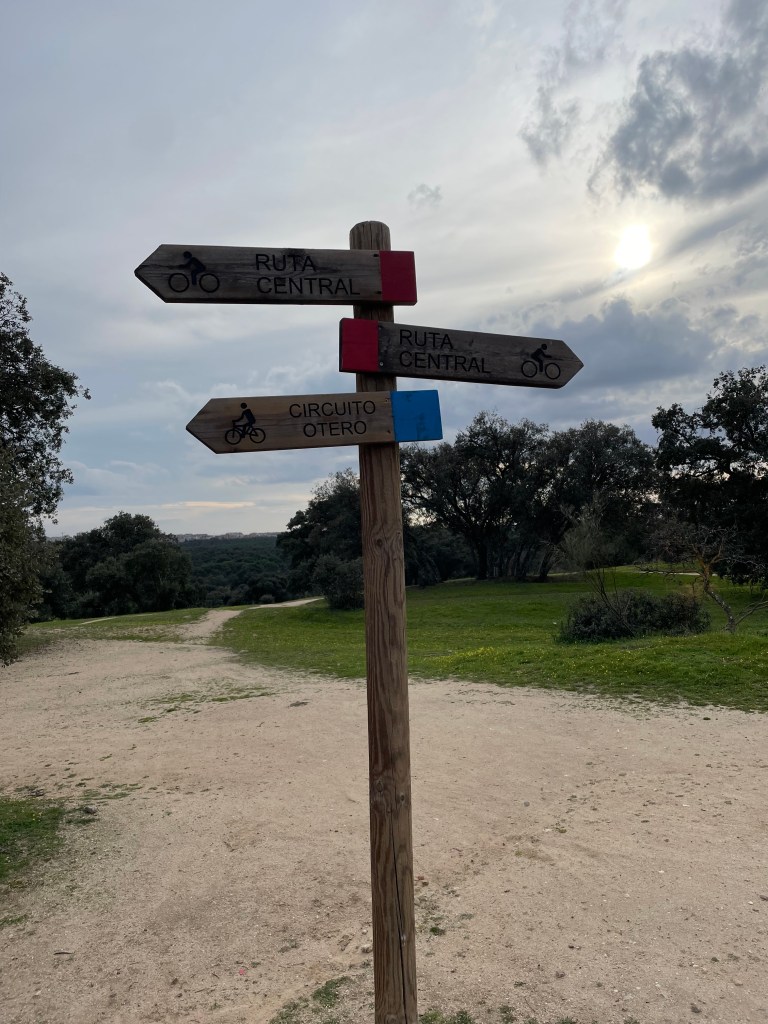
We skirt from track to proper road to rabbit path and back as we zigzag through the park for an hour or so, eventually emerging by the zoo. By this point my right foot is killing me and I am worried I will be able to make it. It’s another hour-and-a-half-ish of walking to get to the Madrid Río park.
Madrid Río park and river re-wilding was done in 2005, and involved putting a large chunk of the M30 orbital motorway underground which, among other things, makes for a hairy car journey if you’re not sure which exit you’re supposed to take.
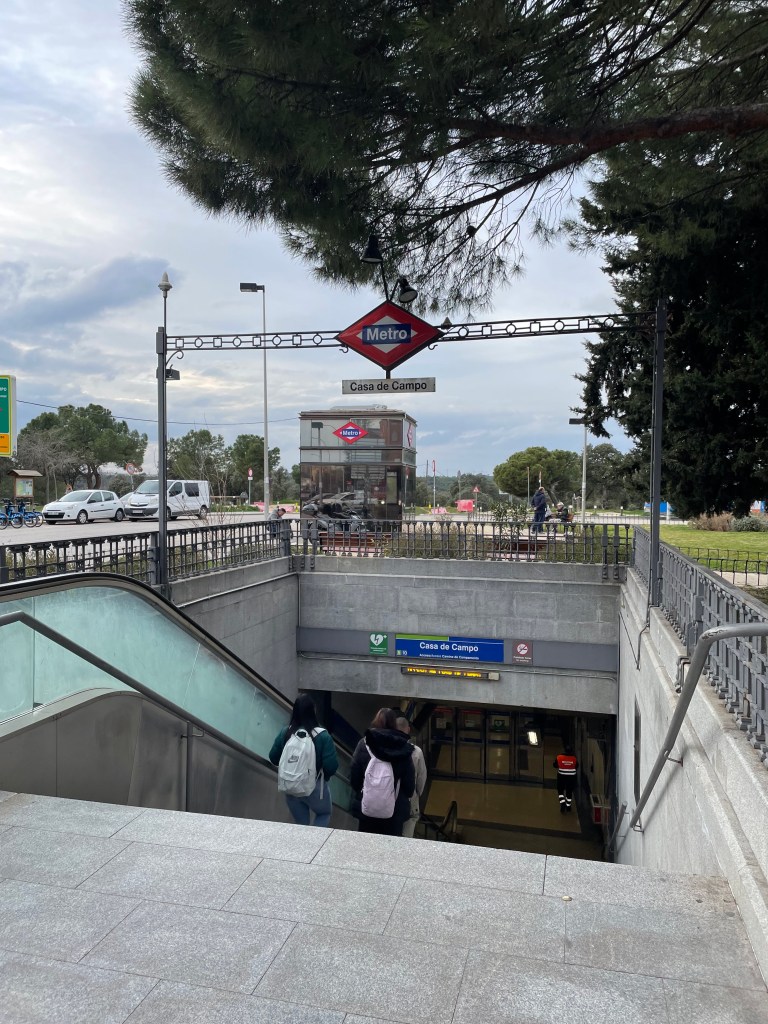
If I want to see the park, I’m going to have sort my foot out, but as we walk past the zoo – peering in to see a lonely wolf howling for attention – my limp is getting worse. We have an exit opportunity at Casa del Campo metro station, just beyond the zoo, and this is tempting, but without the last leg back to the river through the Cuña Verde de Latina and San Isidro parks, it feels incomplete.
I limp on, not sure what to do, and not wanting to let Marietta down. I raise the idea of stopping and she suggests we have a break and a drink, then plough on to the end and I agree, but as we plod up the hill, I know I’m not going to make another hour-plus of walking, I can barely make the metro.
I admit defeat, suggesting we do a southern route another day, trying to make out that this is better really. If we start at Casa de Campo, we can head to the river and then on to the chain of parks along the south of the city … it’ll be brilliant!
She doesn’t sound convinced.
We stop, and abruptly disappear into the anonymity of the crowded metro – adventurers no more, lost in plain sight once again, squashed in among the Friday evening masses – and just like that, our little adventure jerks to a sudden stop.
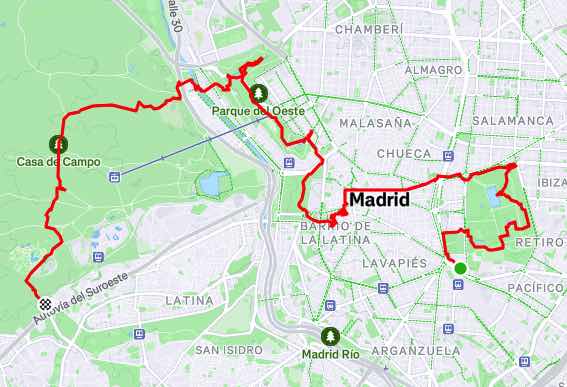
See here for Marietta’s version (on Instagram).
- I drive a Škoda, so instead choose to display my status via blogging … ↩︎
- The viaduct is so-called because it crosses Segovia street, a street that then crosses the Manzanares River on the Segovia bridge, but at no point does this road go to Segovia, or indeed even head in the general direction of Segovia. Segovia is out to the north-west of Madrid (and is well worth a visit), but this road quietly changes its name the second it gets across the river and bombs down to Extramadura, nowhere near Segovia. ↩︎
 MrJohn