I wasn’t sure I wanted to write this post, it’s not my usual kind of thing – it’s four days of tourism with friends, not proper travel, and normally I’d turn my nose up at such things. My original plan was not to include it (hence most of the photos are not mine), but then I changed my mind because I learnt so much about London creating the itineraries, then even more when I started to tentatively write this, that I thought it was worth a try … so anyway, here it is …
Day One
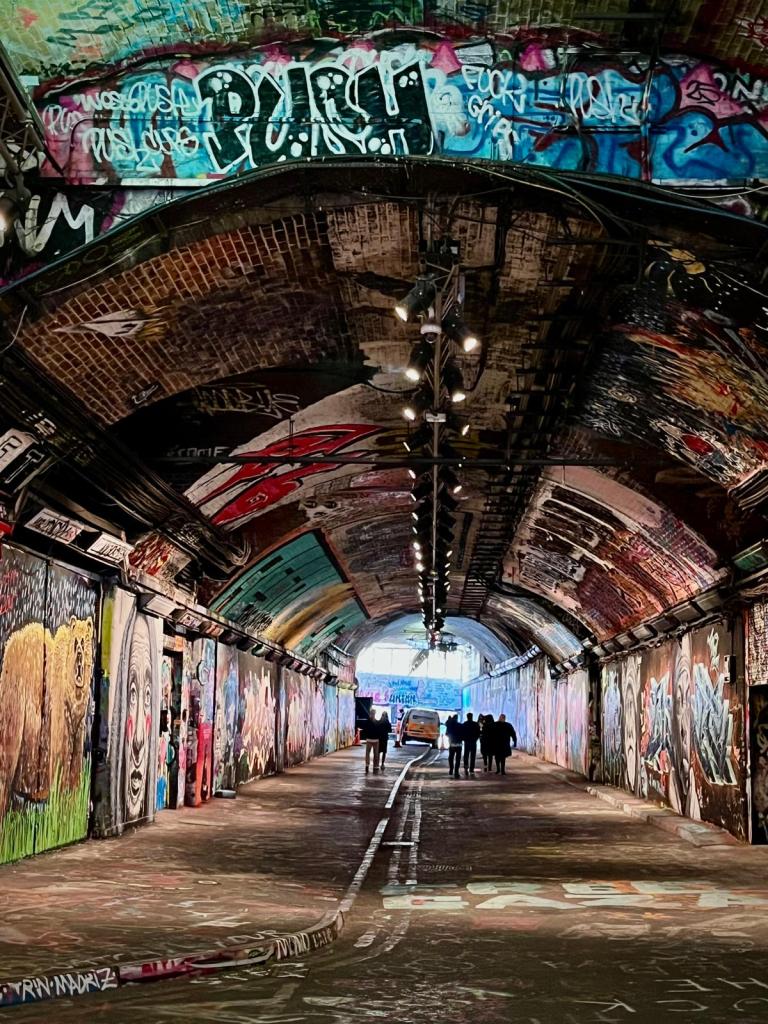
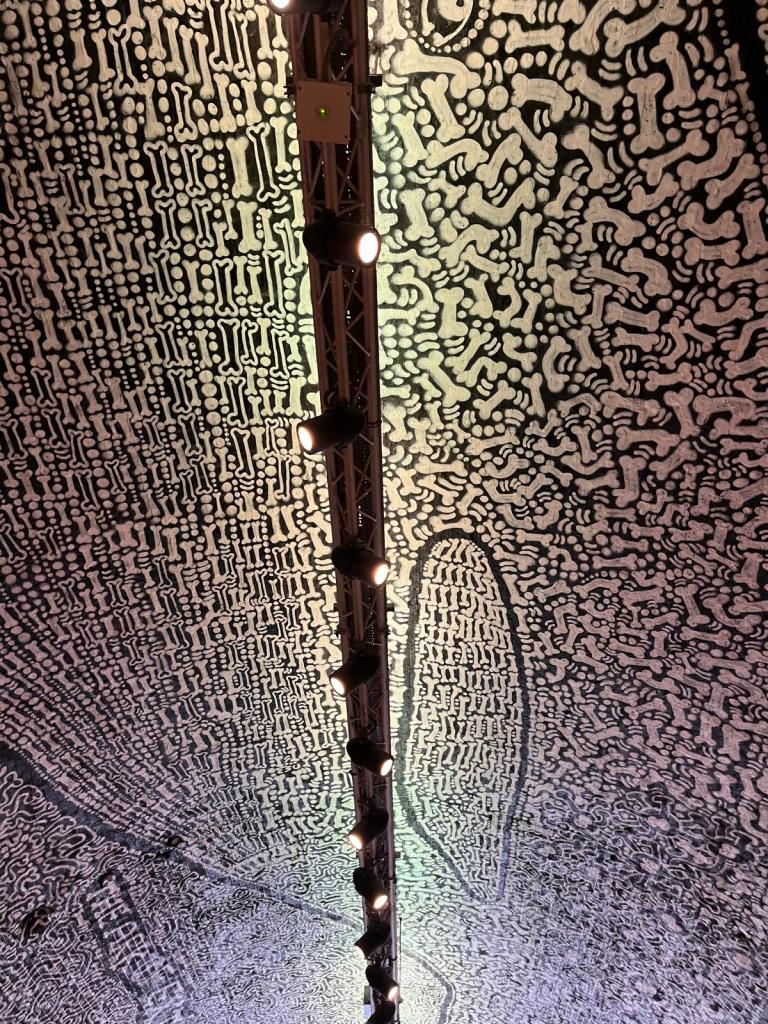
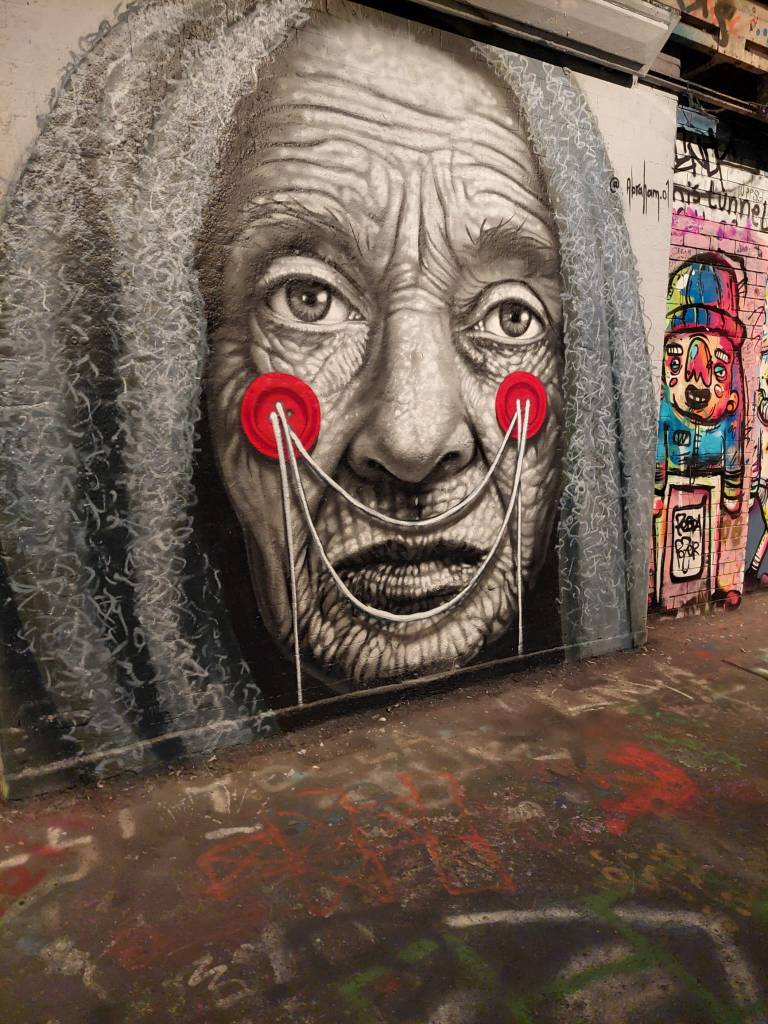
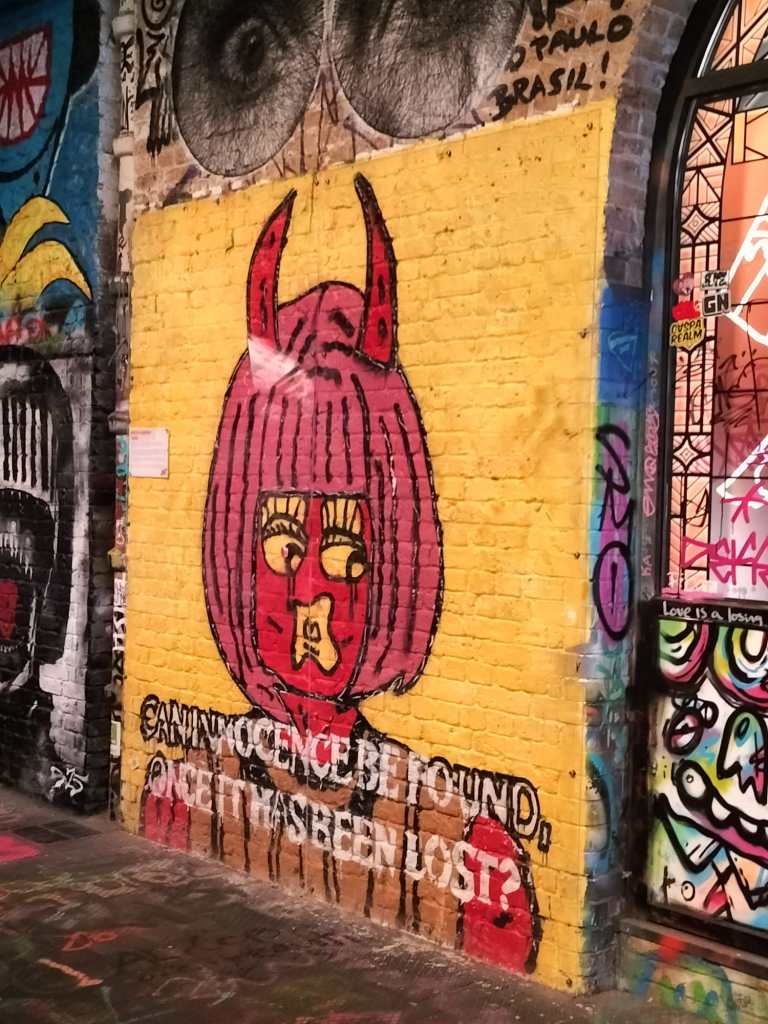
We left our hotel near Waterloo and cut down Lower Marsh, a nice busy street packed with restaurants and food stalls. It was too early for lunch, but we’d been up since 4am, so I suggested we get a snack to put us on, but groups struggle to make decisions, and whoever speaks first tends to speak for all because it’s so much easier to agree than to disagree – so we ploughed on, turning right into the Graffiti Tunnel (Leake Street Arches).
I’ve traipsed my way around Banksy exhibitions like the best of them, but I’m not a big fan of graffiti and I admit I didn’t care for this being first on our itinerary, but even I had to sulkily admit it was quite impressive in its own way, and I liked the concept of allowing a free space for artistic expression.
This trip was with a group of Spanish friends, and I had designed daily routes to showcase the variety and complexity of the world’s greatest city. I was excited about seeing things through their eyes, eyes attached to brains that filtered the world through a Spanish cultural lens.
They liked the tunnel.
We emerged from the darkness and zig-zagged a couple of streets to the London Eye to get our first sight of the Thames and the view across to Parliament and Big Ben. We took some photos and I explained the river was tidal here, open to the North Sea, not held in place by locks. The Thames is England’s longest river (346kms), slightly shorter than the UK’s longest (the Severn, at 354kms) although how they work out where the end is, as both drift languidly into wide tidal estuaries, I will never know – that said, the Severn – with its twisty route through the beautiful heart of Wales – has almost twice the volume of water, so it deserves the top prize.
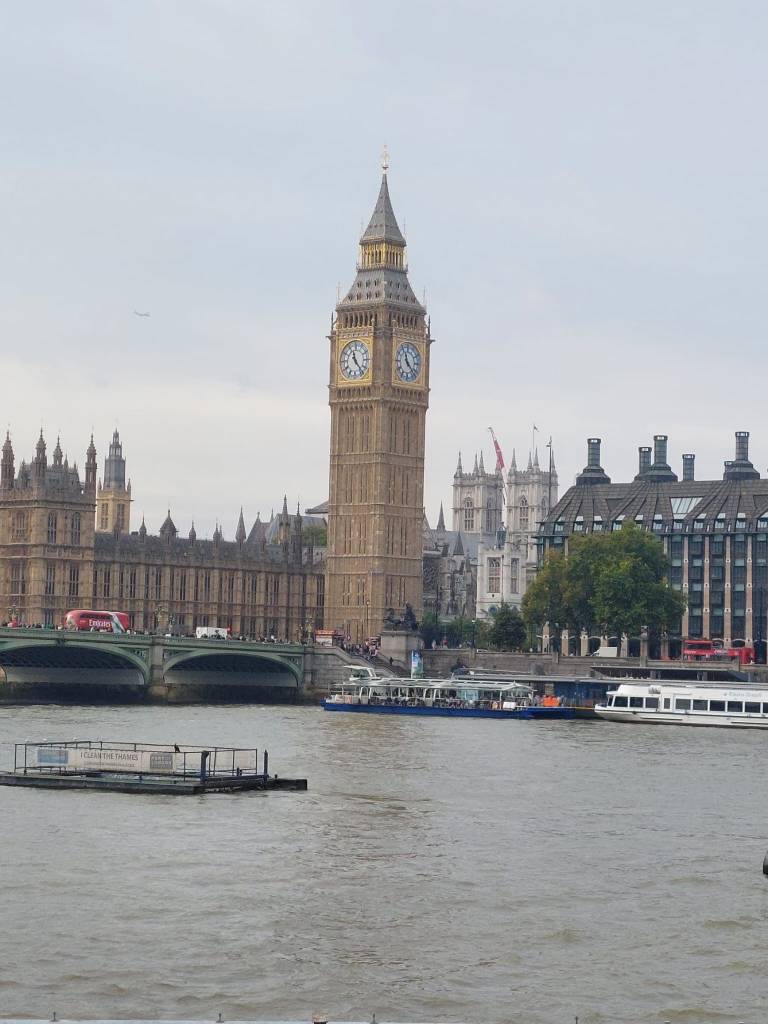
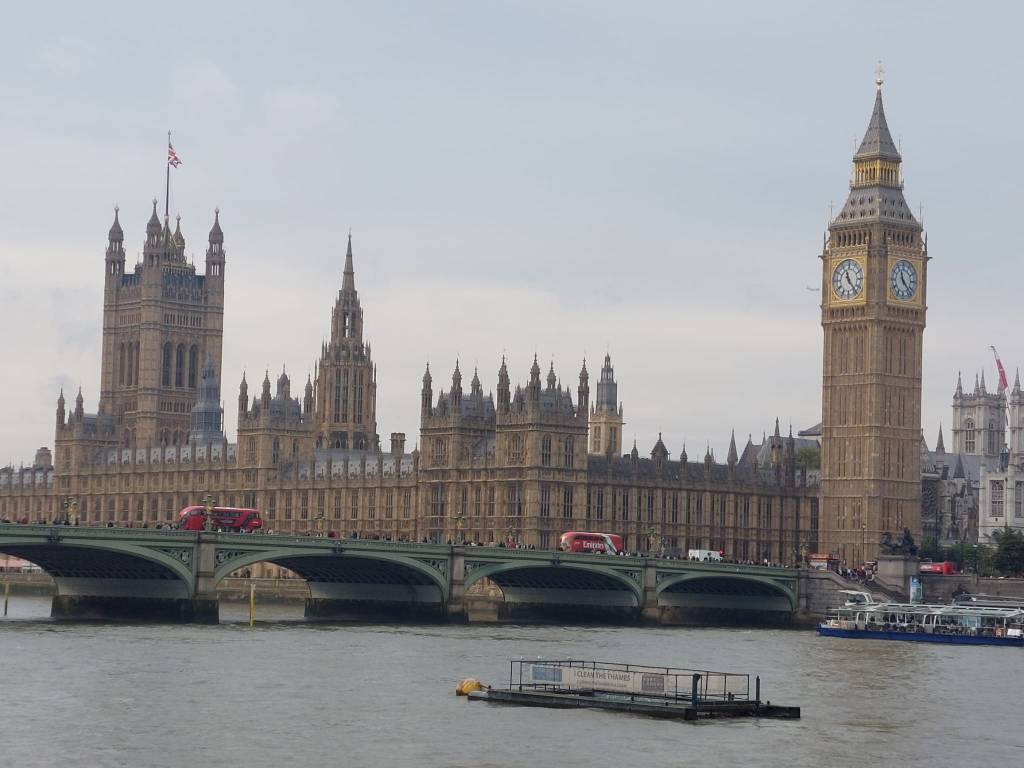
We crossed Westminster Bridge. Our plan was to use our train tickets to get half-price entry in Westminster Abbey (National Rail’s 2FOR1 deal) but we were now hungry all of a sudden and fancied a sit down … I mean, I had just mentioned this five minutes earlier, but anyway … I led the gang down the charming slither of Lewisham Street to emerge at the pretty The Two Chairman pub, thinking they’d appreciate its twee floral frontage, but sometimes when you need a beer and a sit down, such nuance fails to snag on the brain.
Oh well, with the plan already struggling to survive its impact with real life, we finished up our mediocre hand-pulled beer which I explained was not the finest example of an English ale (beer, I explained patiently, is one of the many things that is better up north) and headed out and off down Cockpit Steps, across the corner of St.James’s Park and over Horse Guards Parade to emerge onto Whitehall by the mounted guards. As always, they were surrounded by tourists warily taking photos – wary because the horses bite, and so do the guards; the many social media videos of stroppy guards barking at people have had an impact. I’ve always respected the guards as professional soldiers maintaining an elegant tradition, but perhaps they take themselves a little too seriously if they think it’s fine to march on top of people – come off it fellas, you’re not guarding anything really, you’re a photo op for tourists, so let’s all just be cool.
We decided to pull lunch forward and so headed off down Scotland Yard, across Northumberland Avenue, past the Sherlock Holmes pub, through the tunnel under Charing Cross Station to have fish and chips at Hobson’s – I’m not one to go on about everything being better up north, but it’s a fact that fish and chips are better up north … but despite the disadvantage of their southerly location, Hobson’s do a decent chunky fish in crispy batter, and we all enjoy the meal, even the bit where the waitress accidentally smashed a pint of Camden Ale all over the table.
We headed past the beautiful Eleanor Cross outside Charing Cross Station (built in 1864 to mark the opening of the station, the original cross was the centre of the village of Charing, and later used to mark the official centre of London on what is now – oddly – just a traffic island with a statue on it), and back down Whitehall to Westminster Abbey to get back on track. I am a history buff, and was excited to see this ancient church again (I had visited it as a child, but back then I didn’t care about buildings or history, I was more interested in sweets and pop music, but it was free in those days, so no harm done – it’s not free now, believe me!). This time I was fascinated to see things like Edward the Confessor’s crypt and the tombs of so many English kings and queens, but as beautiful and historic as Westminster Abbey is, it is also very busy, and I struggled to follow the wordy audio on the contraption thing they give you, and maybe the fact of having got up at 4am was catching up with me, but my patience was wearing thin and I found a ledge to perch on and waited.
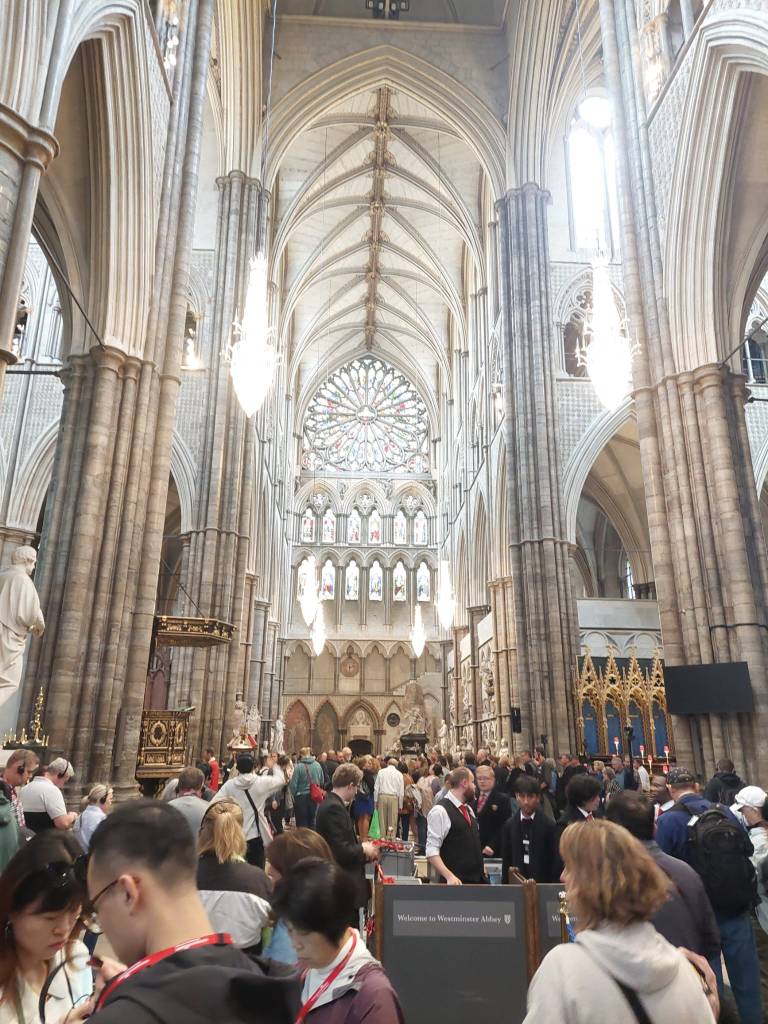
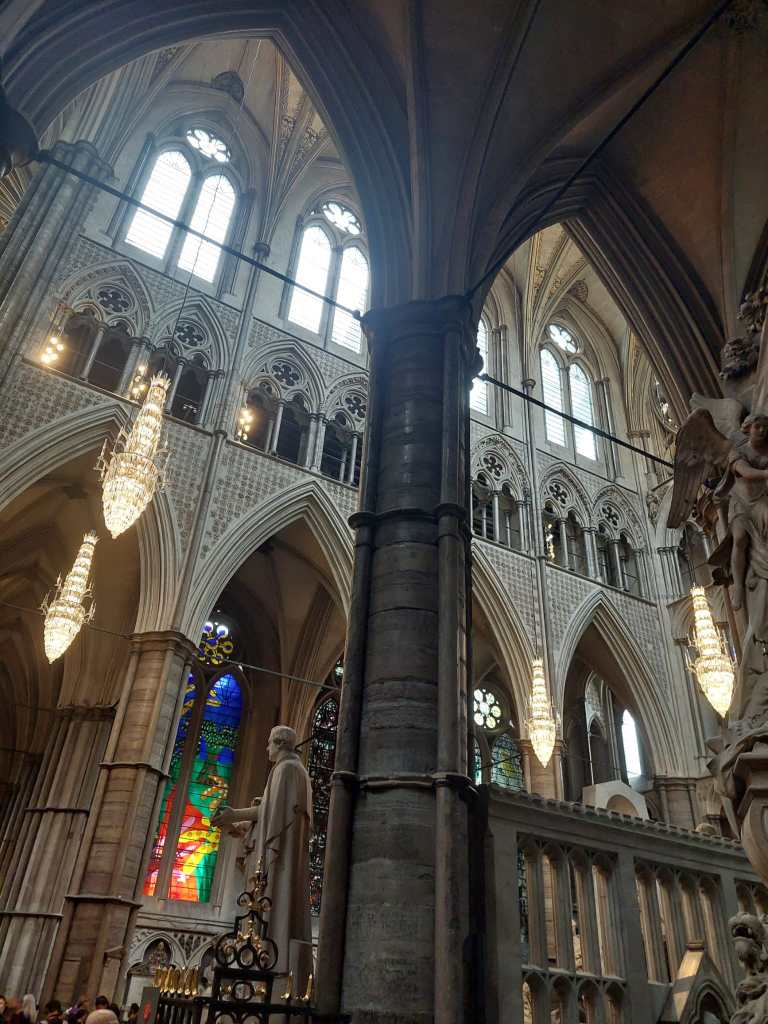
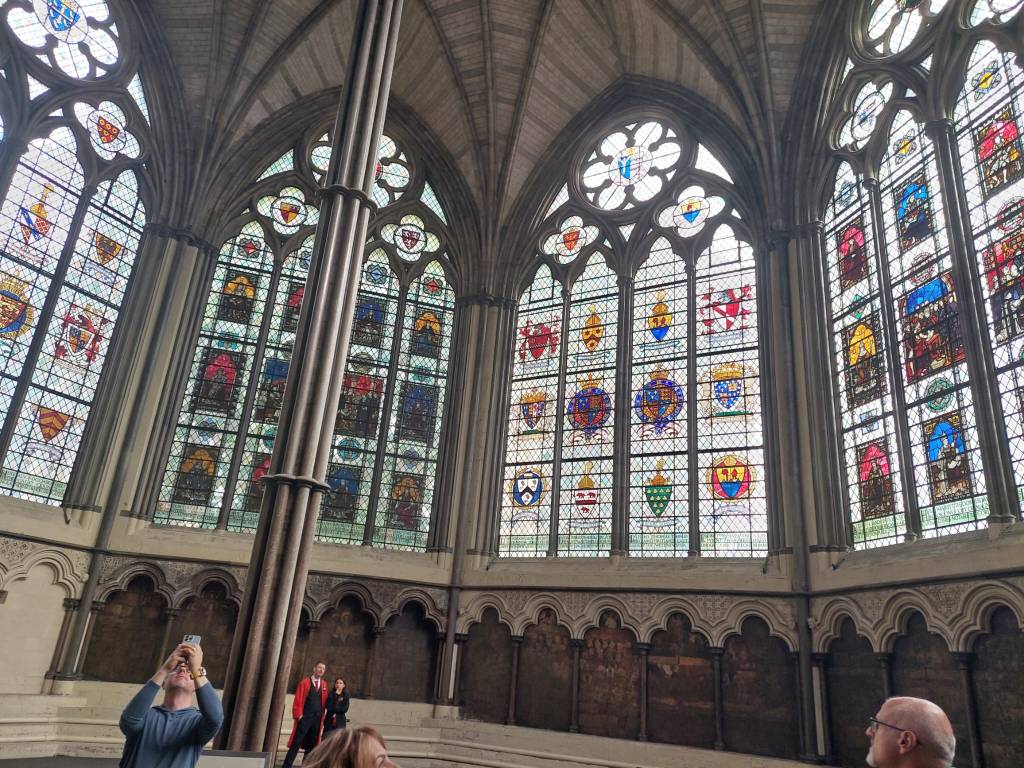
We saw the thirteenth-century Coronation Chair on the way out, a fairly plain wooden chair with fancy lion feet, made with a hollow base to house Scotland’s Stone of Scone, currently in Edinburgh Castle awaiting the next time they need to crown someone. We walked out and crossed into Parliament Square, past statues of Mandela, Lloyd George and Churchill, scanning for somewhere to throw away the litter that had accumulated in our pockets, but there were no bins. I explained that this was because hiding bombs in bins was a regular tactic used by the IRA back in the 1980s but I wasn’t sure my explanation helped much – sometimes people just want to be outraged by a lack of bins.
We headed up Whitehall and I pointed out the Treasury, Foreign Office and the Cenotaph but as nice as these are, they don’t mean much to people from other countries, they’re just nice buildings where government business gets done, and much like another country’s famous people, they mean nothing if you’re not from there.
I think they’d have preferred to see a bin than a few old buildings and a war memorial.
And this became the narrative … when everything is new, every observation becomes a generalization, first impressions embedding themselves in the soft putty of the brain, a putty that soon hardens into a cranial concrete block, first impressions becoming infallible truths.
Anyway, as time wore on the the truth drifted and it became “London” that had no bins, and given time, it would become “England” that had no bins, especially as so many people think “London” and “England” are synonyms anyway.
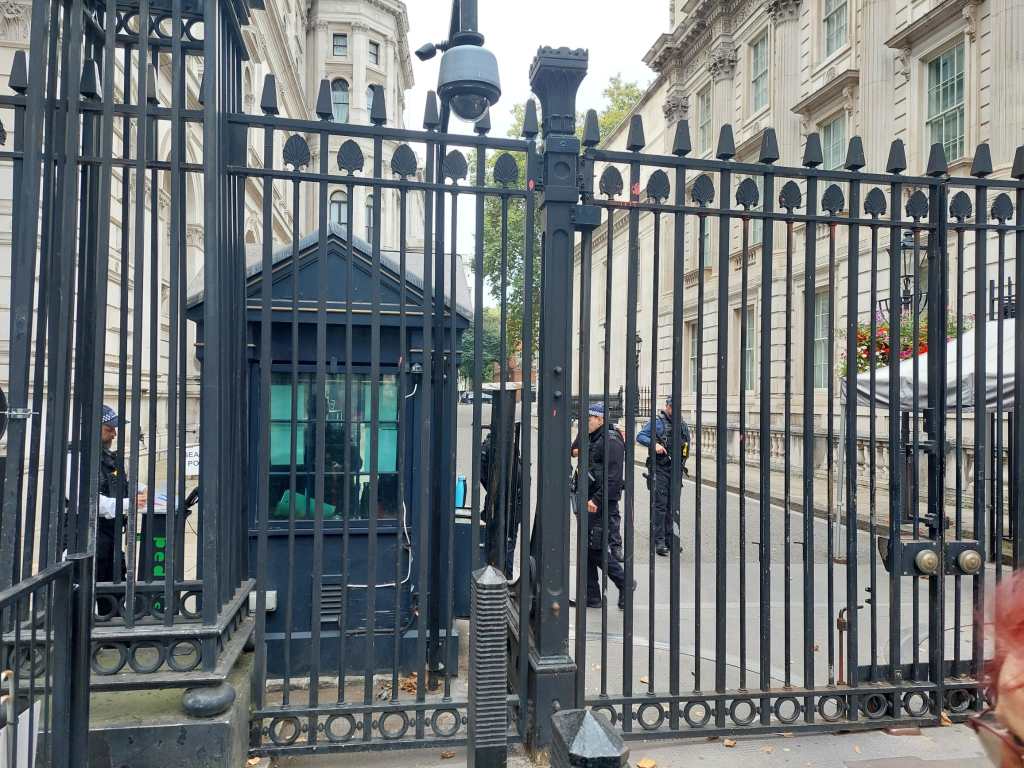
We continued, pausing at the gates of Downing Street where there’s not much to see. It is fascinating knowing what has happened at this famous address (and what continues to happen), but there’s only so much attention you can affix to a distant shiny door you can barely see, and we moved on.
On a school trip to London as kids we were allowed to walk all the way up the street, back then it was open to pedestrians like any other street. We stood in a rowdy huddle opposite the Number 10 door shouting “Maggie!” but the Iron Lady steeled her metallic resolve and turned a deaf ear to our cries. She then had gates erected at the end, quite possibly as a direct consequence of our mischief, although the official government line was, as with the bins, a response to the threat of terrorism.
I was tired, and asked if people wanted a break, but everyone was still feigning strength and vitality, and so we laboured up Whitehall and crossed Trafalgar Square, found a litter bin that I made a point of mentioning, and continued on to The National Gallery. I don’t know much about art, but even for an ignoramus like me, this is one of the capital’s treasures, and if you’re operating on a budget, it is one of the many places you can enjoy for free.
I whizzed past most of it, enjoying the beauty of the building more than the pictures on the walls. In Room 41 that changed, and the more informal style of Renoir, Manet, Sisley and Sorolla grabbed me. There’s something captivating about that early impressionist period. I am guessing here, because we didn’t do History of Art in my school, but I assume there was a moment when someone got bored of being a combination of camera and propaganda machine and instead started communicating something else, something subtler and deeper. I don’t really know why, but the way some of the paint splodges were daubed on the canvas set my heart racing a bit faster, and I didn’t want to leave this room.
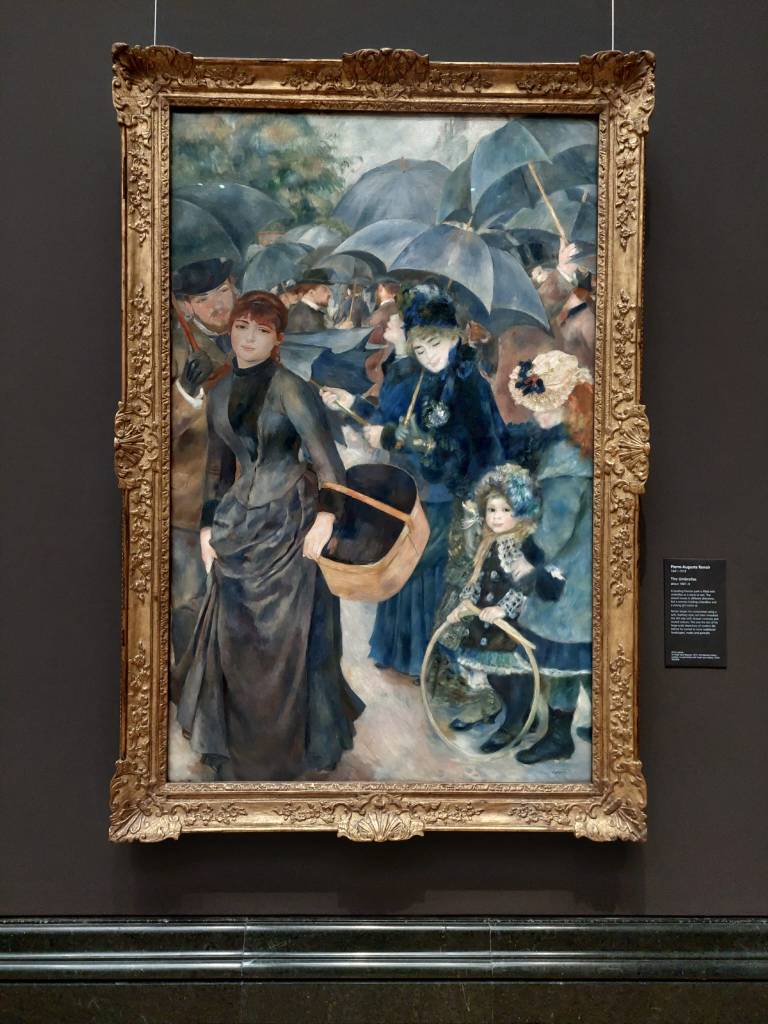
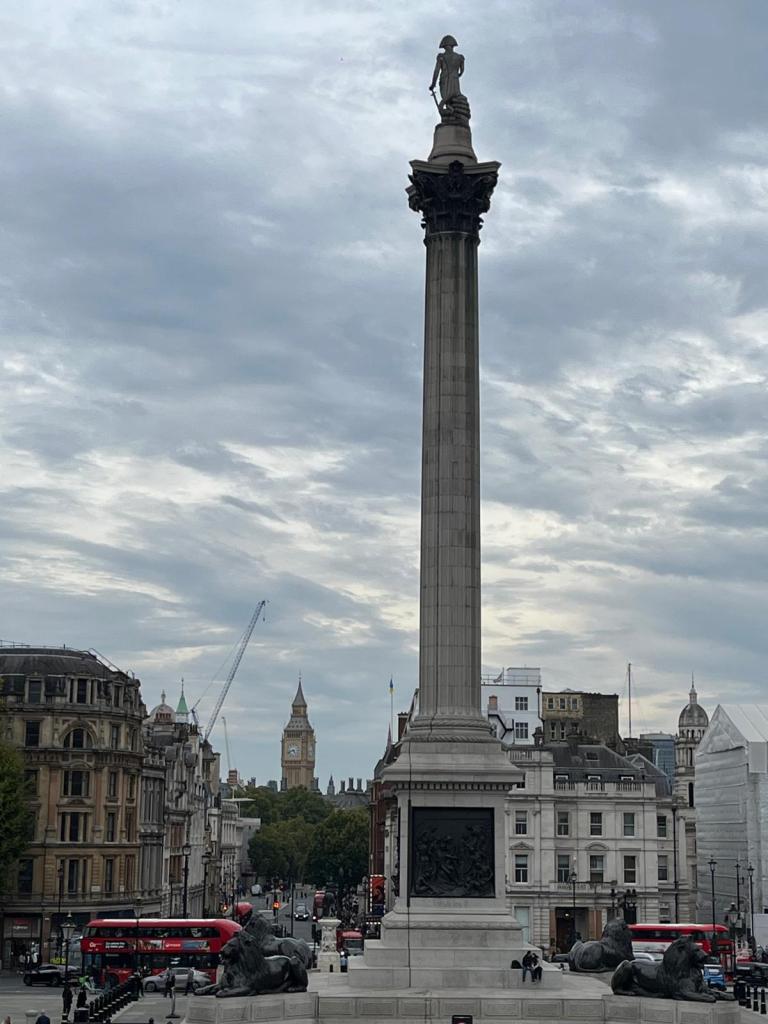
We did leave it though, and moved on to discuss if Van Gogh’s Sunflowers is really all it’s cracked up to be (it isn’t) and anyway The Harp pub was just around the corner … unfortunately, as always, it was jam-packed (for good reason, it serves some of the best beer in London), so we walked on, past multiple litter bins that I pointed out and commented upon, into Covent Garden.
We noodled around a bit, and through the gentle afternoon sun we found our way up to the Seven Dials. We tried The Lamb and Flag, but, as always, it was heaving and customers were spilled out into the space in front. The thing was, we didn’t just need to sit down for tiredness reasons (by now people were starting to tentatively admit to a minor degree of mild utter exhaustion), but also to consume a couple of hours so we could build up an appetite for dinner. The plan said we were having dinner in Chinatown so we were having dinner in Chinatown, even if it killed me, which at that moment it felt like it might.
The Spanish are famous for many things, most of them positive like excellent food and wine, and being sociable and friendly people, but they’re really annoying sometimes too, not least when they refuse to ever admit to being tired. Spanish people take patriotic pride in staying up long past my bedtime – this is almost as annoying as how they always stand in doorways.
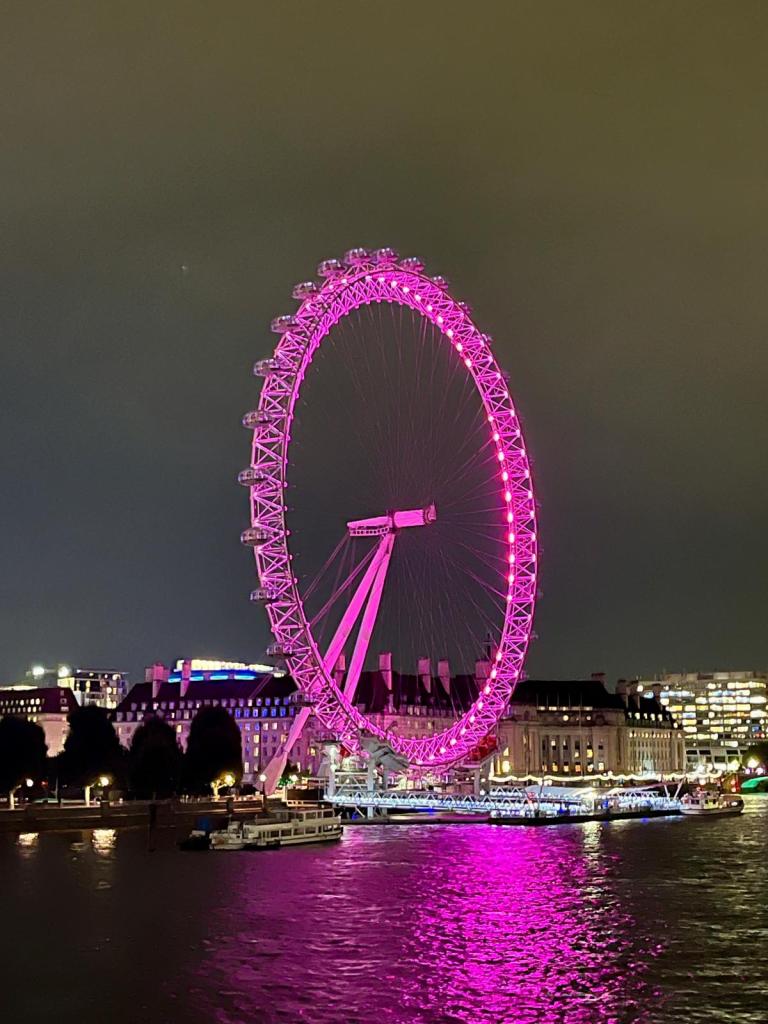
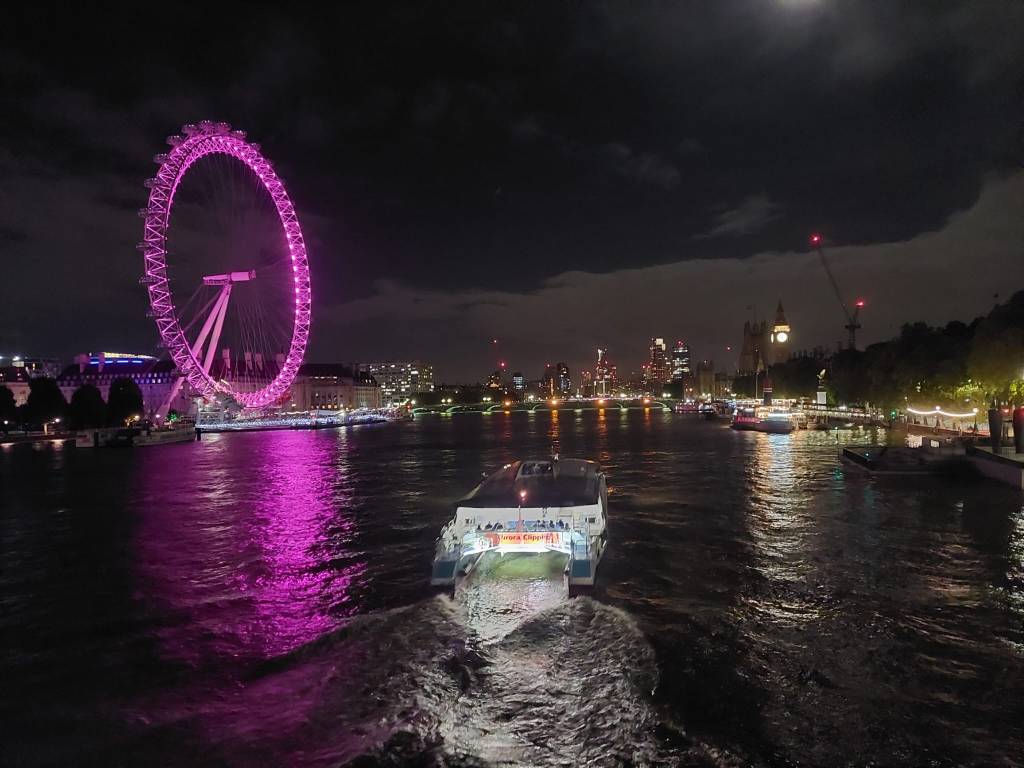
We drank some beer in a Peruvian place because it had available seating, then wandered off via Leicester Square to Chinatown where we ate on a large round table with a lazy Susan, most using knives and forks because Spanish people can’t use chopsticks. We then wearily walked back … but hang on, not yet, the night still being reasonably young, there was time for coffee and cream cakes in Ole and Steen … then, at last, the trudge to our hotel via one of the Golden Jubilee footbridges that run parallel to Hungerford Rail bridge, feeding the trains into Charing Cross Station. The upstream view from the westerly bridge toward the Eye and Parliament is lovely and we paused for photos – I often walk this way when I’m in London and always take a moment to appreciate it, feeling grateful to be is such a beautiful spot in this amazing city.
Day Two
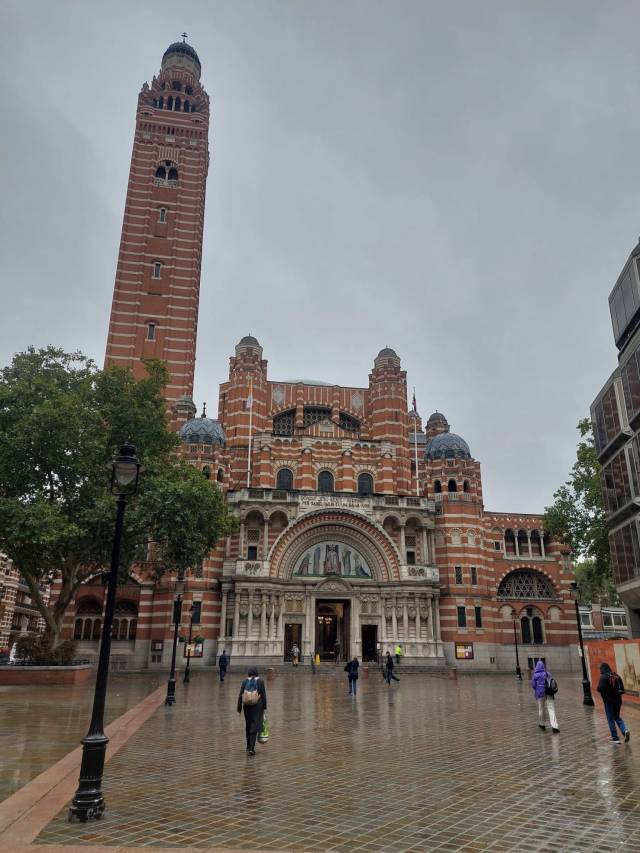
After trying to explain that it wasn’t all hotels in England that don’t make your bed, it’s just the cheap ones (“hotels in England don’t clean the room!”), we got the bus a few stops to avoid the drizzle, getting off outside Westminster Cathedral, the Catholic version of the Abbey just down the road. In contrast to its ancient neighbour, Westminster Cathedral is relatively new (opened in 1903) and is quite different in style being made of cheaper brick in a Roman basilica style rather than the more obvious Gothic style of many of the area’s finer buildings, including the Abbey and Parliament.
We didn’t go in, we didn’t have time, the Changing of the Guard was at 11 and it gets crowded, so we wanted to get there in good time and not miss any of the action.
We walked up past Victoria Station, and I resisted the temptation to entertain my friends with a lecture on railway infrastructure, mentioning only that this had been my London gateway when I lived in Brighton (well, Hove actually), and instead turned right into Buckingham Palace Road and down toward the palace.
There were thousands of tourists, crowded into every spot, several deep in most places, their umbrellas blocking the view for anyone behind. I found a reasonable position, only slightly annoyed by having to do such a silly touristy thing, and being in such a dense crowd, and soaked by the incessant drizzle, and risking permanent blindness from the umbrellas precariously dancing in front of my eyeballs … this all added up to being majorly annoyed by the whole enterprise, an annoyance multiplied by a factor of big when the stupid ceremony didn’t even happen!
Eventually some soldiers marched down The Mall and we all tensed with excitement, thousands of phones drawn, their screens shining among the crowd, ready to record shaky blurred videos of distant guards doing something vaguely historic. These videos would soon all end up on Instagram and Facebook, proving their owners to be both interesting people who were both in London and experiencing something cultural.
Daniel Kahneman said the Instagram generation don’t live in the moment, they experience the present as an anticipated memory, and that’s how it feels as this non-event is captured by thousands of phone cameras, observed through the phone as an anticipated social media post rather than directly.
That said, nothing actually happened, so there wasn’t much present to be living in.
Some tourists perched on the kerb behind were discussing the Union Flag flying half-mast on the palace roof, guessing that it meant His Majesty wasn’t at home. This was partly true, whenever he is in residence his Royal Standard flies, and the Union Flag is only flown when he’s out, but it was at half-mast out of respect for people who had been killed in an attack in Manchester the previous day, not because they were sad at His Majesty’s absence.
The King doesn’t live in Buckingham Palace anyway, he lives in the much nicer Clarence House over the road; the main palace has never been popular with the royals, and now – like the Royal Palace in Madrid – it’s only used for business. William has gone even further, saying he intends staying in the modest (by their standards, not ours) Adelaide Cottage at Windsor when he becomes King.
I am watching The Crown at the moment, and it’s interesting the late Queen also wanted to stay at Clarence House, but was persuaded to move over the road, to become the crown, a neutral personification of a nation, and not impose her individualistic ideas on the institution. They didn’t choose this life, but they have to do it anyway, imprisoned by birthright and expectations, albeit in a series of rather nice palatial prisons, the blow softened with wads of cash.
How many of us would choose their loss of privacy and freedom in exchange for the money and status?
Most days I wouldn’t.
As the confused and disappointed crowds drifted away, we wandered up The Mall, taking photos of the palace with the golden Victoria Memorial in the foreground. We turned into St James’s Park, the loveliest of the capital’s central green spaces, but it was so crowded it was unbearable and we cut back across The Mall again, up the steps, past the Duke of York column (not built to honour the most-recent holder of that title), through St James’s to Mason’s Yard to see the Yoko Ono mural and the site of the old Indica Books and Gallery, owned by friends of Paul McCartney, and the place where John first met Yoko – I mention this in my Beatles walk across London.
We went in the Chequers Tavern for beer and a sit down, where we enjoyed English real ale, well … I say enjoyed … Spanish people don’t like English ale, beer in a hot country like Spain is served cold and fizzy, usually fairly light on alcohol to allow for greater thirst-quenching consumption without getting hammered – the Spanish don’t drink to get drunk, they drink for pleasure not pain, and often with food. This means they tend to keep their beers around the 4% range, which also means they are less tasty, and so a flavoursome flat dark ale served at cellar temperature (around 12º) without any food is not always a welcome addition to a Spaniard’s table.
Oh well, we drank our drinks and relaxed, briefly considering grabbing lunch here, but the plan had us going to Harrods to buy a picnic to eat in Hyde Park, and so that’s what we were going to do.
We lumbered out the pub, feigning energy, and up to Piccadilly, pausing to pop into a very busy Fortnum and Mason, before getting the bus across to Knightsbridge – using buses in London is surprisingly easy and highly recommended.
Harrods is also heaving with people, and the now torrential rain is making our plans for a picnic in the park look a little unwise. We wandered around the food halls, marvelling at the prices, ditched our plans to get a boxful of nosh from the Rotisserie stall, and headed out into the rain to find the nearest pub (Tattersall’s Tavern). We ordered food and Old Speckled Hen beer, and enjoyed sitting down without being rained on for a while before realizing how little time we had to get to The British Museum.
We had tickets for 17:30 – it’s free, but they tell you to book a slot – although no-one at any point checked our tickets, so we needn’t have rushed at all (I think they only enforce the ticket rule when busy).
It was busy.
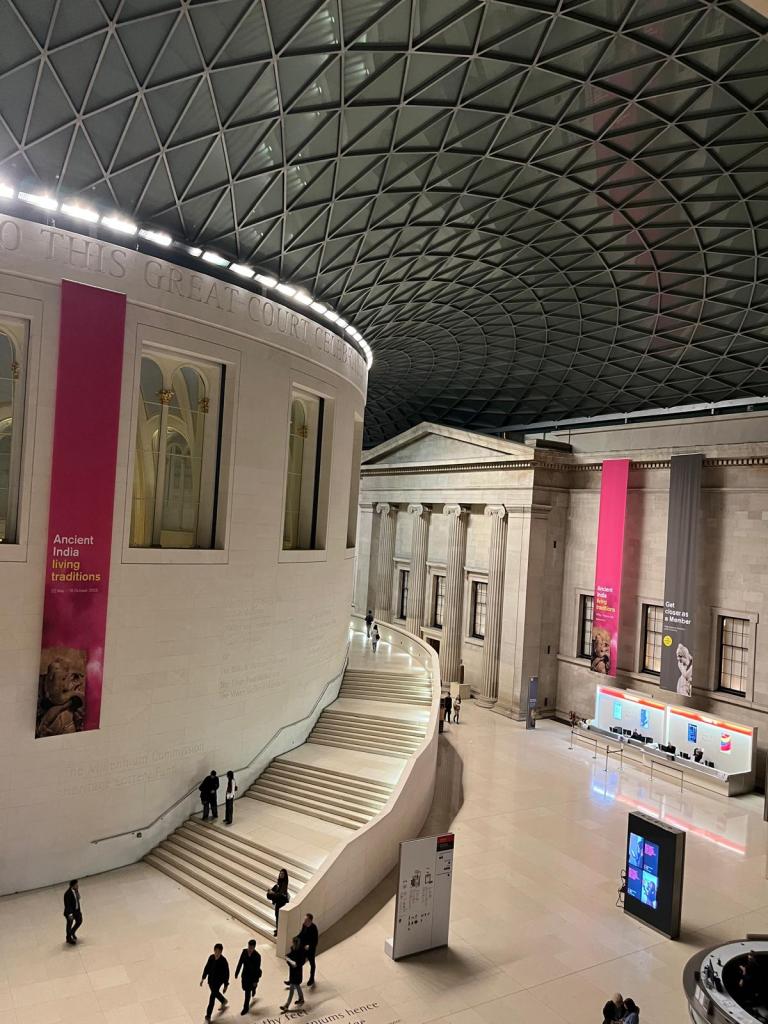
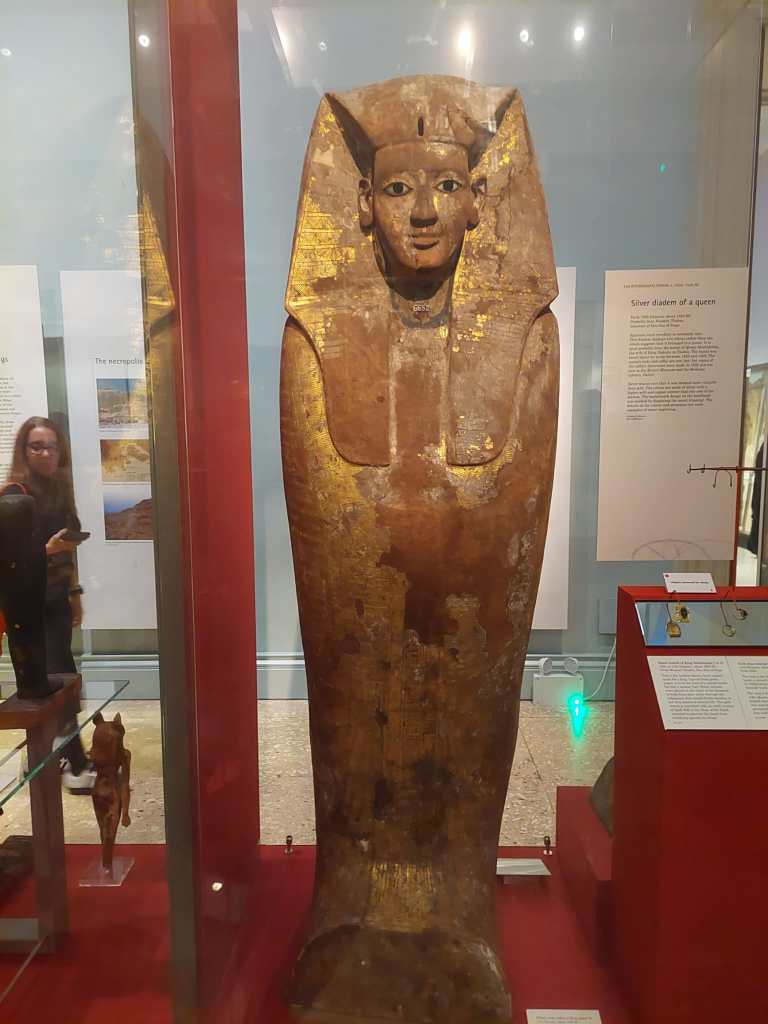
The British Museum is one of the world’s oldest and largest museums, and riffs big on the idea of Britain being a curious nation of explorers and collectors. Some might use other words to describe the process by which the world’s treasures ended up in London1, but as a curious explorer myself, I liked the description, and it was interesting how much the museum’s eyes were turned outward to the world, with very little focus on Britain itself – I wonder how many other country’s national museums told so little of their own story, a reflection of the English character perhaps (more than British maybe).
The Norman-Foster-designed Great Court was a highlight, especially the gorgeous Reading Room, although I never puzzled out how they reach the books on the upper shelves of that beautiful room, once a haunt of the likes of Lenin and Arthur Conan-Doyle.
We wandered around, a little unsure what we were looking at, but determined to be marvelled by it nonetheless. The Rosetta Stone, the Parthenon sculptures (what we used to call the Elgin Marbles), Egyptian artifacts, an old Scottish chess set, the Rothschild family collection of posh stuff … we left feeling like we’d barely scratched the surface of a collection we barely understood.
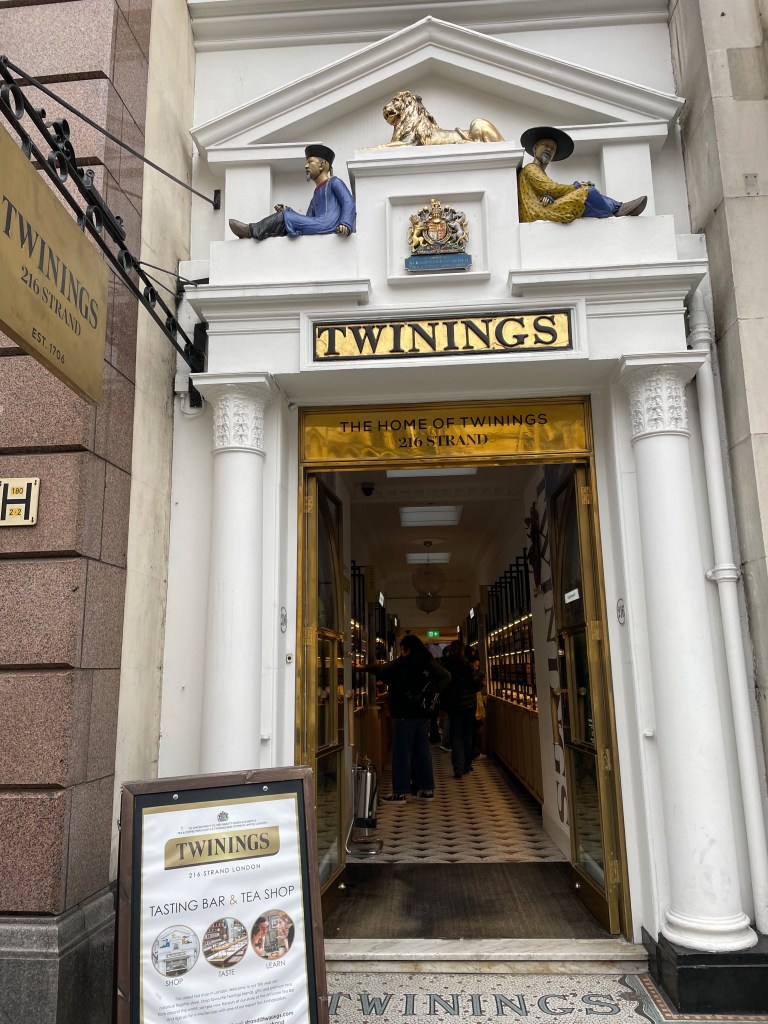
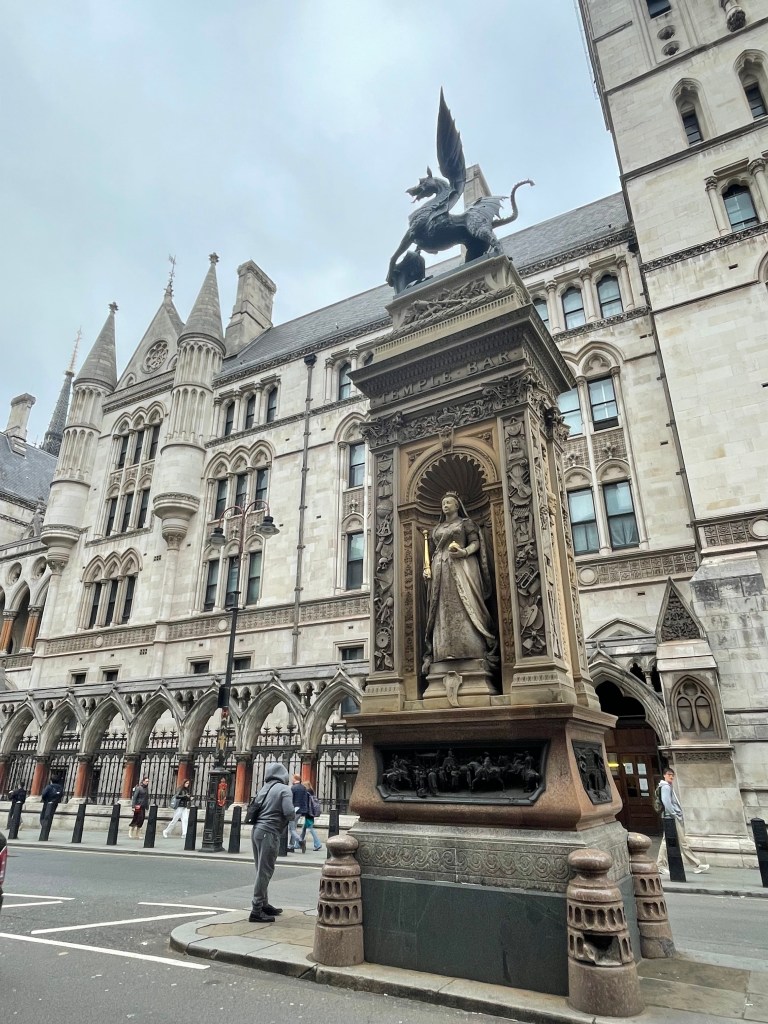
We walked down to The Strand and turned left, past the original Twinings tea shop, the Royal Courts of Justice and the Temple Bar Memorial separating the cities of Westminster and London. Ahead the two-thousand-year-old Roman city and the financial district, behind the one-thousand-year-old Anglo-Saxon city with its theatres, bars and restaurants – they say you go to London to make money, and to Westminster to spend it.
We spent our money that night in London, in The Old Bank of England, a very noisy disco pub full of young people. I’m not against disco dancing in its place, nor against youths, but I don’t like if they get too close or do anything antisocial like speak to me, so I was not at my best by this point. Fortunately our table was in a quieter dining room to the side, perhaps reserved for clientele of a more mature disposition.
My plan was to expose the group to further delights of the British culinary experience with the pie menu, but in the end I was the only one who had London’s signature dish of pie and mash, the others all had burger and chips.
The table was too small for six adults, and I chose to sit by the wall at one end, so spent the meal with my elbows tightly tucked to my sides. It was like trying to a meal while trapped in an air-conditioning duct.
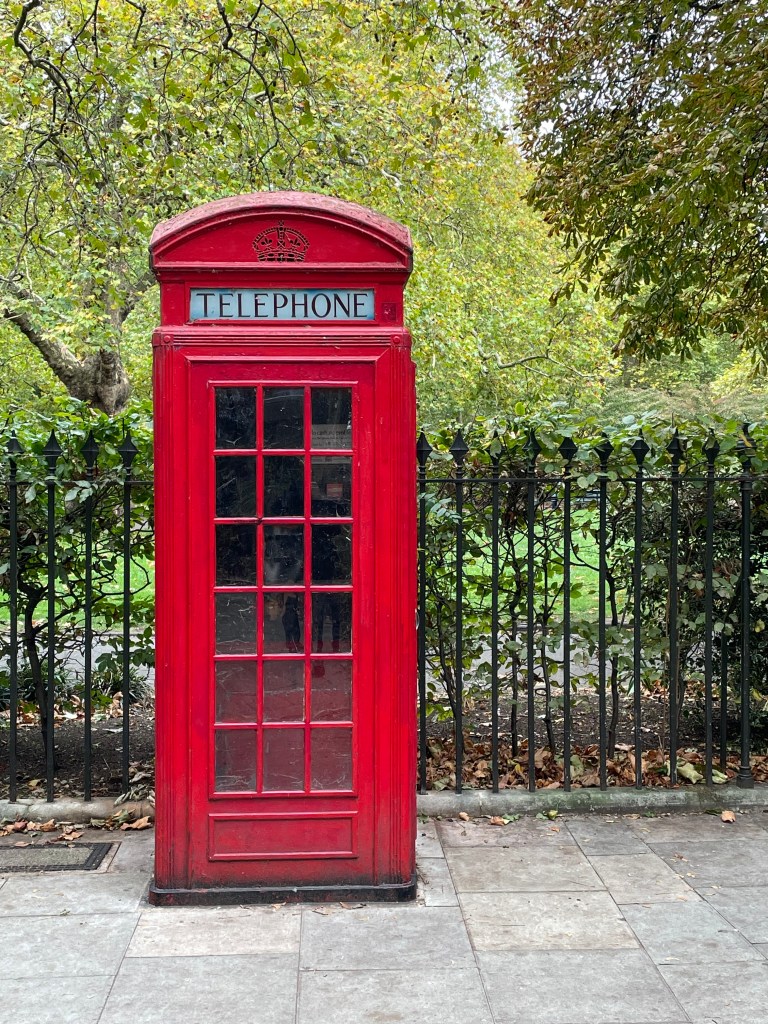
(The photos below are mine, but from a different day).
Day Three
We got the bus to Euston Station, London’s ugliest mainline station, and walked along toward St Pancras, its most beautiful – between the two is the British Library.
It was built in 1997 as the Library vacated the Great Court and Reading Room of The British Museum, giving both much more room to breathe. This was an excellent idea, and although the site between Euston and St Pancras was better than the original idea of knocking down half of Bloomsbury, the building that emerged – a boxy cross between a ship and a factory – was more at the Euston end of the beauty scale than the St Pancras end.
See what you think:
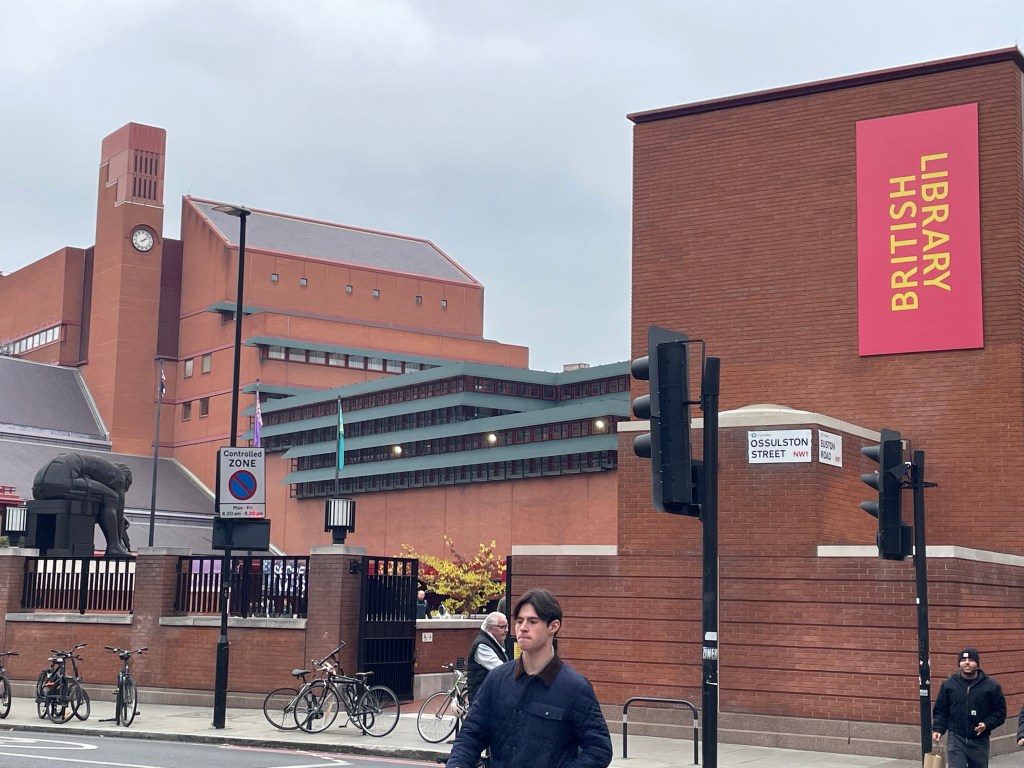
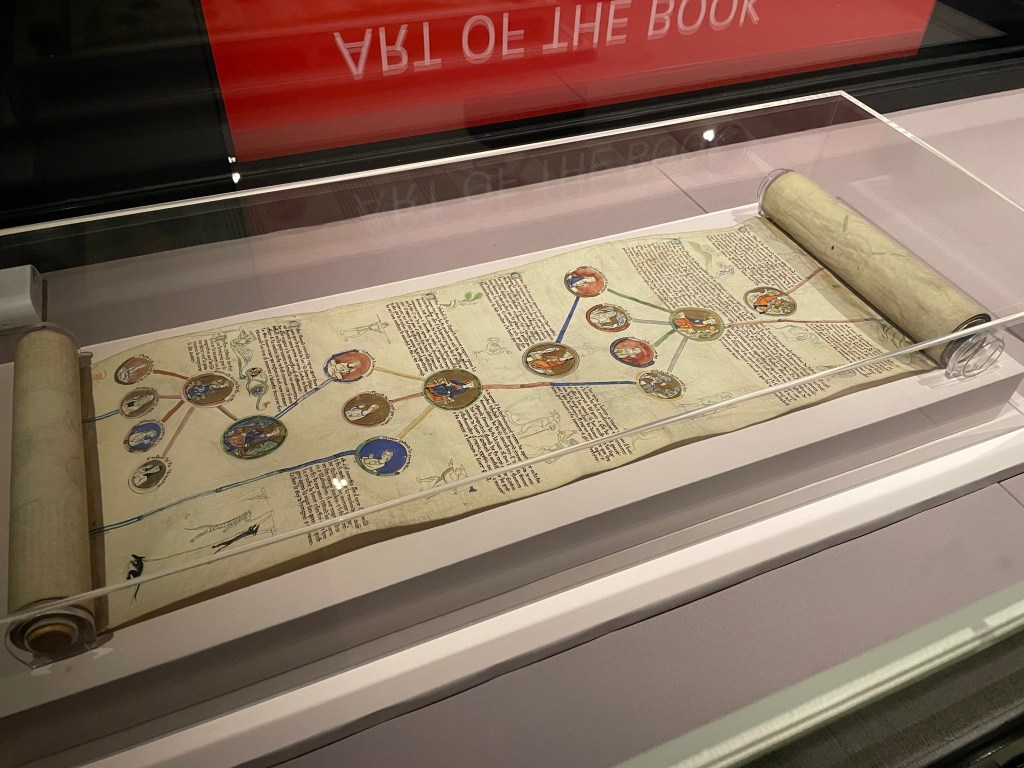
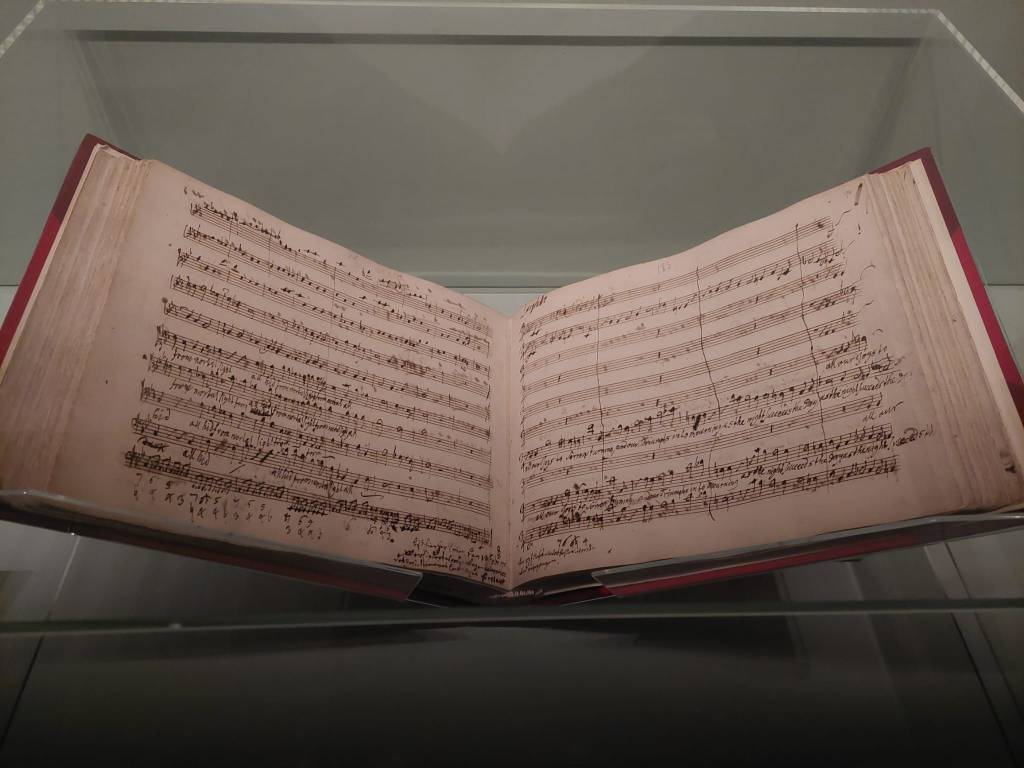
But let’s not judge a book by its cover, because inside this angular red-brick edifice is a world so beautiful it took my breath away. Yes, I’m biased, I’m a bibliophile and bookish people are my tribe, but The Treasure’s Gallery is aptly named, from original hand-written musical compositions by great composers to scrawled Beatles lyrics; from the Magna Carta – the (broken) agreement between the barons and King John – to a beautiful royal genealogy that I adored … the Lindisfarne gospels, old illustrated manuscripts from Charles Babbage …
Everyone else was sitting patiently outside, ready to move on to see the Harry Potter trolley at King’s Cross, as I, tears in my eyes, skin covered in goose-pimples, wandered around, lost in the beauty around me. In ways that the museum and gallery hadn’t – I’d felt like a tourist in those places – The British Library had grabbed me, and this felt like my place.

The Library, the nice man on reception told me, has a deep basement containing millions of books, which, he said (and he had measured it with his iPhone) was as deep as the building in front was tall. Millions more are stored in an ugly square fortress oddly located on an industrial estate on the edge of Leeds – not far from the Leeds United training ground – so that corner of Leeds abounds with precious treasure.
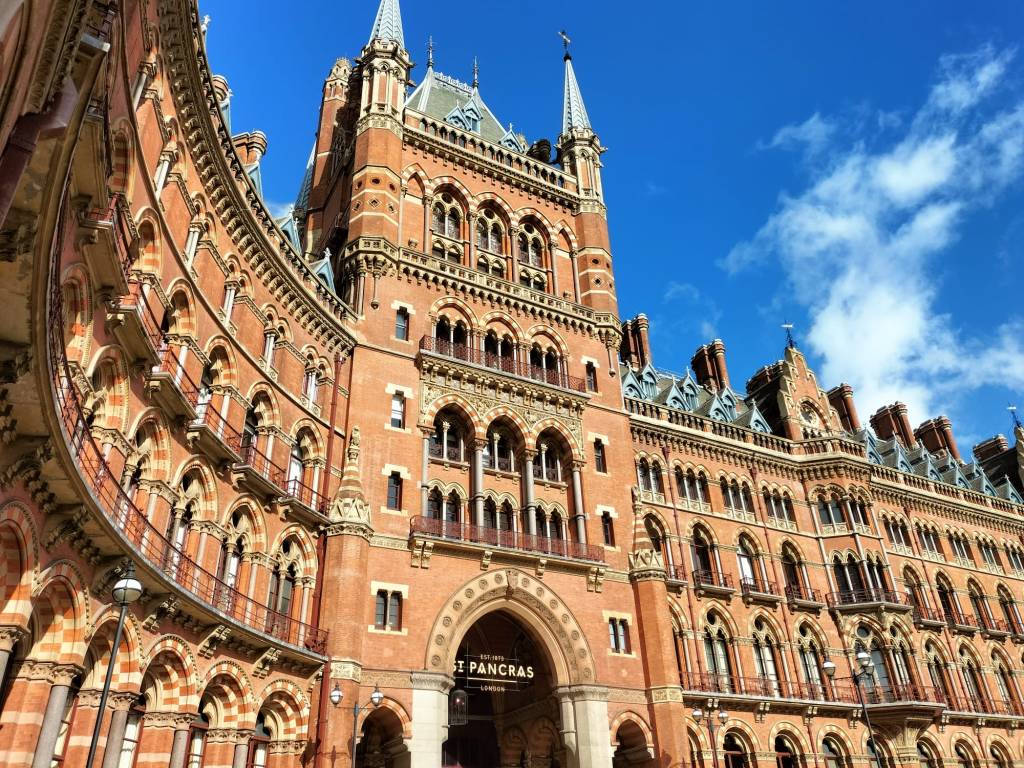
I reluctantly left, dragged out by those who had less patience for staring at old books, and walked to St Pancras – an example not just of a beautiful Victorian railway station (built in 1868), but of a clever piece of modernization. Here the trains leave for the tunnel to France and Belgium, and what was once a neglected terminus threatened with closure, its few trains trundling up to Sheffield and cities in the East Midlands, now vibrates as an impressive international gateway.
It also serves Luton Airport, so perhaps that adds to the buzz.
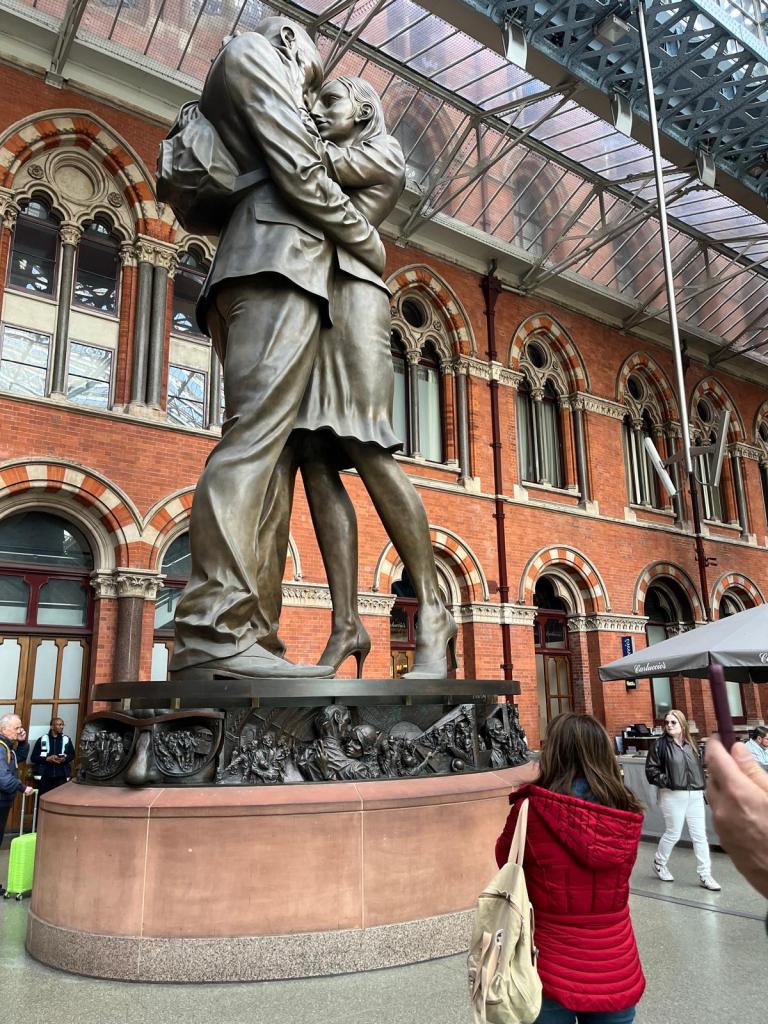
We took photos of The Meeting Place statue by Paul Day, described by various critics as “a very good example of the crap out there” and a “terrible, schmaltzy, sentimental piece of kitsch” and “barely a work of art” – well, as I said, I don’t know much about art, but I loved it.
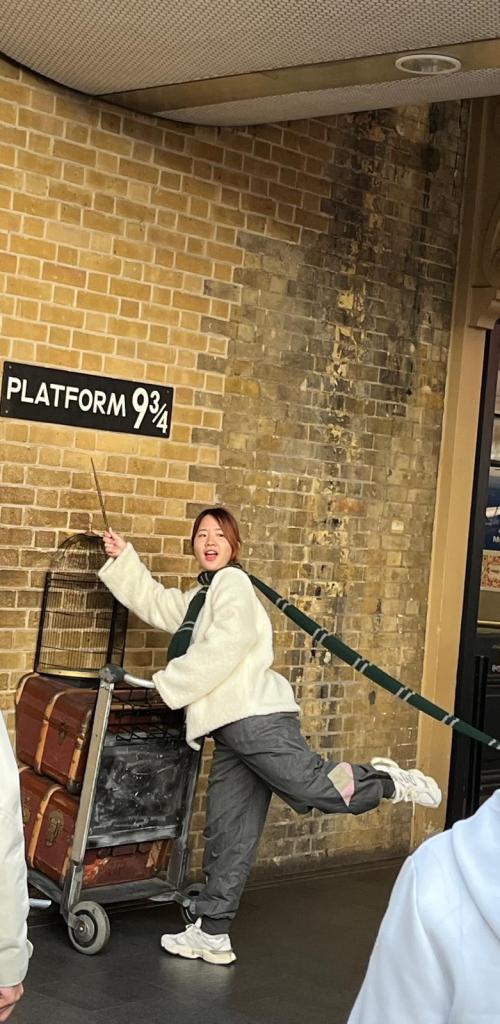
Next door is Kings Cross, bigger, busier and less nice than its neighbour, but perfectly decent in a functional sort of way. We were only here to see Platform 9¾ so we could take a photo with the luggage trolley disappearing into the wall, but the queue was far longer than our patience and so we snapped a photo with an unknown random person in it, and moved on.
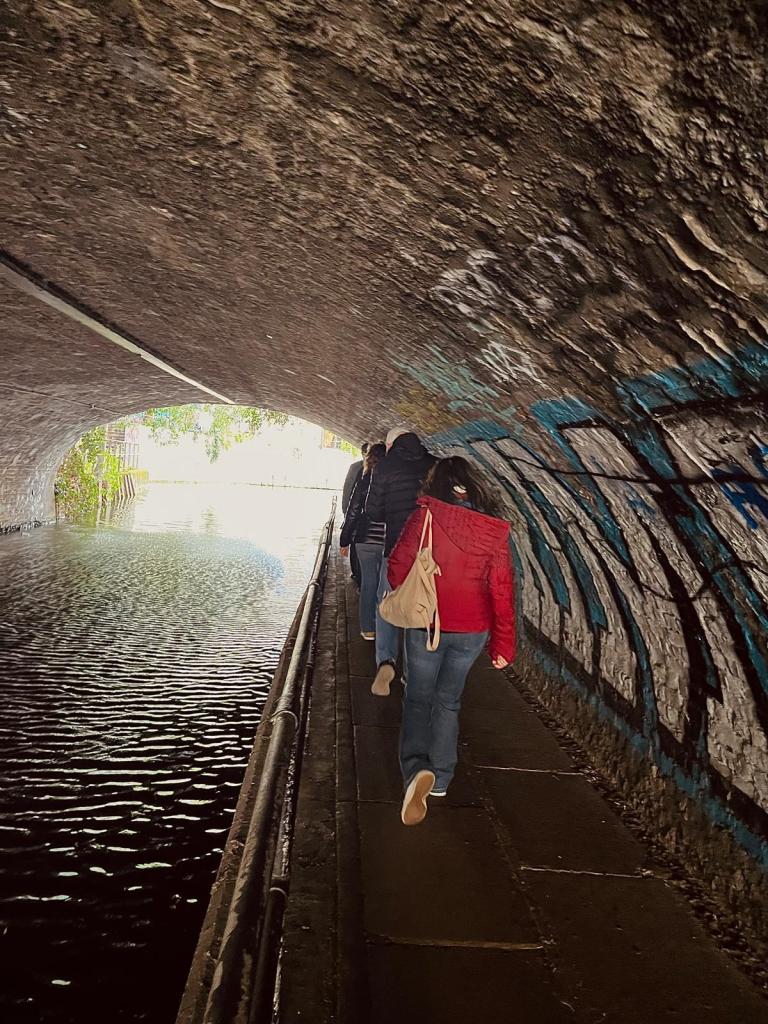
We braved the gale-force winds and found our way to the Regent’s Canal, accessible at Granary Square via the green steps, just behind Kings Cross. This short canal connects the Thames at Limehouse Basin to the Grand Union’s Paddington branch and so, with sufficient patience, one could theoretically sail a narrowboat from here to Birmingham and points north – even as far as my hometown of Leeds.
I would love to do that, but I also like the idea of kayaking the canals, drawn – as with running and hiking – by its simplicity. I grew up near the Leeds-Liverpool canal, and as a kid imagined I might one day live a bohemian lifestyle aboard a narrowboat, perhaps taking a break from being a rock star to write my travel tales. Alas life didn’t work out like that – it rarely does – but maybe one day I can kayak the 127 miles of that lovely canal … although that’s a proper adventure, that’s doing things that people don’t normally do and so requires more time, money and camping tolerance than I currently possess.
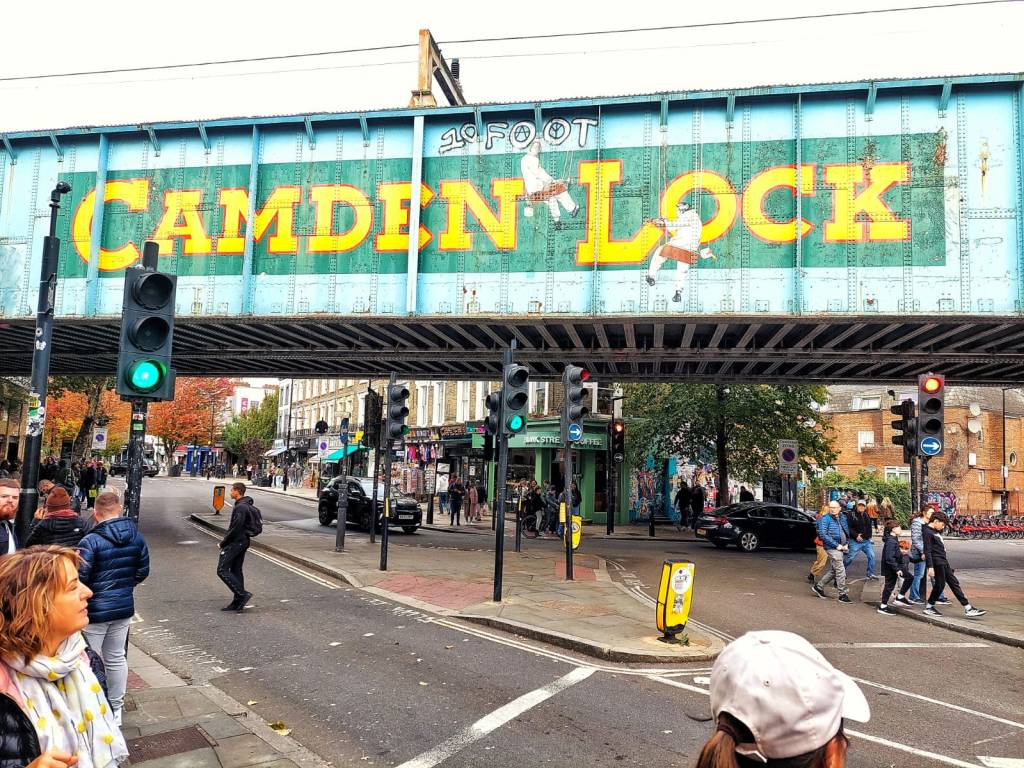
We walked along Regents Canal toward Camden so we could eat at Camden Market.
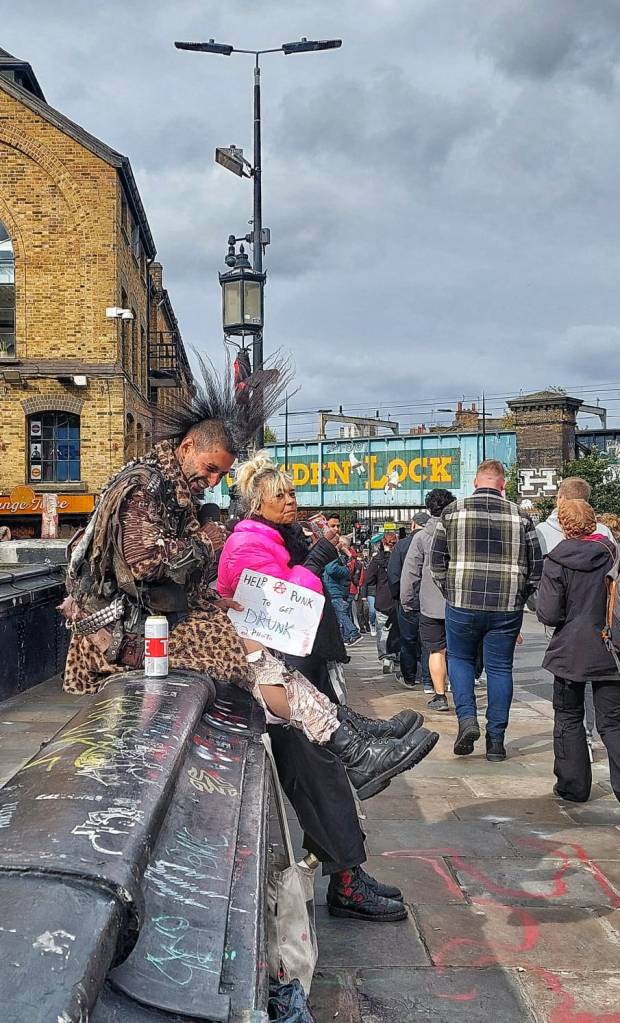
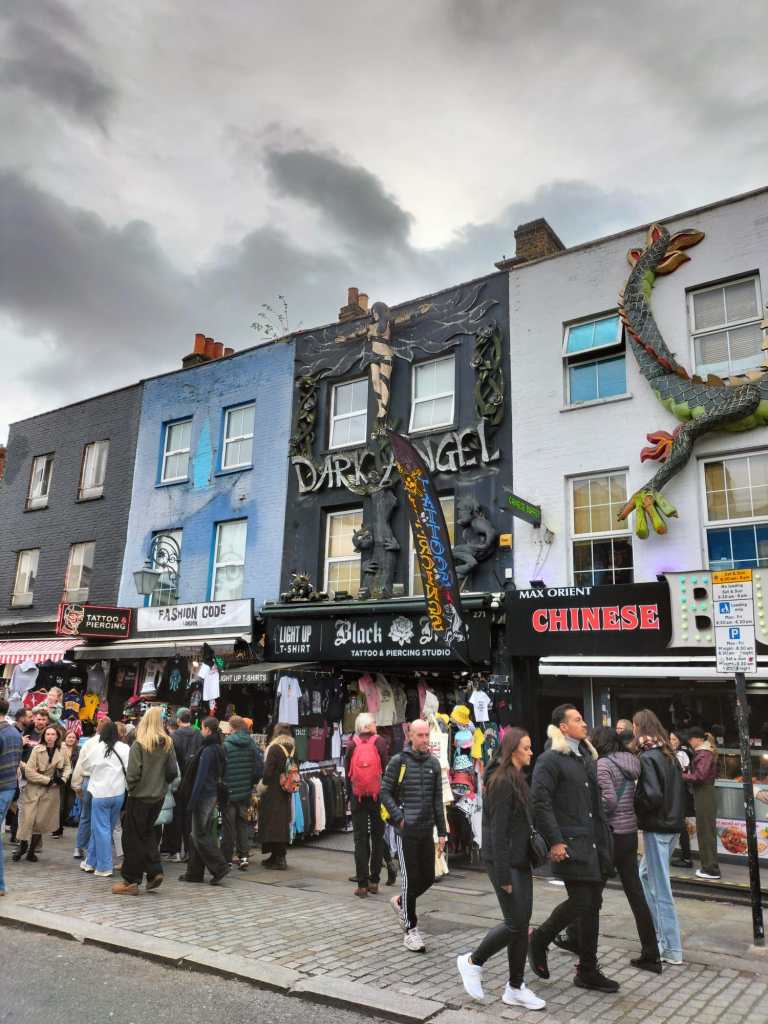
We wandered a little around the market and had a beer in Lockside, then along the High Street and back round to the market. It was busy, and not everyone was enthused about the idea of eating different stuff while standing up, and so we found a place to sit down and eat the same stuff. I, experimenting with an alcohol-free life, and feeling a bit chilly, ordered a peppermint tea and you’d think the sky had come crashing in. Never before had such a cultural misstep been taken, and my bamboozled beer-guzzling pals were left reeling at the very idea of someone having tea to accompany a meal.
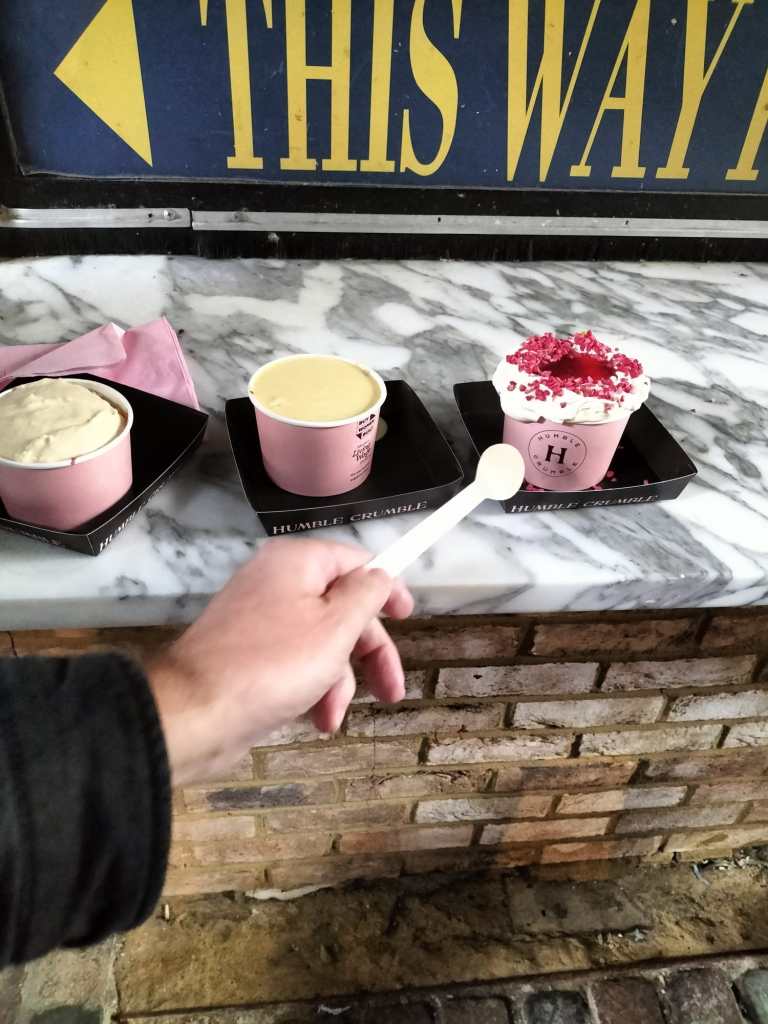
We survived, and went on to enjoy various delicious crumble-based deserts from Humble Crumble, all agreeing that, in a strong field of enjoyable puds, the trifle was the pick of the bunch. I overheard the chat of one of the girls serving, saying “Oh, I love The Smiths!” and because the youth of today have – thanks to TikTok – suddenly discovered the Mancunian quartet, we chatted about the band, and I asked if she liked Radiohead too, knowing Let Down had been another TikTok sensation and she nodded. I am not sniffy about such things, we all find great music in our own way, and it’s fantastic that it is being appreciated by a new generation of fans.
She then put extra cream and a cheeky swirl on my trifle, which I’m assuming was just for me, but it is possible this is standard for all Humble Crumble customers.

The plan was to then walk to Primrose Hill to see the view of London and on to Abbey Road, but the high winds meant the park was closed, and so we walked through the posh streets of St John’s Wood to Abbey Road Studios.
It’s unfair of me to assume that just because I am a bit obsessed with music in general, and The Beatles in particular, that others would be too, and so I was a bit nervous about including this on the itinerary. There’s not much here really, a studio you can’t go in, a busy zebra crossing and a shop full of tourists who probably wouldn’t know A Hard Day’s Night from Sergeant Pepper, at least not until they go viral on TikTok.
I expected them to want to take photos, possibly with us crossing the correct way on the zebra crossing, and possibly even from the correct angle to have the right background, but again, assumptions had made an ass out of me, and it turns out such attention to detail is not as general a trait as I had imagined.
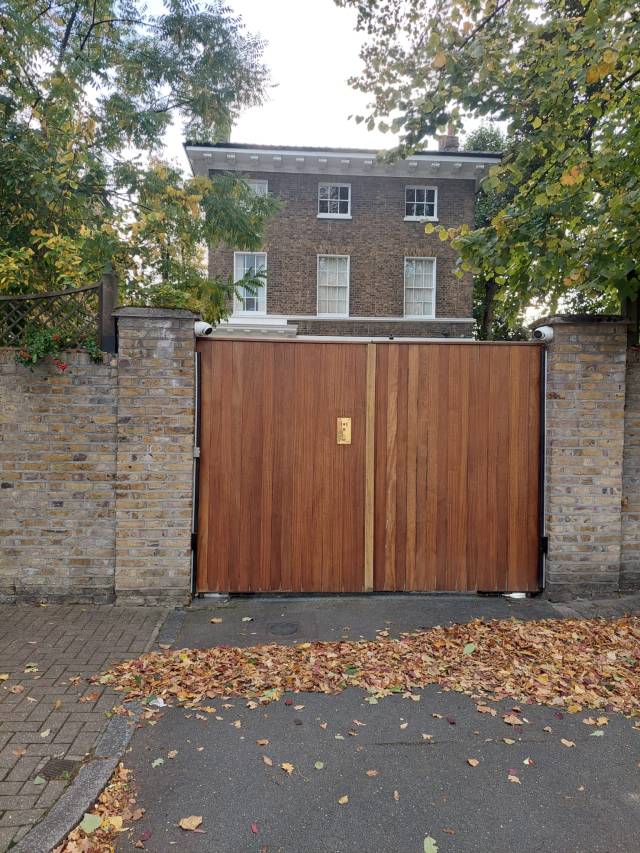
Oh well, we wandered off to see Paul McCartney’s house on Cavendish Avenue and then feeling a bit weary, we ditched the idea of going to Greenwich.
It was always a bit ambitious, but the plan had the tentative idea of getting the Tube and DLR to the north side of the pedestrian tunnel, walking under the Thames, seeing the Cutty Sark and having afternoon tea in Greenwich Market, possibly wandering up the meridian, and then getting a boat back to Embankment.
In the end we just walked to the nearest pub, had a beer, and played Uno (the only game in the pub that we could all play), which – although unplanned – was actually rather lovely. To relax in a cosy pub playing games for a couple of hours was a much better idea than trying to squash yet more activity in – I suppose, on reflection, if we’d wanted to include Greenwich we should have not done Abbey Road, but – perhaps blinded by my own obsessions – I never thought of that.
We walked from the Sir John Balcombe pub down Gloucester Place, along Oxford Street, down Regent Street, cutting left into Kingly Street via the little archway and had another typical English culinary experience: Indian at Dishroom Carnaby.
Day Four
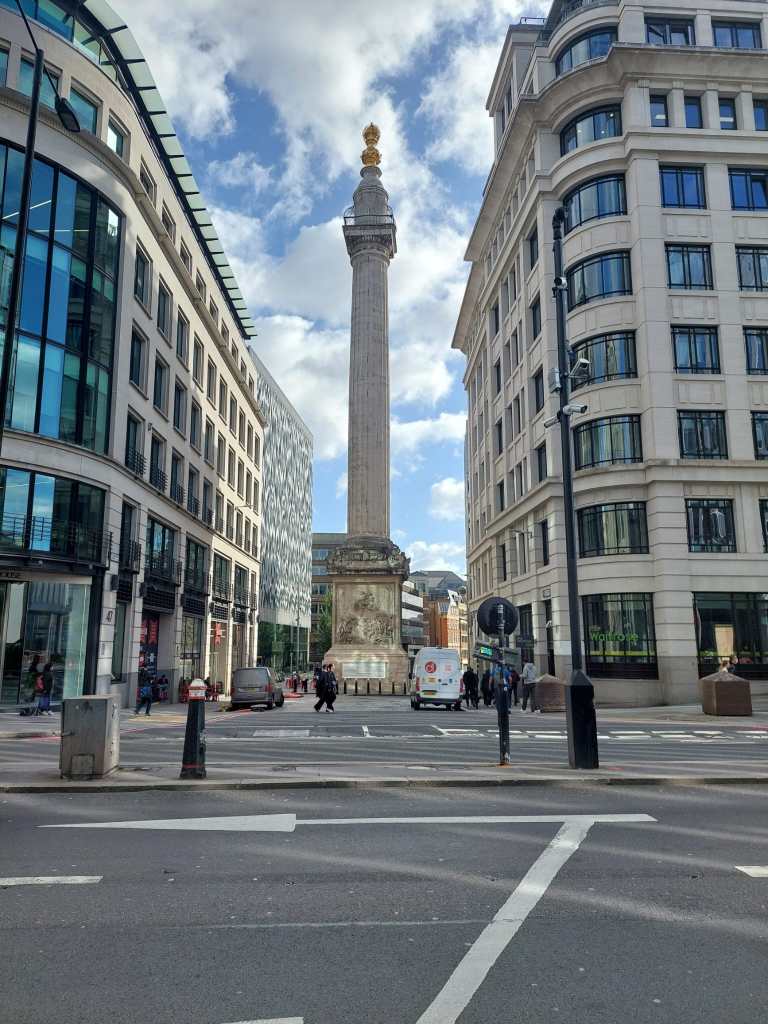
The last day was shorter because we had to leave for the airport after lunch, so we got the bus to Monument to explore the City of London. I would change this now, and instead start back by the Royal Courts of Justice, and walk down Fleet Street to see St Paul’s Cathedral and the Bank of England, but we didn’t.
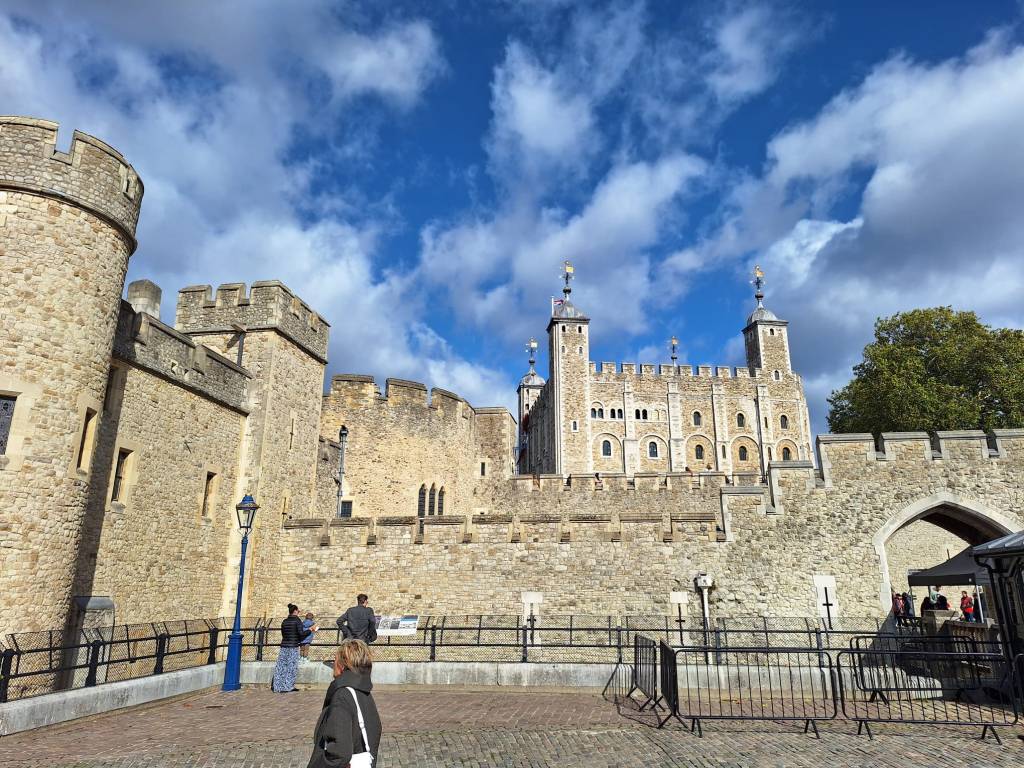
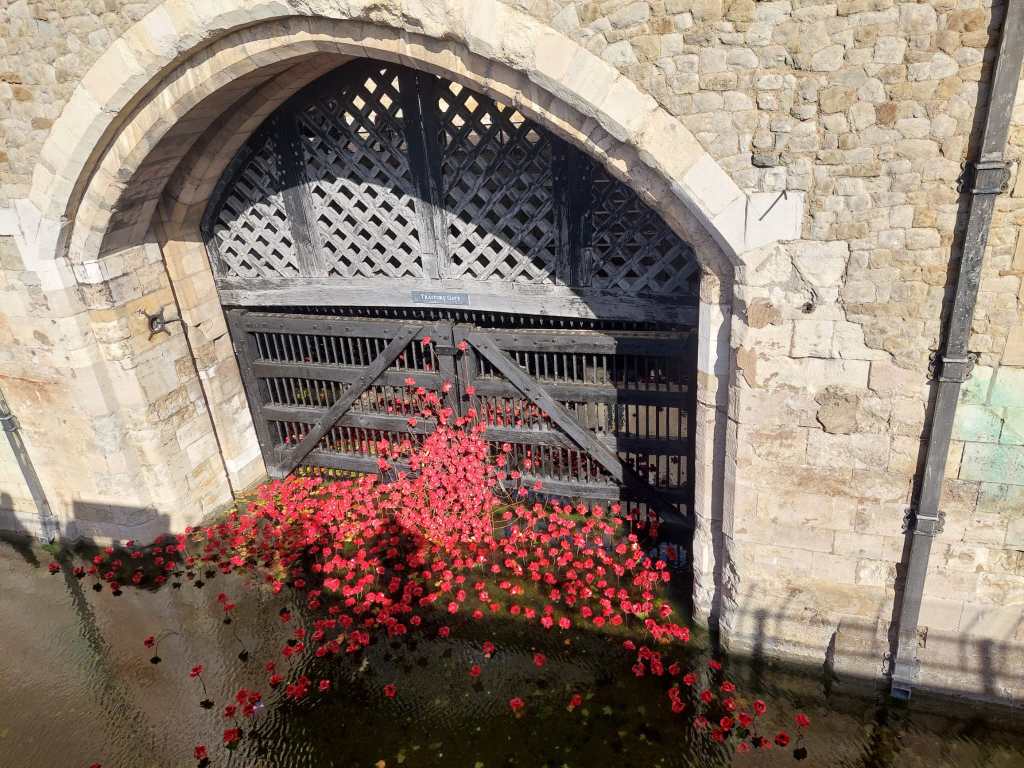
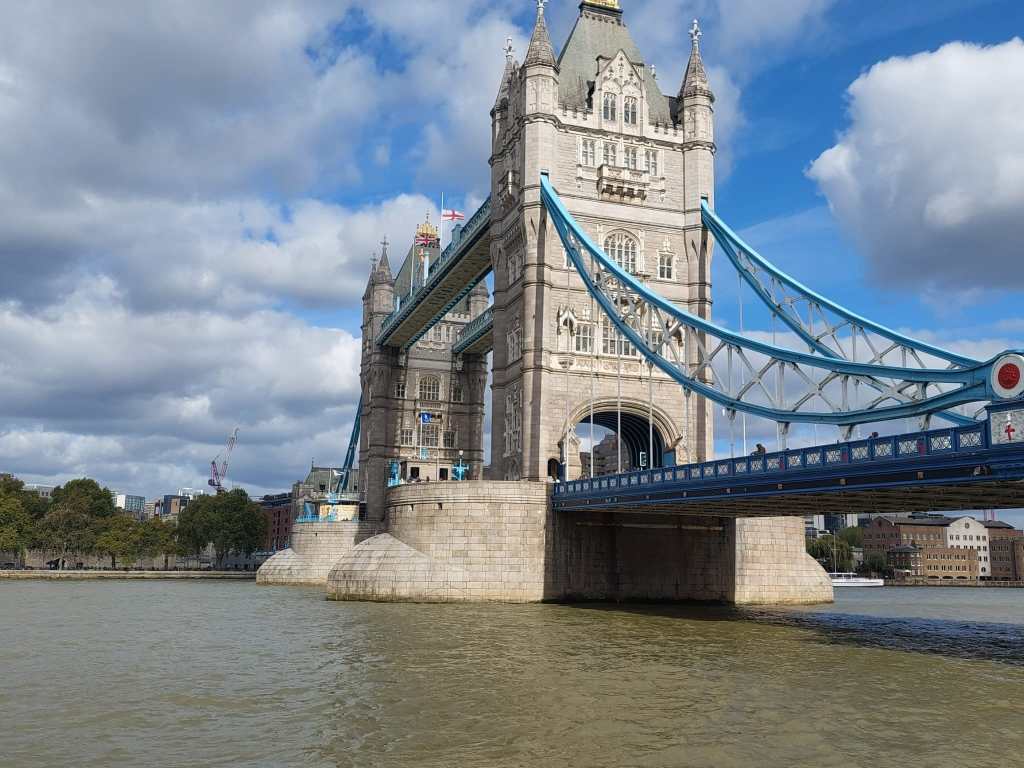
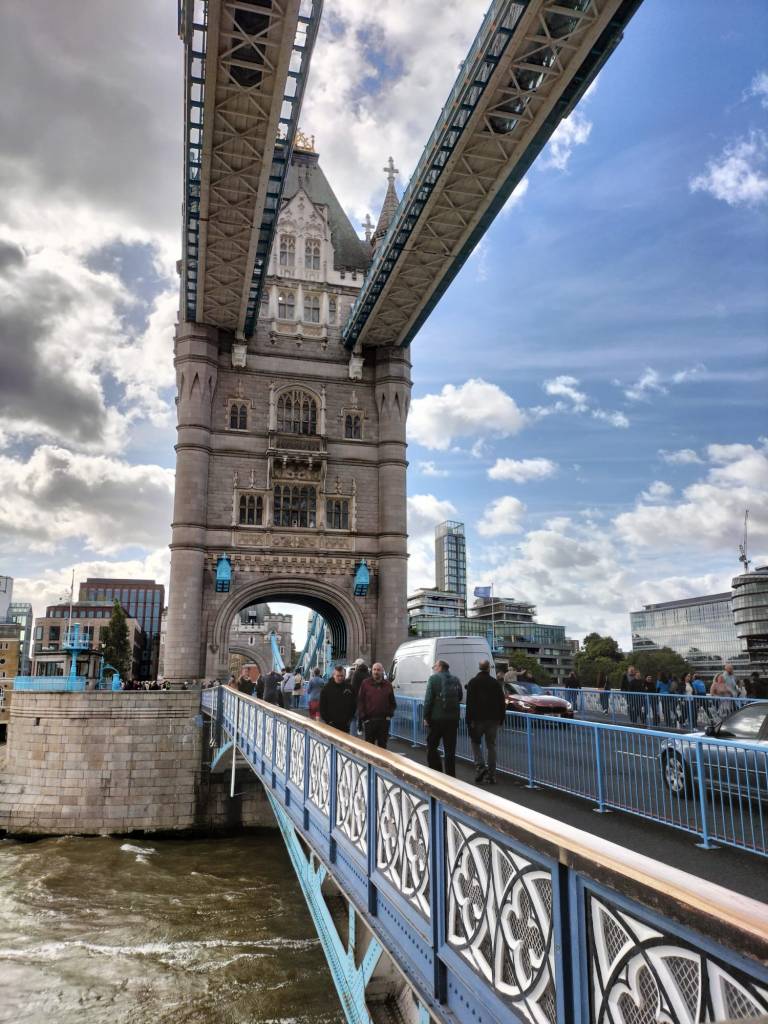
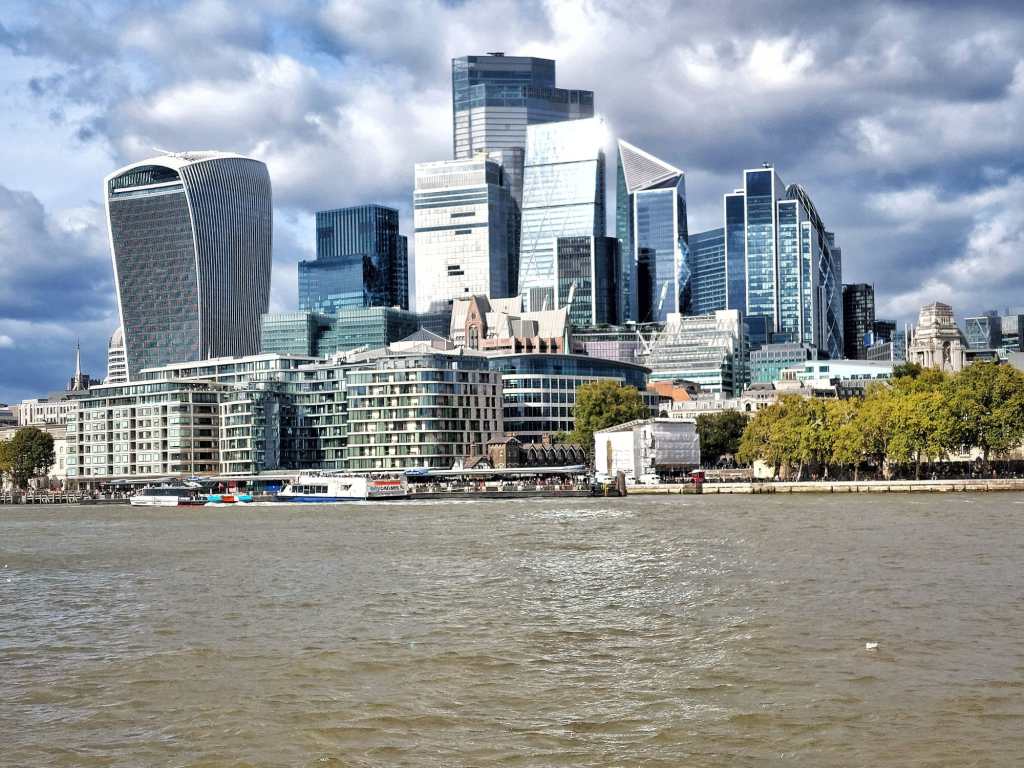
We walked down to the Tower of London, the sheer number of litter bins lined up outside was almost overwhelming, there were far more of them than there were Beefeaters and I insisted we take a group selfie by one of them to reinforce my point – I’m not saying we invented the bin or anything, but we do know how to throw litter away in England. We walked by the river, past the Traitor’s Gate, and across to St Katherine’s Dock to walk around and look at the boats. We crossed Tower Bridge and turned left to Butler’s Wharf to have a beer in The Chop House, sitting under heaters outside, the stunning view of the bridge framing the cluster of skyscrapers of The City.
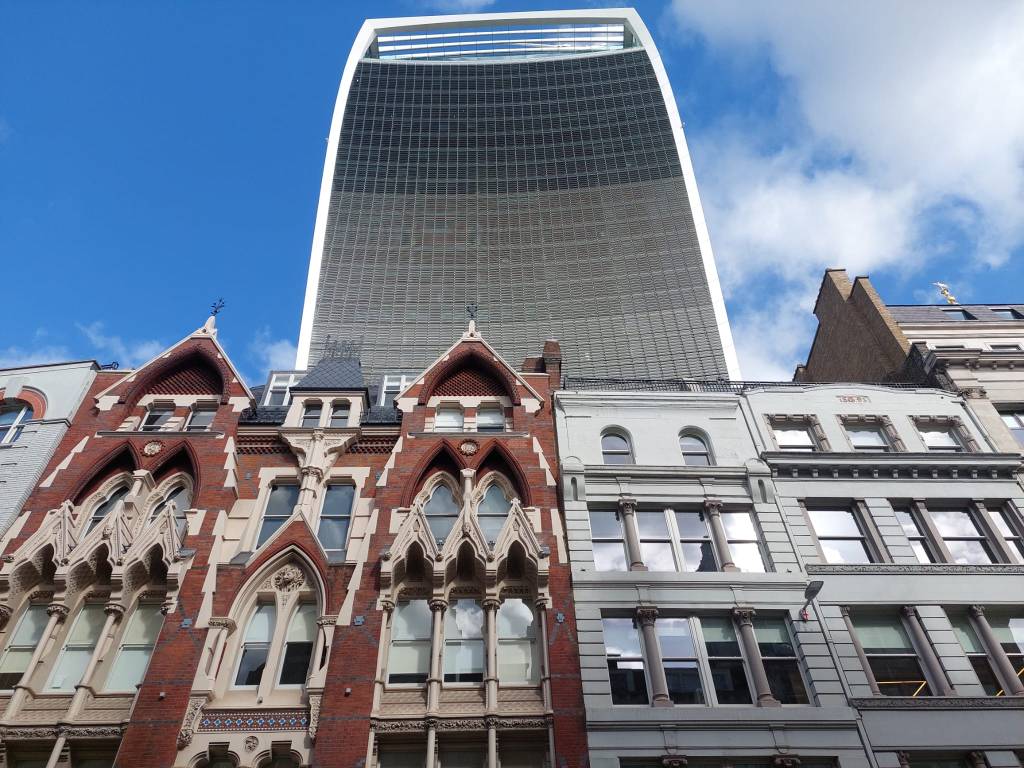
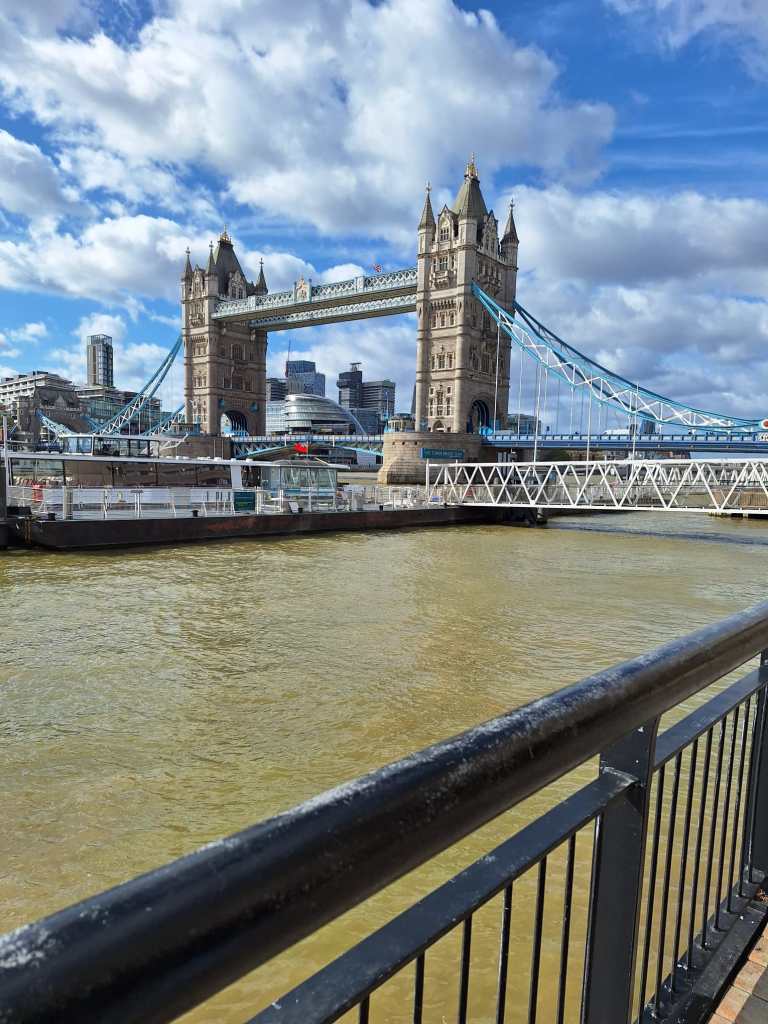

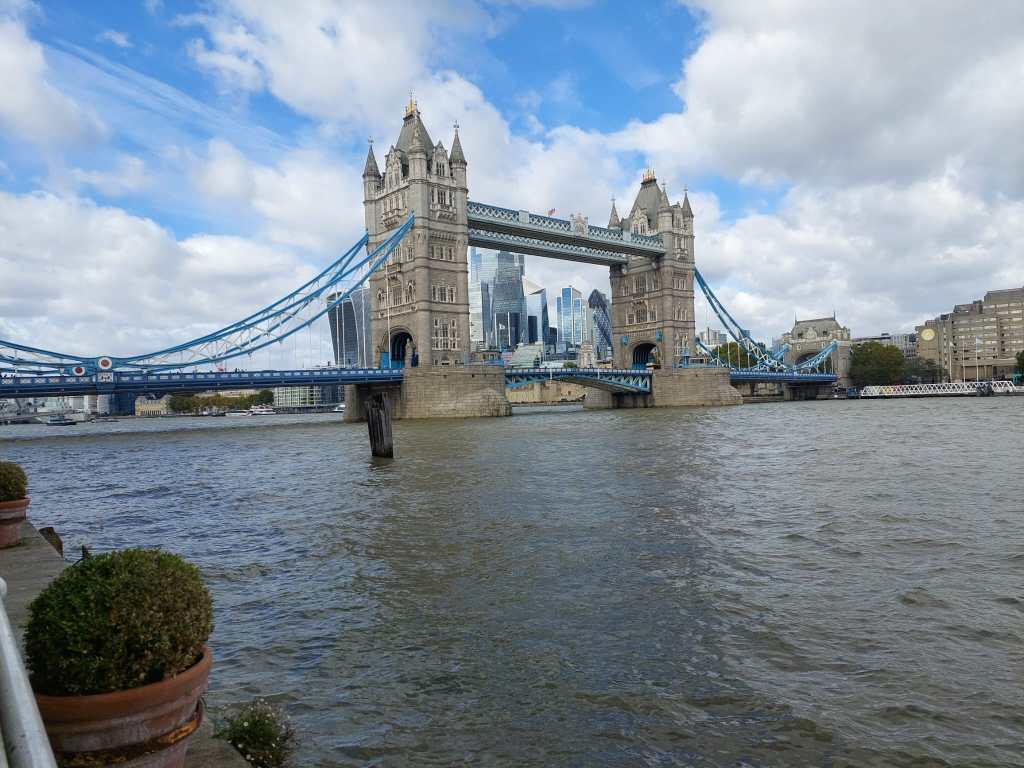
We walked a little way back along the Thames to London Bridge and turned left in Borough Market – another new one on me where I had to pretend I knew a lot more than I actually did. We bought a selection of cheeses and a stick of break, a tray of beers, and some smoked salmon and ate standing around a barrel.
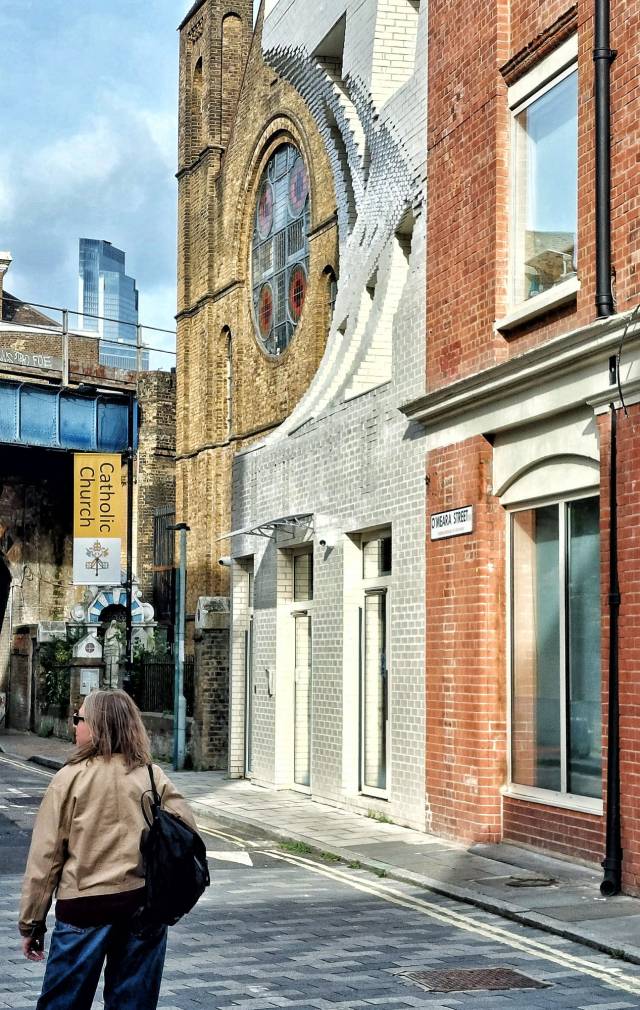
Walking back down Southwark Street, through the cool Flatiron district (I could live here, I thought, checking out the buildings for the most suitable apartment for my imaginary future), we ducked down O’Meara Street and I explained how the odd architecture of the building next to the church, viewed from the end of the road, allowed passers-by to see the lovely round window.
“I see you English are very good at the details,” they said, nodding in approval.
That’s one generalization I agreed with.
Footnotes
- There is a joke in Egypt that if you lose something like your keys or your phone, they say “it’s probably in the British Museum” ↩︎
 MrJohn