At the risk of being boring, I thought I’d blog a metaphorical journey, based on how my musical taste evolved over the years.
Showaddywaddy
When you’re a kid, music is mainly about play.
It’s about simple melodies and catchy tunes, things you can sing along to and join in with. You’re not looking for complex time signatures or virtuoso instrumentation, you barely notice what instruments are even playing – it’s about the bits you can do yourself, and that’s dancing around and singing along to a fun chorus.
The oddly-named Showaddywaddy were a 1970s institution in the UK, but then so were The Bay City Rollers and Brotherhood of Man, so while the past may look rosier through our nostalgia-tinted lens, it was often fairly shit. I don’t remember much about Showaddywaddy other than one song that grabbed my attention: Under the Moon of Love – a major UK hit in 1976.
At this point, I was just a crappy generic child. I was six when Under the Moon of Love shook my little world with its shallow but catchy chorus, and other than it being the first time I remember expressing my own musical preferences, Showaddywaddy left little lasting imprint on me.
Adam and the Ants
The kids at my school weren’t into Showaddywaddy. They were cool and liked the Sex Pistols and The Exploited and tough things like that – or at least they said they did.
For a shy introverted bespectacled wimpy misfit kid like me, the idea of liking something obnoxious that my parents would disapprove of was irresistible, and I immediately decided to like them too, even though I’d never heard any of their music.
This brief arms-length flirtation with punk led me to Adam and the Ants.
All those schoolyard Sex Pistols fans crossed over to Adam and the Ants as one, I didn’t know why the one automatically led to the other, but I was glad because not only had I heard Adam and the Ants music, I actually liked it!
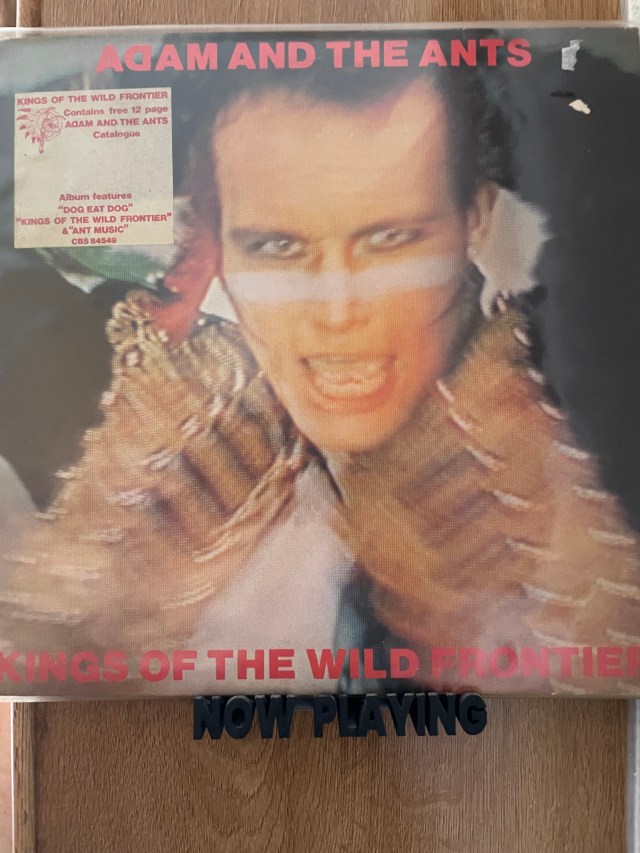
I later learnt that The Ants had toured extensively with Siouxsie and the Banshees in the early days, and after the release of their first album (Dirk Wear White Sox), Malcolm McLaren (flamboyant manager of the Sex Pistols) had briefly managed them, albeit not very nicely because he took Ant’s backing band and formed Bow Wow Wow with the beguiling Annabella Lwin on vocals … leaving poor old Adam to start again, but these links meant that when he put together a new version of the Ants, that hard-earned punk-credibility remained, despite that new group being a theatrical pop act more reminiscent of early Roxy Music than anything any punk band had churned out. I didn’t care, I heard Dog Eat Dog and Antmusic and especially Kings of the Wild Frontier and was totally smitten – for the first time, I was obsessed with music.
I even saw them live – my first concert! I was 12, and my Uncle took me because my Father was not a man for concerts or music or children. Uncle Rog refused to let me sit atop his shoulders for long, and so I asked if I could go down the front to the mosh pit, but he feared losing me among the crowd, and the repercussions that might ensue when my Father found out his brother had misplaced his son. I nodded, but I wasn’t so sure my Father would have even noticed had I not returned, but I let it slide.
The concert was in the now-defunct Queens Hall in Leeds, an old tram-shed that was freezing in winter and had all the acoustic finesse you’d expect from a massive garage. Despite its obvious unsuitability, it had hosted many top names over the years including The Beatles, Pink Floyd and Rush …
Rush
Adam Ant ended the band after Prince Charming, and continued as a solo artist, but I wasn’t interested in that. I like bands. I like to know the name of every member, I like to know their story; I don’t just want to listen to the music, I want to look behind the curtain and know who’s making it.
Some other band playing Stand and Deliver would have been fine, but also not that interesting … so what, it’s only pop, any half-decent musician can play it, but are they part of the story?
So I ditched Adam when he ditched The Ants, and, looking for new music, I followed the Ants thread only as far as Bow Wow Wow (and that was more about the lovely Annabella Lwin than the music). This meant I failed to discover other possibilities that were there for the taking: Roxy Music most obviously, the favourite of most members of Adam and the Ants, and (via guitarist and songwriter Marco Pirroni) to Siouxsie and the Banshees and then on to The Cure. Those would have been fine musical routes to explore … instead, with all my friends now madly into heavy metal and progressive rock, I took a chance and asked for “anything by Rush” on my Christmas list and got a copy of their then latest release Signals.
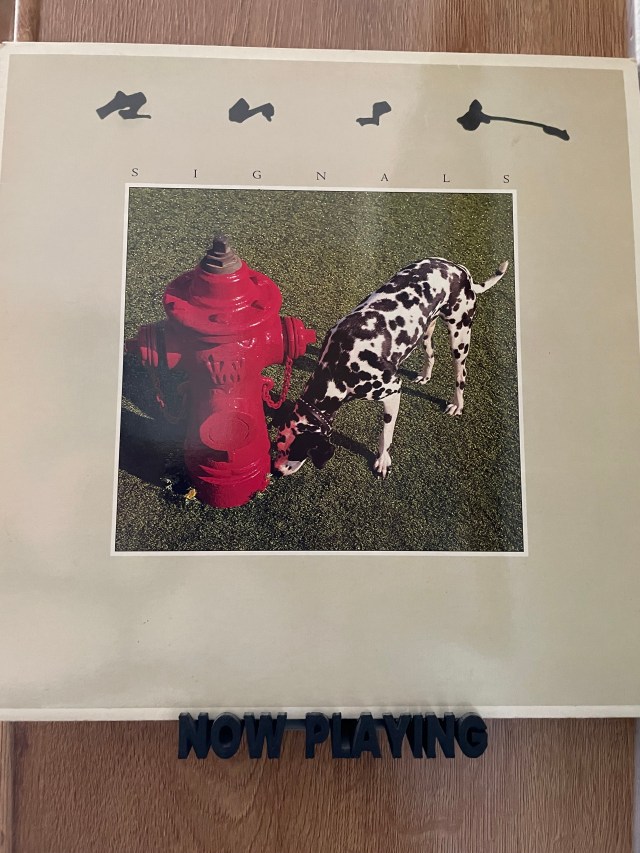
As Adam and the Ants ignited in me a love of pop music and bands, Rush made me notice the music more deeply, and I started to appreciate musicianship and the layers of complexity in music itself.
Their songs rarely spoke to me on any personal level, Neil Peart’s lyrics were often distant and impersonal, rarely is one moved by a song about science or a dodgy Ayn Rand novel, although Subdivisions, the kick-off track on Signals was about a misfit trying to navigate high school, and that made all sorts of sense to me.
My approach to not getting my head kicked in at high school was not to pen a Rush song out of my daily struggle, but to look for every opportunity to be sarcastic, rude and arrogant. Now I’ve written it down, I see that – to paraphrase Teddy Roosevelt – had I kicked the backside of the person most responsible for my torment, I wouldn’t have sat down for a week.
Pink Floyd
Perhaps inspired by Geddy Lee (perhaps that’s a post-hoc justification …)1, I bought a bass guitar, and taught myself to play2 – I had been forced to learn the piano and had tried the drums as a kid, but neither instrument clicked the way the bass did.
The psychology of this choice makes sense.
According to this Nena Lavonne video on YouTube, there are three main factors that influence the instrument we choose: temperament (for example, I am an introvert who likes my influence to be on the subtle side); personal expression (I struggle to express my emotions, it seems such an imposition on others, so I prefer to hide behind the groove); social influence (it was all about rock music, so instruments like the violin or the oboe never entered my thinking).
Pink Floyd bass lines are fairly easy to play, and Money soon became my show-off piece when anyone else was listening. Knocking out a 7/8 rhythm in the key of B minor was surprisingly easy, but it sounded difficult-ish to any observer who has no knowledge of how to play the instrument.
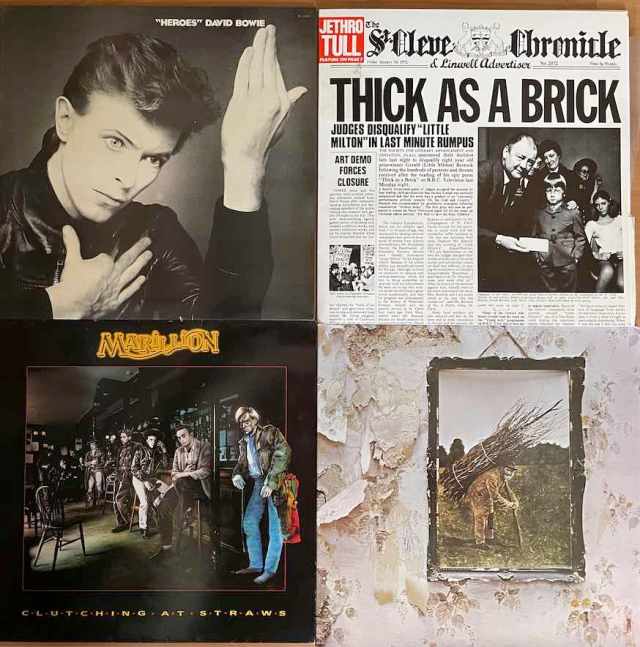
There were other bands I liked too, such as the aforementioned Rush, but also David Bowie, Jethro Tull, Marillion and Led Zeppelin, but they were very much second division behind Pink Floyd.
Unlike Rush, with their complex but often soulless songs, Pink Floyd were rarely complex but produced albums that bristled with soul. The combination of Roger Waters’s conceptual and lyrical touch with Gilmour’s gorgeous playing, backed by Rick Wright’s atmospheric keyboards and Mason’s understated tasteful drumming, meant they took a fairly simple palette of colours and created masterpieces that could break your heart.
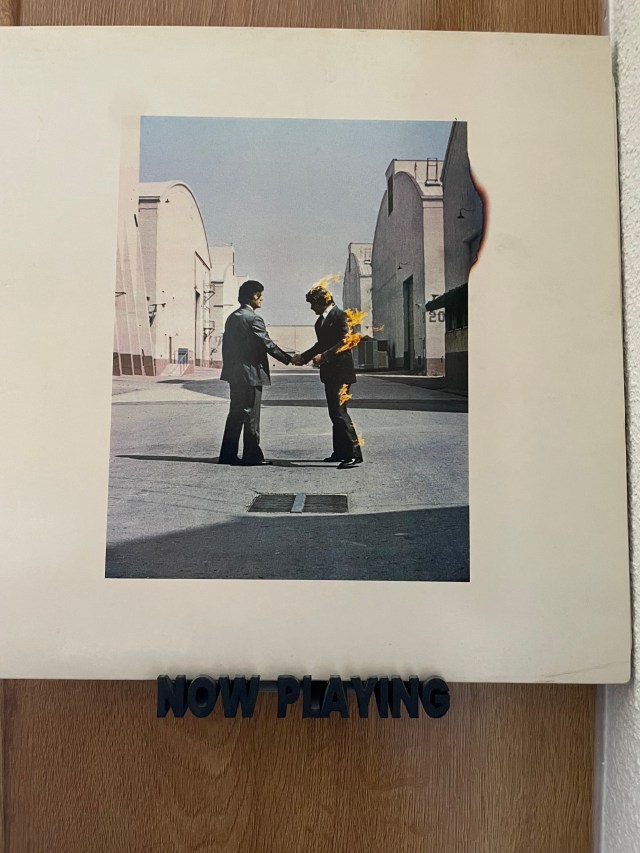
I admit I got a bit obsessed, like many young Floyd-heads did – there was an aura about their music that made us think we’d found something so precious that we simply must share the good news with the world. My friend Adam (he crops up in A Fistful of Travellers Cheques if you’re interested) had to have a little word with me about my not repeating the “joke” that Sharon Gilmour from Prisoner Cell Block H was David Gilmour’s sister.
I guess Adam had had enough of laughter, and just couldn’t take any more.
I was so taken with Pink Floyd at the time that I believed they existed in a different dimension to the rest of us, hovering somewhere intangible and mysterious, our mere material world too prosaic to contain such other-worldly genius.
Roger Waters seemed to think so too, but his mediocre solo albums and the rest of the band knocking out the dreadful A Momentary Lapse of Reason in his absence broke the spell, proving that the best bands are not about individual genius, they’re about dynamics, about relationships between members – the genius is the whole, not one of the parts thinking it’s better than the rest.
Talking of which …
The Beatles
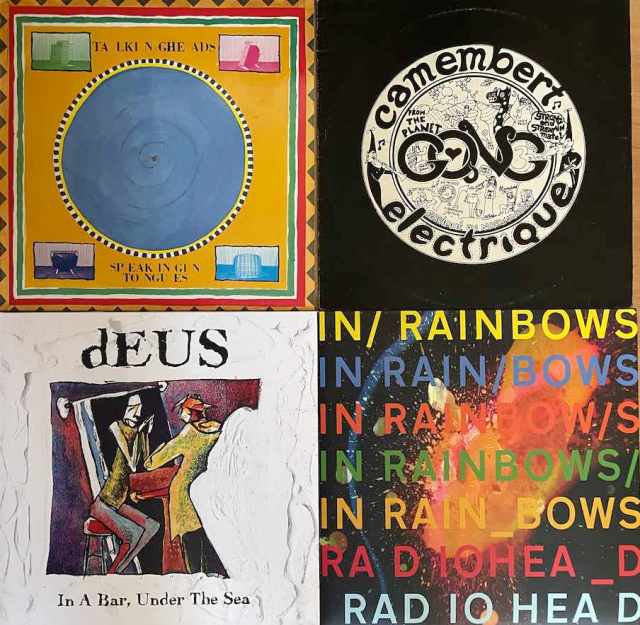
A few other bands became favourites for a while, in chronological order: Talking Heads; then the wonderfully eccentric Gong (who I saw many times in various Daevid Allen-led guises); the brilliant dEUS (a band I still follow with levels of obsessive gusto that border on the embarrassing); and Radiohead (the only famous band I’ve seen playing in a pub before they became famous3) … but the one that really landed with a thump and took my breath away was The Beatles.
I was born just after the Fab Four had split up, so they arrived into my world tarnished by association with my parent’s generation. Their old-fashioned black-and-white rock’n’roll had about as much relevance to me as George Formby or England’s 1966 World Cup triumph, which my parents also didn’t stop going on about.
I didn’t get The Beatles, and the argument was not bolstered by Paul McCartney singing along with a load of frogs or banging on about solving racism with pianos: if piano keys can all get along, why oh why can’t we?
It was only when I heard A Day in the Life and Lucy in the Sky with Diamonds that my ears pricked up: this is brilliant, I thought, who is it? … fortunately, before I could open my big stupid mouth and ask, someone else said “The Beatles are just fucking amazing, aren’t they?” and we all nodded along wisely.
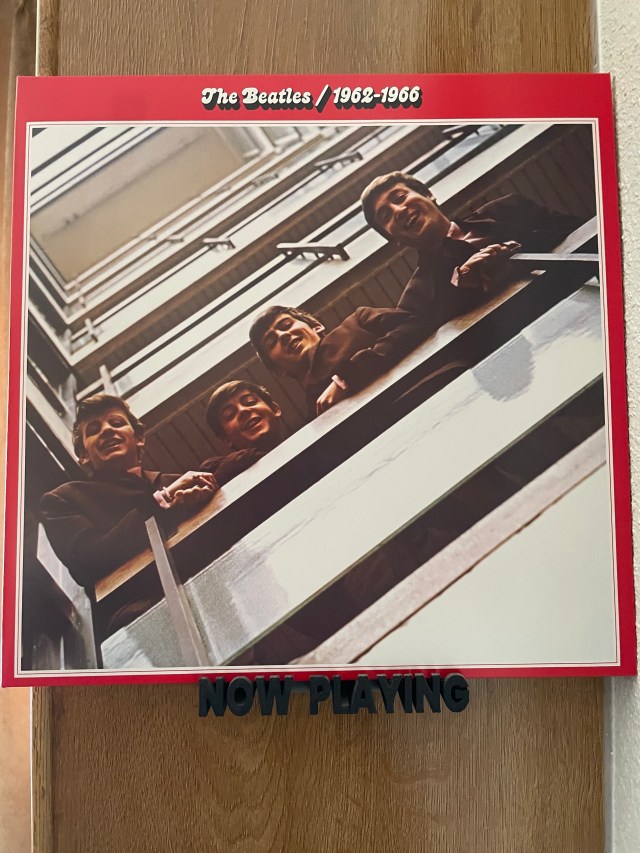
The thing is with The Beatles, if you only look at the music, you miss the point.
They are not particularly good musicians and their early songs are of their time and sound dated now … but that’s not the point.
The Beatles arrived on a staid pop scene where music was like any other popular culture product (films, books, TV etc.) in that it was carefully curated by grown-ups. Record companies found respectable polite potential stars, wrote them some songs, gave them their moment in the spotlight, bossed them about a bit, then moved on to the next one, the money staying firmly with the providers of capital: the record companies.
The Beatles were the revolution that changed all that.
They were one of many teenage bands who took advantage of national service ending by sticking together, and, thanks to the many hours spent playing the nightclubs of Hamburg, they actually got pretty good.
It wasn’t just that they sounded good, it’s that they were a band – you could connect with all of them. The norm at the time was to have a singer and a bunch of anonymous backing musicians, but this was not The Beatles – they didn’t even have one lead singer, they all sang, and all had recognisable personalities, four real people that the audience could feel like they knew. The band personality was lively and charismatic, cheeky and irreverent, an extension of Lennon’s own cocky personality perhaps.
But that’s not all, they also wrote, played and sang their own songs – no Tin Pan Alley conveyor-belt pop where The Man decided what they’d play. They were their own bosses and (eventually) got to keep a fair bit of the money too: the power moving from capital to labour.
This group of cheeky good-looking charismatic boys were also outsiders, they were from the north4, they were working-class, they were irreverent, but only a bit, they looked like good boys really, and they were singing love songs, so no harm done … they were exactly what teenagers wanted, and exactly what their parents were happy to let them have.
The Beatles had stumbled on to a magic formula that no-one knew existed, just as post-war teenagers had pocket money to spare and houses with fancy new appliances like radios, TVs and record players.
But that’s not all … the shelf-life of pop acts is short, fans grow up and music moves on, pop music in particular palls with repeated listens, but The Beatles grew up and moved on too. Rubber Soul and Revolver are so much better than anything they’d done before, and so far ahead of what most other bands were doing, it’s quite hard to understand how they pulled it off5. They didn’t settle for being just a pop act that produced one type of music, they became an artistic collective that did what it was inspired to do.
After they stopped touring they produced Strawberry Fields and Penny Lane as a double A-side, and then knocked our Sergeant Pepper! They slowly fractured after that, especially following Epstein’s death, but they still produced a load of remarkable stuff: Abbey Road especially, although I also have a soft spot for parts of The White Album and Let It Be (the Naked version)6.
The Beatles split up, each going their own way and producing their own albums (around 64 in total). Completely in charge, unencumbered with the pressure of being Beatles and no longer having to listen to each other’s ideas and feedback … that’s maybe why not one of those 64 albums comes close to the magic of The Beatles: genius is (usually) in the relationships, not the individual.
You can read about my Beatles-themed walk through London here.
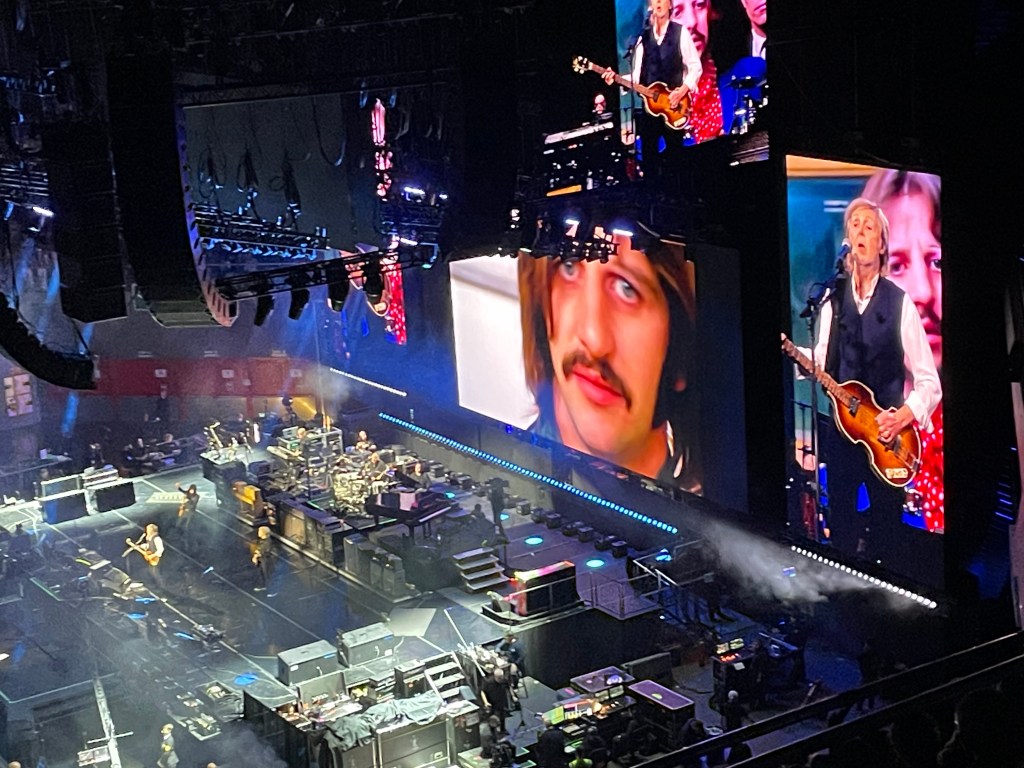
I saw Paul McCartney in concert a few months ago7 – and the show was wonderful, he’s showing his age – it was a little frayed around the edges – but live music is like nothing else for living completely in the moment. I sang along to every song, danced like a middle-aged introverted shy man, and cried like a little baby … and that’s what music is.
Footnotes
- It wasn’t that at all, it was that my friends were all buying electric guitars and I wanted to be both included but different. I always want to be included but different, that’s basically my entire personality summed up in one phrase. ↩︎
- Very badly (worse than you’re imagining), and several decades later, I am not much better (I rarely practise, so it’s little wonder I can barely play, and I’m too old to be crap now. You can get away with being rubbish if you join a band when you’re 15, but when you’re in your fifties, there is a reasonable expectation of minimal competence). ↩︎
- They were supporting The Sultans of Ping fc at The Duchess of York in Leeds, a famous venue, but a pretty shoddy one. The Sultans were great, but Radiohead were still raw and sloppy back then, cutting the jib of a pretentious shoegaze band having a bad day. Despite this off-putting veneer, you could tell even then that Jonny Greenwood was an astonishing guitarist and Thom Yorke could sing like an angel. ↩︎
- This fact meant it took the UK press a long time to take them seriously, dismissing them as oiks from the sticks. It wasn’t until they played Sunday Night at the London Palladium and Beatlemania was undeniable that they begrudgingly got on board. ↩︎
- The success of Revolver was down to a combination of factors, as these things so often are. Partly they had a lot of free time having refused to make another film, so they could dedicate months to making an album instead of days. Also, building on the success of Rubber Soul which had moved pop more toward albums with artistic value (as fans grew up, they had more money and could afford albums, not just singles), and as creative restless young people, they didn’t want to just keep churning out the same old stuff … and then there was the LSD … ↩︎
- I think I could be an Album Doctor, I could take a band’s finished album and polish it, maximizing its potential. The White Album could have been so much better with a bit of minor surgery – some ideas played out more and expanded, others edited out; and Let It Be could have been a great album if they’d recorded it properly (and included All Things Must Pass) and then released a live version as a second disc. ↩︎
- The second time I’ve seen him. The first was at Knebworth in 1990 when he played second fiddle to Pink Floyd at the Nordoff and Robbins concert – apparently he wasn’t happy about not topping the bill, but Floyd needed the darkness for their light show. In the end, it would have been better the other way around, it’s hard to follow Hey Jude. ↩︎
 MrJohn